Moving is consistently ranked as one of life's most stressful events, often feeling like an overwhelming puzzle with too many pieces. The difference between a chaotic move and a smooth transition, however, is not just luck; it is strategy. Effective organization is the cornerstone of a successful relocation, transforming the daunting task of uprooting your life into a manageable, even exciting, project.
In this guide, we will explore ten powerful moving organization tips designed to bring order to the entire process. These are not just generic suggestions, but actionable, stage-by-stage systems covering everything from pre-move planning and smart packing to leveraging digital tools for comprehensive inventory management. Forget the last-minute panic and the mystery of "where did I pack that?" This roundup presents a clear roadmap for a streamlined move.
Prepare to learn how strategic planning, detailed labeling, and smart workflows can help you pack, move, and settle into your new home with confidence and calm. We'll detail specific methods like the 'Open First' box, the reverse timeline packing order, and hardware organization for furniture. We'll also highlight how modern services like Vorby can supercharge your efforts, creating a digital map of your belongings that simplifies every step. This collection of practical moving organization tips provides a structured framework to conquer the chaos, ensuring you feel in control from the first box to the final piece of furniture.
1. The Color-Coding System
The color-coding system is a classic yet powerful visual strategy for organizing your move. Instead of relying solely on written labels, this method assigns a unique, vibrant color to each room in your new home. This simple association allows anyone helping with the move, from professional movers to family friends, to instantly identify where a box belongs without having to read a single word. It transforms the chaotic process of sorting dozens of boxes into a simple game of "match the color."
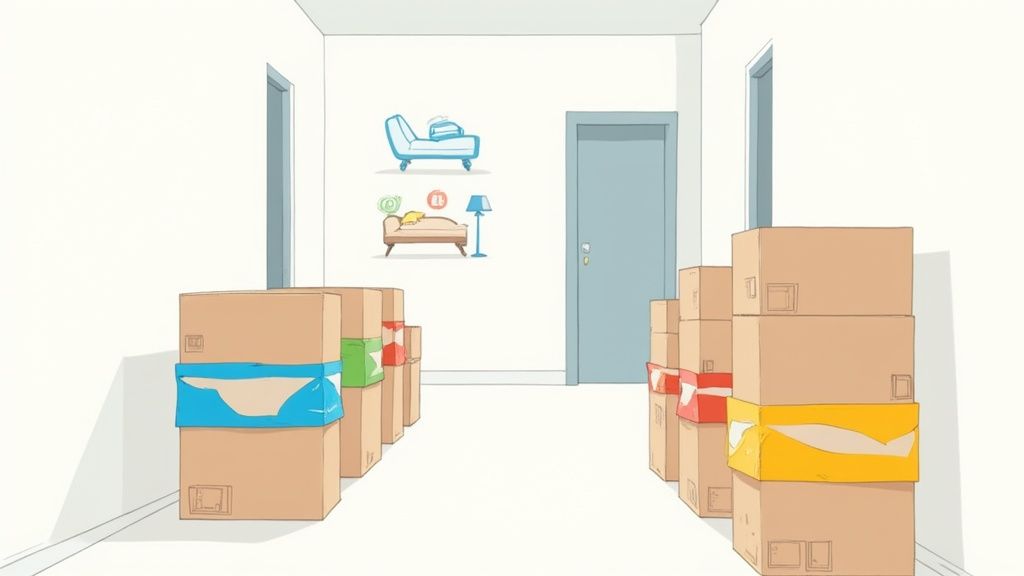
This technique is a cornerstone of professional moving organization tips because it drastically reduces confusion and streamlines the unloading process. Movers can quickly place boxes in their designated areas, clearing pathways and preventing a massive pile-up in the entryway. This efficiency is why professional organizers and popular home organization experts, such as The Home Edit, frequently champion its use.
How to Implement a Color-Coding System
To execute this strategy effectively, follow these actionable steps:
- Assign Colors: First, designate a specific color for each room. For example: Blue for the kitchen, Green for the primary bedroom, Yellow for the living room, and Red for the home office. Choose bold, easily distinguishable colors.
- Acquire Supplies: Purchase colored packing tape, large colored dot stickers, or a set of thick, permanent markers in your chosen hues. Neon colors are particularly effective, especially for visibility in poorly lit garages or basements.
- Mark Every Side: When labeling, apply the color to at least three sides of each box, including the top. This ensures the color is visible no matter how the box is stacked or carried.
- Create a Legend: On moving day, post a "color key" or legend at the entrance of your new home. This simple chart should clearly show which color corresponds to which room, serving as an easy reference for everyone involved. For instance, a sheet of paper with a blue square next to the word "Kitchen" and a green square next to "Primary Bedroom" will guide the entire team. This small step is one of the most impactful moving organization tips for a smooth unloading day.
2. The Room-by-Room Packing Method
The room-by-room packing method is a systematic approach that prevents the chaos of packing your entire home at once. Instead of tackling disparate items from various areas, you focus on completing one room entirely before moving on to the next. This strategy compartmentalizes the overwhelming task of moving into manageable, self-contained projects, creating a sense of accomplishment with each finished space. It transforms the move from a chaotic scramble into a logical, sequential process.
This technique is a cornerstone of professional moving organization tips because it directly translates to a more organized unpacking experience. When you arrive at your new home, the boxes for the guest bedroom are all together, as are the boxes for the kitchen. This methodical approach, often recommended by moving companies like Mayflower and Allied, simplifies both packing and settling in, ensuring you can set up functional spaces quickly without hunting for misplaced items.
How to Implement a Room-by-Room Packing Method
To execute this strategy for a streamlined move, follow these actionable steps:
- Start with the Least-Used Rooms: Begin packing in areas you use infrequently, such as guest bedrooms, formal dining rooms, or storage closets. This gets non-essential items out of the way early without disrupting your daily life.
- Create a Packing Schedule: Dedicate specific days or weekends to tackle individual rooms. For instance, assign Saturday to the home office and Sunday to the living room. This prevents burnout and keeps the process moving forward.
- Pack Essentials Last: Save your primary bedroom, bathroom, and kitchen for the final week. Pack an "essentials box" for each of these rooms containing items you'll need immediately upon arrival, like toiletries, medications, coffee supplies, and bedding.
- Take "Before" and "After" Photos: Snap a quick photo of each room once it's completely packed and empty. This not only provides a satisfying sense of progress but also serves as a useful reference for your home inventory. To go a step further, you can find a comprehensive guide for your belongings in this home inventory checklist.
- Label with Detail: Clearly mark every box with its designated room and a brief summary of its contents (e.g., "Primary Bedroom: Sweaters and Jeans"). This simple step is one of the most effective moving organization tips for an efficient unpacking process.
3. Detailed Inventory Labeling System
While color-coding directs boxes to the right room, a detailed inventory labeling system tells you exactly what is inside each box without having to open it. This methodical approach involves creating a comprehensive log of your belongings by assigning a unique number to every box and documenting its specific contents. It transforms your move from a guessing game into a precise, trackable operation, allowing you to locate any item, from your coffee maker to your child's favorite toy, in minutes.
This system is a cornerstone of professional moving organization tips, especially for corporate relocations and moves involving high-value items like art or antiques. Insurance agencies and professional moving companies often require it to ensure accountability and prevent loss. By creating a master list, you have a complete record of everything you own, which is invaluable for both unpacking and potential insurance claims.
How to Implement a Detailed Inventory Labeling System
To execute this strategy effectively, follow these actionable steps:
- Number Every Box: Use a thick permanent marker to assign a unique, sequential number to each box (e.g., 1, 2, 3...). Write the number clearly on at least three sides for easy identification.
- Create a Master Inventory: Use a digital spreadsheet, a dedicated moving app like Sortly, or a simple notebook to create your master list. For each box number, list the room it belongs to and a detailed description of its contents. To complement your labeling system, a structured record of your belongings can be created using an essential moving inventory list template.
- Be Specific: Instead of just "Kitchen," write "Box #12: Kitchen: Toaster, blender, coffee mugs, silverware tray." This level of detail is crucial for finding specific items quickly after the move.
- Photograph Valuables: For high-value items, take a photo before packing and note it in your inventory log next to the corresponding box number. This provides visual proof of the item's condition. For complex items or collections, you can learn more about how asset tags can be used for sophisticated tracking.
4. Strategic Packing Order (Reverse Timeline)
The strategic packing order, often called a reverse timeline, is a system that prioritizes packing based on how soon you'll need an item. Instead of packing room by room at random, you begin with items you use the least and finish with everyday essentials. This approach ensures that your most critical belongings remain accessible until the very last moment and are the first things available upon arrival. It methodically transforms a daunting task into a manageable, logical sequence.
This method is a cornerstone of professional moving organization tips because it directly combats the "where is the..." panic that often defines the first 24 hours in a new home. By ensuring essentials are packed last, they are naturally loaded onto the truck last and are therefore the first to be unloaded. This simple logic prevents you from having to dig through a mountain of boxes just to find a toothbrush, coffee maker, or important documents.
How to Implement a Strategic Packing Order
To execute this strategy effectively, follow these actionable steps:
- Create a Priority Matrix: Before you start, categorize your belongings. Divide items into groups: Low Priority (storage items, seasonal decor), Medium Priority (books, most clothing, non-essential kitchenware), and High Priority (daily essentials, documents, medications).
- Pack in Reverse: Begin packing weeks in advance with Low Priority items. This includes holiday decorations, off-season clothing, and anything in your garage or attic. Move on to Medium Priority items as the move gets closer.
- Designate a 'First Night Box': Keep one or two boxes separate for absolute essentials needed immediately upon arrival. This should contain toiletries, a change of clothes for everyone, medications, basic tools, phone chargers, and perhaps coffee supplies. Mark this box clearly with a unique, bold label like "OPEN FIRST".
- Label Priority Levels: In addition to room names and contents, add a priority level (Low, Medium, High) to each box label. This gives movers context and helps you decide which boxes to unpack first, making it one of the most effective moving organization tips for a streamlined settlement.
5. The 'First Night' or 'Open First' Box Method
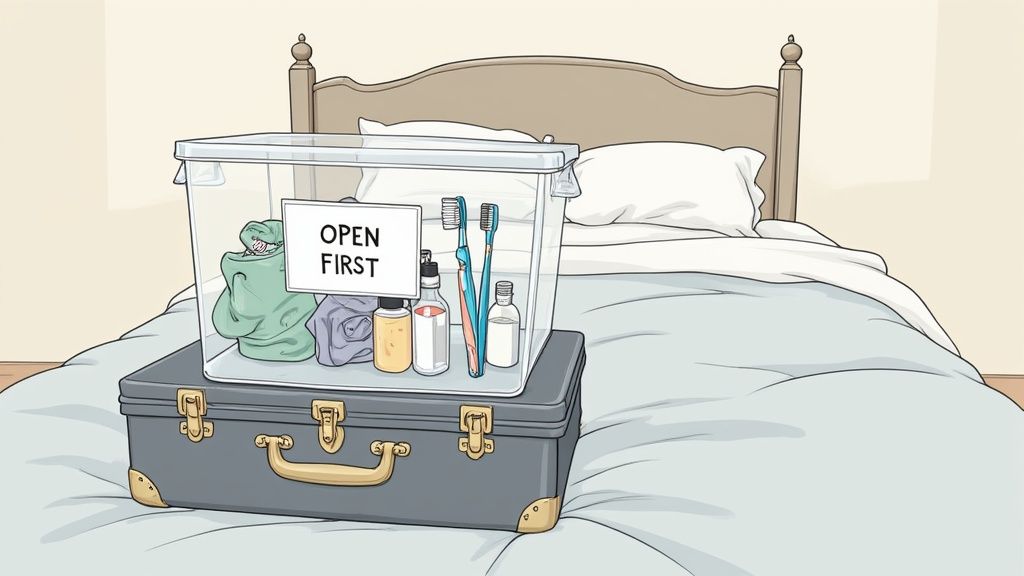
The 'Open First' box method is a critical survival strategy for the first 24 to 48 hours in your new home. It involves packing a dedicated, clearly-labeled container with absolute essentials, ensuring you aren't desperately tearing open random boxes to find a toothbrush or phone charger after an exhausting moving day. This single box acts as your personal care package, providing comfort and immediate necessities before the main unpacking begins.
This tactic is a cornerstone of moving organization tips promoted by relocation experts and seasoned family moving bloggers alike. Major moving companies like United Van Lines often recommend creating an "essentials kit" to reduce stress and bridge the gap between moving in and settling in. It prevents the chaos of searching for basic items and allows you to focus on resting and refueling, making the transition significantly smoother.
How to Implement the 'Open First' Box Method
To create an effective essentials box, focus on immediate needs and convenience:
- Choose the Right Container: Opt for a clear plastic bin so you can see the contents at a glance. Alternatively, a small suitcase or duffel bag works perfectly, as it's easy to transport and distinguish from cardboard boxes.
- Pack Critical Supplies: Your box should contain items for everyone in the household, including pets. Key items include: medications, toiletries (soap, toothbrushes, toilet paper), a change of clothes and pajamas for everyone, and phone chargers.
- Include Basic Comforts: Think about the first meal and moments of rest. Pack non-perishable snacks, bottled water, a manual can opener, disposable plates and cutlery, coffee or tea, and a small first-aid kit.
- Keep It Separate: This is the most important rule. Do not put this box on the moving truck. Keep it with you in your personal vehicle to guarantee it arrives with you and is immediately accessible upon entry to your new home. This simple step is one of the most effective moving organization tips for ensuring a calm and controlled first night.
6. Category-Based Grouping Within Rooms
Category-based grouping is a sophisticated organizational method that goes a step beyond simply assigning boxes to a room. This strategy involves subdividing rooms into smaller, functional categories, ensuring that all similar items are packed together. For example, instead of a generic "Kitchen" box, you would have separate, clearly labeled boxes for "Cookware," "Glassware," and "Utensils." This approach makes unpacking a logical, streamlined process rather than a treasure hunt.
This method is heavily endorsed by professional organizers, including the principles popularized by Marie Kondo and the Container Store's methodology, because it sets you up for an organized home from day one. By grouping like with like, you can unpack and set up an entire section of a room, such as the coffee station or the bookshelf, without having to open multiple, unrelated boxes. It’s one of the most effective moving organization tips for those who dread the chaos of unpacking.
How to Implement Category-Based Grouping
To effectively apply this method, follow these detailed steps:
- Define Categories: Before you start packing a room, break it down into logical sub-groups. For a bedroom, this could be Bedding, Shoes, Outerwear, and Desk Supplies. For a kitchen: Pots & Pans, Small Appliances, Baking Supplies, and Everyday Dishes.
- Create a Hierarchy: Label boxes with both the room and the specific category. A clear label like "Kitchen - Glassware" or "Office - Electronics" is far more useful than just "Kitchen." This creates an instant organizational hierarchy that simplifies the unpacking workflow.
- Gather Items: Collect all items belonging to a single category from around the room (or even the entire house) before packing them into a box. This ensures all your coffee-making supplies or all your crafting tools end up together, regardless of where they were originally stored.
- Use Appropriate Box Sizes: Pack heavy categories like books or dishes into smaller, more manageable boxes to prevent them from becoming too heavy to lift. Lighter, bulkier items like pillows or linens can go into larger boxes. This is a crucial detail for an efficient and safe move.
7. The Essentials-First Unloading Strategy
The essentials-first unloading strategy is a systematic approach to moving day that prioritizes creating immediate functionality in your new home. Instead of unloading the truck randomly, this method focuses on bringing in and setting up the most critical items first. This ensures you have a comfortable place to sleep, a functional bathroom, and basic kitchen necessities available within hours of arriving, preventing exhaustion and the overwhelming feeling of being surrounded by a sea of boxes.
This professional-grade technique transforms the first night in a new house from a chaotic camp-out into a comfortable stay. Professional moving companies and corporate relocation specialists use this protocol to establish a sense of normalcy for their clients as quickly as possible. By strategically ordering the unloading process, they create functional zones, like bedrooms and bathrooms, that serve as a foundation for the rest of the unpacking.
How to Implement an Essentials-First Unloading Strategy
To execute this strategy for a stress-free first day, follow these actionable steps:
- Establish a Priority Order: Before the truck arrives, decide on the sequence. A common and effective order is: 1) Bedroom furniture (beds, mattresses), 2) Bathroom essentials (toiletries, towels), 3) Kitchen basics (coffee maker, a few dishes, snacks), and 4) Living room seating. Storage items and non-essentials should always come off the truck last.
- Communicate with Your Movers: Clearly explain your priority plan to the moving crew. Point out the "Open First" boxes and direct them to assemble beds as soon as the frames and mattresses are inside. This simple communication is one of the most effective moving organization tips for a smooth unloading day.
- Set Up Functional Zones Immediately: As items come in, focus on setting them up, not just placing them. Assemble the beds and make them with fresh linens. Unpack the box of toiletries in the bathroom so everyone can freshen up. Plug in the coffee maker and set out some mugs.
- Pace Yourself: The goal is functionality, not complete organization. Resist the urge to unpack everything on the first day. Once your essential zones are established, you can take a well-deserved break and tackle the rest of the boxes with a clear head over the following days. This measured approach prevents burnout and makes the entire process more manageable.
8. Pre-Moving Decluttering and Downsizing
One of the most impactful moving organization tips is to reduce the volume of what you move. Pre-moving decluttering is the systematic process of evaluating every possession you own before packing begins and deciding what is truly essential. By downsizing your belongings, you not only save money on moving costs and packing supplies but also ensure you begin life in your new home with a clean, organized slate, free from the clutter of the past.
This philosophy is championed by minimalist advocates like The Minimalists and has been popularized globally by Marie Kondo’s KonMari method, which encourages keeping only items that "spark joy." The principle is simple yet profound: don't pay to move things you no longer need, use, or love. This proactive step transforms the move from a relocation of clutter to a curated transition, making the entire unpacking process significantly faster and less stressful.
How to Implement a Pre-Moving Declutter
To execute an effective purge before you pack, follow these actionable steps:
- Categorize Your Items: Instead of tackling an entire room at once, which can be overwhelming, sort items into four distinct categories: Keep, Donate, Sell, and Discard. Use bins or designated corners for each category to maintain order.
- Apply the 'One-Year Rule': A practical guideline is to let go of any item you haven't used in the past year. This rule is especially effective for clothing, kitchen gadgets, and hobby supplies that often accumulate without purpose.
- Schedule Disposals: Plan ahead. List items for sale on platforms like Facebook Marketplace or OfferUp several weeks before your move. Schedule a pickup with organizations like Goodwill or the Salvation Army for your donation pile to clear it out efficiently.
- Follow a Checklist: To streamline this process, consult an ultimate room-by-room declutter checklist to ensure no area is overlooked. A structured guide prevents decision fatigue and helps you systematically work through your entire home, from the attic to the basement. This methodical approach is key to successful downsizing.
9. Furniture Disassembly and Hardware Organization
One of the most common moving day frustrations is lost hardware or the inability to reassemble furniture correctly. A systematic approach to furniture disassembly and hardware organization eliminates this chaos, ensuring every screw, bolt, and bracket arrives with its corresponding furniture piece. This method transforms a potentially complex task into a manageable, step-by-step process that saves time and prevents damage during the move.
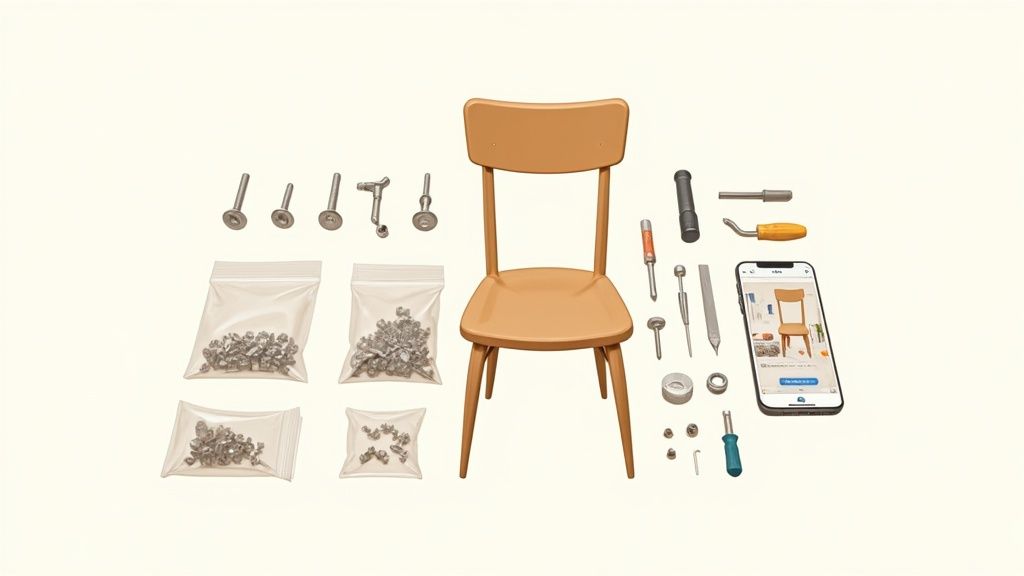
This strategy is a critical component of professional moving organization tips because it protects your investments and streamlines the setup process in your new home. Instead of searching through a random box of metal parts, you will have everything you need exactly where you need it. This level of preparation is essential for everything from complex IKEA wardrobes to simple bed frames, making it easier to settle in quickly and efficiently.
How to Implement a Furniture Disassembly System
To execute this strategy effectively, follow these actionable steps:
- Document Before Disassembly: Before you touch a single screw, take photos of the furniture from multiple angles. Capture close-ups of connection points, such as where legs attach to a table or how shelves are mounted. This visual guide will be invaluable for reassembly.
- Use Labeled Bags: Place all hardware from a single piece of furniture into a small, sealable plastic bag (like a Ziploc). Use a permanent marker to clearly label the bag with the name of the furniture item, for example, "Primary Bedroom Dresser" or "Living Room Bookshelf."
- Secure Hardware to the Furniture: Using painter's tape, which won't damage the finish, securely tape the labeled hardware bag to a large, non-visible part of the corresponding furniture piece. For a large bed frame, tape the bag of bolts to the headboard.
- Create a Master Tool Kit: Keep all necessary assembly tools (screwdrivers, Allen keys, wrenches) in one easily accessible toolbox. Label this box "FURNITURE TOOLS" and ensure it’s one of the last items loaded and first items unloaded. A detailed plan for handling furniture is a key part of any comprehensive moving and packing checklist.
10. The Digital Moving Binder and Moving App System
Transitioning from scattered paper notes to a centralized digital command center is a game-changer for modern moves. The Digital Moving Binder approach involves creating a single, accessible hub for every piece of information related to your relocation. This system consolidates checklists, timelines, contact information, inventory lists, quotes, and important documents, ensuring nothing falls through the cracks. It's the modern equivalent of the classic three-ring binder, but with the added benefits of cloud backup, shareability, and real-time updates.
This method is a cornerstone of professional moving organization tips because it provides a single source of truth for a complex project with many moving parts. Instead of searching through emails, notebooks, and text messages for a mover's phone number or a utility transfer date, everything is organized and at your fingertips. Moving apps like Sortly and Unpakt, or even a well-structured Google Drive folder, transform chaos into a manageable, step-by-step process.
How to Implement a Digital Moving Binder
To build your own digital command center, follow these actionable steps:
- Choose Your Platform: Select a platform that suits your style. You can use a dedicated moving app, create a master folder in a cloud service like Google Drive or Dropbox, or use a project management tool like Trello. The key is to pick one and stick with it.
- Create Core Sections: Organize your binder with distinct sections. Essential categories include: Checklist & Timeline, Budget & Expenses, Inventory Lists, Contacts (movers, real estate agents, utilities), and Important Documents (leases, contracts, insurance).
- Digitize Everything: Scan or take clear photos of all paper documents, such as moving contracts, receipts, and new lease agreements. Save them to the appropriate folder in your digital binder. This creates a secure backup and makes them easily searchable.
- Utilize a Master Spreadsheet: Create a central spreadsheet to track key details. Include tabs for your moving budget, a comprehensive contact list with phone numbers and account details, and a schedule of utility shutdown and activation dates. This is one of the most effective moving organization tips for staying on top of deadlines and finances.
- Share Access: If you're moving with a partner or family, share access to the digital binder. This ensures everyone is on the same page and can contribute to tasks, update information, and access critical documents when needed.
Top 10 Moving Organization Strategies Comparison
| Method | Implementation Complexity 🔄 | Resource Requirements ⚡ | Expected Outcomes 📊 | Ideal Use Cases 💡 | Key Advantages ⭐ |
|---|---|---|---|---|---|
| The Color-Coding System | 🔄 Low; simple rules, needs consistency | ⚡ Low; colored tape/markers, printed legend | 📊 ⭐⭐⭐⭐; faster sorting and placement; fewer room errors | 💡 Family/home moves; quick load/unload scenarios | ⭐ Quick visual ID; low cost; scalable |
| The Room-by-Room Packing Method | 🔄 Low–Medium; linear workflow, discipline required | ⚡ Low; boxes, labels, time per room | 📊 ⭐⭐⭐⭐; clear progress, easier tracking of remaining tasks | 💡 Residential moves; teams dividing tasks by room | ⭐ Clear milestones; reduces confusion; good for teams |
| Detailed Inventory Labeling System | 🔄 High; detailed entries, maintenance needed | ⚡ Medium–High; spreadsheet/app, time, photos, backup | 📊 ⭐⭐⭐⭐⭐; precise item location; better insurance documentation | 💡 High-value moves, estate sales, long-term storage | ⭐ Rapid retrieval; loss prevention; audit trail |
| Strategic Packing Order (Reverse Timeline) | 🔄 Medium; requires planning and prioritization | ⚡ Low–Medium; planning time, priority labels, "first night" box | 📊 ⭐⭐⭐⭐; immediate access to essentials; smoother first days | 💡 Families, staged moves, frequent users needing access | ⭐ Ensures essentials available; reduces first-day stress |
| The "First Night" / "Open First" Box Method | 🔄 Low; focused one-box prep | ⚡ Low; clear bin or suitcase; curated essentials | 📊 ⭐⭐⭐⭐⭐; eliminates frantic searching first 24–48 hrs | 💡 Any move where first-night comfort matters; families/pets | ⭐ Immediate comfort; very low overhead; highly reliable |
| Category-Based Grouping Within Rooms | 🔄 Medium; needs category decisions and labeling | ⚡ Low–Medium; labels, category lists, possibly more boxes | 📊 ⭐⭐⭐⭐; efficient unpacking by function; easier organization | 💡 Downsizing, organizing similar items, office moves | ⭐ Efficient packing density; simplifies future organization |
| The Essentials-First Unloading Strategy | 🔄 Medium; requires mover coordination and plan | ⚡ Medium; communication, prioritized placement, time | 📊 ⭐⭐⭐⭐; immediate functional rooms; reduces overwhelm | 💡 Moves with movers present; families needing quick setup | ⭐ Creates livable space fast; improves morale |
| Pre-Moving Decluttering and Downsizing | 🔄 High; decision-heavy, emotional process | ⚡ Low–Medium; time, donation/sale logistics, possible fees | 📊 ⭐⭐⭐⭐⭐; lowers costs, reduces unpacking and clutter | 💡 Downsizing, cost-sensitive moves, preparing home for sale | ⭐ Reduces volume/cost; simplifies new-home setup |
| Furniture Disassembly & Hardware Organization | 🔄 Medium–High; careful disassembly and documentation | ⚡ Medium; tools, bags, labels, photos, time | 📊 ⭐⭐⭐⭐; saves space; prevents hardware loss; eases reassembly | 💡 Large furniture, tight doorways, long-distance moves | ⭐ Protects furniture; speeds reassembly; reduces damage |
| Digital Moving Binder & Moving App System | 🔄 Medium; setup/time investment; maintenance required | ⚡ Medium; devices, cloud storage, apps, initial data entry | 📊 ⭐⭐⭐⭐⭐; centralized info, fewer missed deadlines, sharable | 💡 Complex relocations, corporate moves, multi-person households | ⭐ Centralized records; improved coordination; reusable template |
Your Blueprint for a Seamless Move
Moving doesn't have to be a chaotic whirlwind of stress and misplaced items. The journey from your old home to your new one can be a smooth, systematic process when you have the right blueprint. Throughout this guide, we've explored a comprehensive suite of moving organization tips, each designed to dismantle the overwhelming task of relocation into manageable, actionable steps. You now have a toolkit filled with strategies, from the foundational pre-move decluttering phase to the final, satisfying moment of placing the last item in its new home.
The power of these techniques lies not just in their individual effectiveness but in their synergy. Imagine combining the visual clarity of a Color-Coding System with the logical precision of a Detailed Inventory Labeling System. Each box is not just a mystery container; it's a color-tagged, specifically labeled unit whose contents are known and whose destination is clear. This combination alone can eliminate hours of confusion on moving day.
From Chaos to Control: Your Key Takeaways
The central theme connecting all these moving organization tips is the principle of proactive control. Instead of reacting to the chaos of a move, you are architecting its flow. Let's revisit the core concepts that empower this shift:
- Systematic Sorting and Packing: Methods like the Room-by-Room Packing Method and Category-Based Grouping ensure that items are packed with their future location in mind. This prevents the dreaded "unpacking scramble," where you have to open ten boxes just to find the coffee maker.
- Strategic Prioritization: The Strategic Packing Order (packing least-used items first) and the Essentials-First Unloading Strategy work in tandem. They create a logical timeline, ensuring your daily life is disrupted as little as possible. The 'First Night' box is the ultimate expression of this, providing immediate comfort and functionality upon arrival.
- Leveraging Digital Efficiency: Transitioning from a physical binder to a Digital Moving App System revolutionizes how you manage information. No more lost receipts or forgotten contacts. When you pair this with a detailed digital inventory, you gain an unprecedented level of oversight.
The true value of adopting these strategies extends far beyond a tidy move. Mastering this level of organization reduces mental load, minimizes decision fatigue, and saves your most valuable resources: time and energy. You're not just moving boxes; you're moving your life. The effort you invest in creating a detailed plan pays off exponentially when you can settle into your new space with ease and a sense of calm.
Your Actionable Next Steps to a Better Move
With this knowledge, your next step is to build your personalized moving blueprint. You don't need to implement every single tip, but rather select the ones that best fit your lifestyle and the scale of your move.
Start small. Begin by creating a simple moving timeline and a digital folder for all your moving-related documents. Then, commit to a decluttering schedule, tackling one small area at a time. As you begin packing, choose your primary organizational method, whether it's color-coding, detailed labeling, or a combination. The key is to start early and remain consistent.
Ultimately, the goal of these moving organization tips is to transform your perspective. A move becomes less of a daunting chore and more of a well-orchestrated project. It’s an opportunity to reset, to organize, and to begin your next chapter on the most prepared and positive note possible.
Ready to elevate your move from organized to effortless? Vorby is the digital tool that brings these tips to life, allowing you to create a visual, searchable inventory of your belongings, map items to specific boxes with QR codes, and find anything you need instantly. Stop guessing what’s in each box and start your next chapter with complete clarity and control by visiting Vorby to learn more.