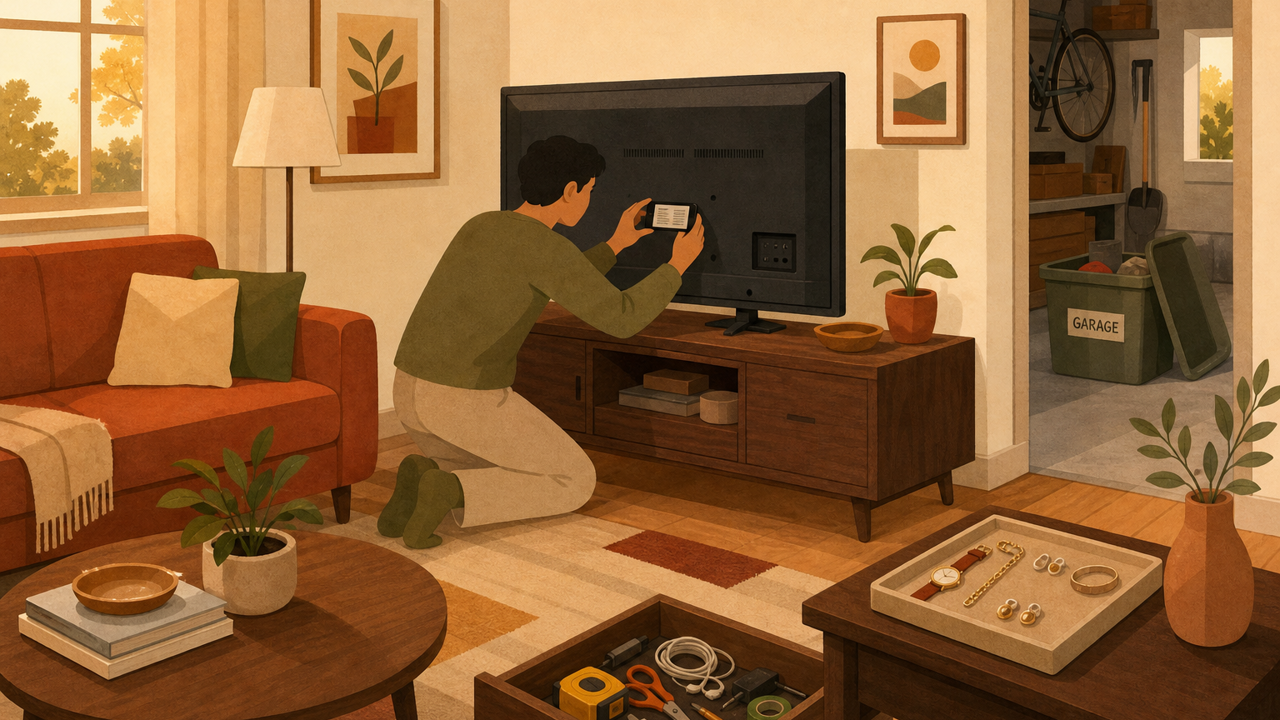
Quick answer. A furniture inventory checklist before moving is room-by-room photos plus width, depth, height, condition, and destination room — written down before anything goes in a box. Measure on a calm day. The doorway is a worse tape measure than you are.
You remember the couch. You forget the dresser in the garage. Then move day does the measuring for you. This list is not a box inventory. Boxes are anonymous. Furniture has a width, a staircase, a scratch you will later blame on the movers, and a habit of living in rooms you stopped seeing.
A furniture inventory before a move is not a box list. Boxes are anonymous. Furniture has a width, a staircase, a scratch you will later swear the movers made, and a habit of living in rooms you stopped seeing. The couch you sit on will get on the truck. The headboard behind the guest-room boxes might not, because nobody wrote it down.
This is the furniture pass. Not the forks. Not another template with twenty empty columns. The pieces that will not fit, the ones that already have damage, and the ones in the garage you stopped counting as furniture.
Why measure furniture before the doorway does?
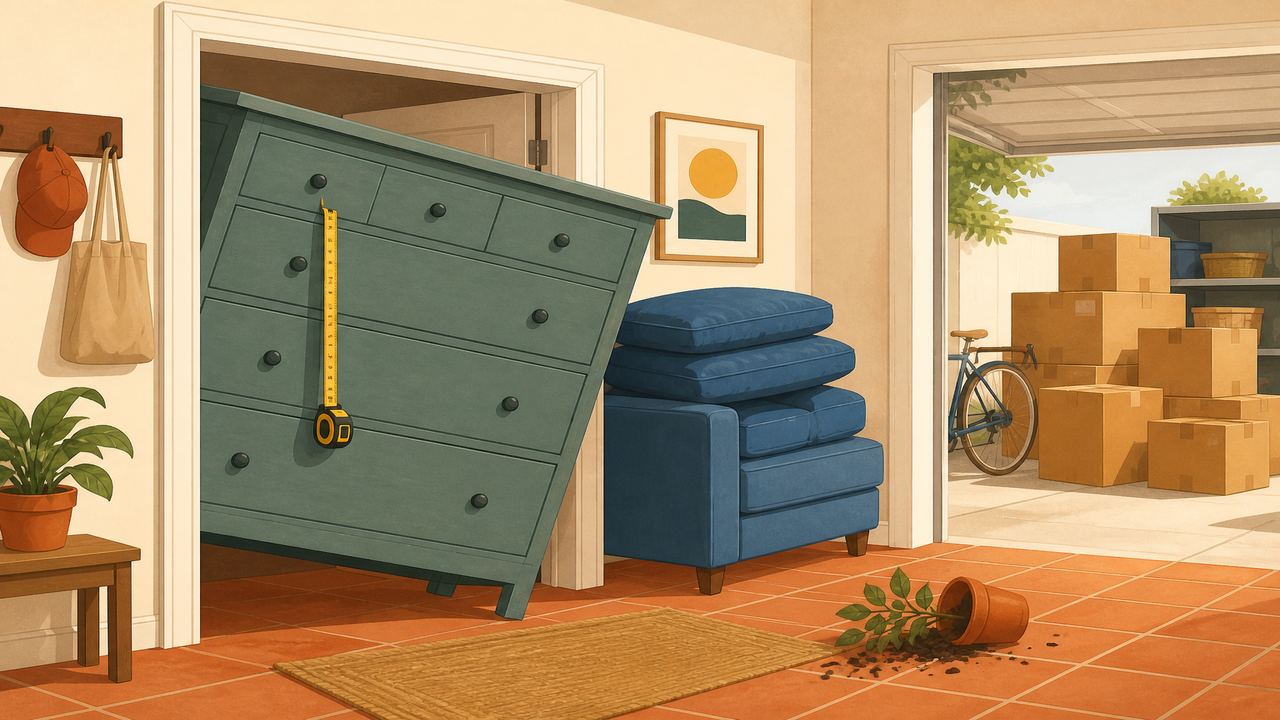
The classic failure is the dresser. It lived against the bedroom wall for six years. You never measured it because it was already inside. On moving day it meets the doorframe at an angle, the tape measure comes out too late, and someone suggests taking the door off the hinges, which is a plan you make when you did not inventory the furniture.
Do the couch too. Length, depth, height of the back. Then the path: hallway width, stair turn, the one doorway that is actually 28 inches. A sectional that came in pieces should leave in pieces. Write that down while it is still in the room, not while it is wedged on the landing.
Ikea that arrived in a flat box is still furniture. If you still have the hex key and the diagram, photograph those with the piece. Future you, building the same dresser in a different zip code, will not remember which model it was.
What should you capture on each piece of furniture?
One piece, five facts. If you cannot get all five, get the photo and the width.
- What it is. “Blue couch,” not “sofa.” “Oak dresser, six drawers.” The word you would use if you were describing it to a stranger on the phone.
- Where it lives. Master bedroom. Garage, left wall. That is how you notice the guest-room headboard you forgot.
- Width, depth, height. Tape measure, inches, the way it sits. For a table, include the leaves if they add two feet when you have guests.
- Condition. The scratch on the left leg. The stain on the arm. Photograph it. After the move, that photo is the difference between “the movers did this” and “that was already there.”
- One photo in place. The piece in the room, with the wall behind it. A catalog shot of the same model proves you can use Google. A photo of your couch against your radiator proves you owned that couch.
You do not need a serial number on a dining chair. You do need it on the treadmill in the basement, the TV stand that hides a soundbar, and anything you would file a claim on. Photograph the plate, then step back so the plate and the object are obviously the same thing.
What furniture do people forget in the garage?
Furniture is not only the living room. It is the workbench you built in 2019. The metal shelves with the paint cans. The bike. The headboard standing on its side behind the Christmas bins. The patio table that has been “going to the new place” since you bought this one.
Walk the garage like it is a room. Then the attic, the basement, the storage unit if you have one. If you cannot name it without walking over there, it is the item that will get left or broken. Open the unlabeled bins only if something large is hiding in them. A bin of cables is not furniture. A disassembled crib is.
Tidy and findable are different things. A clean garage with everything against the wall still hides a dresser if you never wrote “dresser, garage, 36 inches wide.”
When should you inventory furniture relative to packing?
People pack first and inventory later. That is how the nightstand becomes “box 14, bedroom, misc” and the marble top becomes a surprise at the new place.
Order of operations:
- One room. Start with the room whose furniture would be the most expensive to replace or the most annoying to force through a stairwell. Usually the living room or the bedroom with the dresser.
- Big pieces first. Couch, table, dresser, bed, shelves. Measure. Photo in place. Photo of existing damage.
- Path check. Hall, stairs, door. If the number on the tape is bigger than the number on the door, you have a decision to make on a calm Tuesday, not on the truck.
- Garage and outdoor. Grill, patio chairs, mower, the shelves. Same five facts.
- Then pack. Boxes get their own list. Furniture should already be a list.
If you are hiring movers, this list is the scorecard at both doors. If you are doing it yourself, it is how you stop making a second trip for the thing that lived behind the other thing.
When is a furniture inventory enough?
You are done with furniture when you can answer three questions without walking the house: what are the big pieces, will they fit, and what already had a scratch. If you still have a room you have not stood in with a tape measure, you are not done.
A full moving inventory (every box, every lamp) is a different job. There is already a moving inventory list for that. Use it after the furniture pass, not instead of it. The template will not tell you the dresser is 38 inches and the door is 32.
If you want the photos to turn into a searchable list without typing every line, that is what Vorby is for. Snap the couch, the dresser, the garage wall. Items and rooms land in a list you can search. On the current app you can save a first photo without forcing an Apple or Google account up front, and there is a skippable paywall. The tape measure is still on you. The app does not invent a width you never measured.
Soft next step: get Vorby on the App Store or at vorby.com.
FAQ
Do I have to list every dining chair?
No. “Dining set, table plus six oak chairs, one chair has a loose rung” is enough. List a chair on its own if it is the expensive one, or if it does not match the set.
Is a photo enough, or do I need a tape measure?
A photo proves you owned it and how it looked. A tape measure proves it will fit. You want both on anything that has to turn a corner.
What if I do not know the model?
Write the words you have: “green six-drawer dresser, round knobs, scratch on left side.” Photograph the whole piece and any sticker on the back. Model numbers are a bonus, not a requirement, unless you would replace it through insurance.
We are only moving across town. Still?
Yes. Distance does not shrink a dresser. The doorway at the new place is the one that matters, and you can measure that this week.
Can photos replace a furniture inventory spreadsheet before a move?
Photos are the intake. The inventory is the searchable list with dimensions, condition, and destination room. A Camera Roll of room shots helps; it does not answer “will the dresser clear the stair turn” unless you measured and wrote it down.
Furniture inventory FAQ
What should I list for each piece of furniture before a move?
Photo the piece, then note width, depth, height, condition, and the destination room. Skip serial numbers unless you need them for insurance later.
Should I inventory furniture before or after I pack boxes?
Before. Big pieces decide doorway and truck space. Boxes wait until the couch, dresser, and bed frame are on the list.
Do I need a spreadsheet for a furniture inventory?
No. Room photos plus dimensions beat a blank spreadsheet you abandon mid-move. Export a list later if your mover or insurer asks.
Can I use my phone to build the furniture inventory?
Yes. Walk room by room, photograph each piece, and keep the notes with the photo so you are not measuring doorways on move day.