Does your living room look like a toy store after an earthquake? If you’re constantly tripping over LEGOs and digging through bins just to find one specific dinosaur, you’re not alone. The sheer volume of toys can turn a playful space into a source of daily stress for parents and even lead to overstimulation for kids.
It’s not just about the mess; it’s about reclaiming a sense of calm for your family. The good news? An organized, peaceful playroom is completely within reach. You don't need a massive overhaul, just a simple, repeatable system.
The Scale of the Toy Takeover
That feeling of being buried in toys is very real. The global toys market is valued at a staggering USD 300.36 billion, and with sales growing by 7% in value and 4% in units, more and more stuff is flooding into our homes every year.
In fact, nearly 68% of parents in North America admit to struggling with toy overload, dedicating huge chunks of their living space just to manage it all. This isn't a personal failing; it's a modern parenting challenge.
Your Four-Step Path to Order
Instead of attempting a massive, one-time cleaning blitz that falls apart in a week, the key is to build a sustainable system. We've broken down the entire process into a proven, four-step framework that will guide you from chaos to calm and help you stay there.
This is the exact roadmap we'll be following in this guide.

Before we dive deep into each phase, here’s a quick snapshot of the system. Think of this as your blueprint for the project ahead.
| Your 4-Step Toy Organization Blueprint | ||
|---|---|---|
| Phase | Goal | Key Action |
| Declutter | Remove what's no longer used or loved. | Involve your kids (age-appropriately) to decide what to keep, donate, or toss. |
| Sort | Group remaining toys into logical categories. | Create piles based on type (e.g., blocks, dolls, cars) or activity. |
| Store | Give every single toy a designated home. | Use clear bins, cube shelves, and labels so kids know where things go. |
| Maintain | Build simple routines to keep the system working. | Implement quick daily tidy-ups and a weekly reset to prevent chaos from returning. |
This clear, methodical approach is what makes the results last. You're not just cleaning; you're building a new way of managing your space.
By following this Declutter, Sort, Store, and Maintain model, you’re creating a foundation for lasting order. While our focus here is on toys, these same principles can bring sanity to other parts of your home. For example, learning how to organize a nursery for overall tidiness can help you create a cohesive, clutter-free environment from the very beginning.
The goal isn't a perfectly pristine, untouched playroom. It's about creating a functional, inviting space where kids can easily find their toys, play creatively, and learn the valuable life skill of putting things back where they belong.
The Great Toy Declutter That Kids Can Help With
This is where the real work begins, turning that mountain of toys into a curated collection your kids actually love and play with. Before you can dream of tidy bins and labeled shelves, you have to decide what’s worth keeping. I know, this step can feel totally overwhelming, but it’s also the single most impactful part of the entire process.
The secret is to reframe this for you and your kids. You're not just "getting rid of stuff." You're making space for the toys that truly matter. When you bring your children into the process, you're doing more than just clearing floors; you're teaching them incredible life skills like decision-making, generosity, and the art of letting go.
Introducing the Four-Box Method
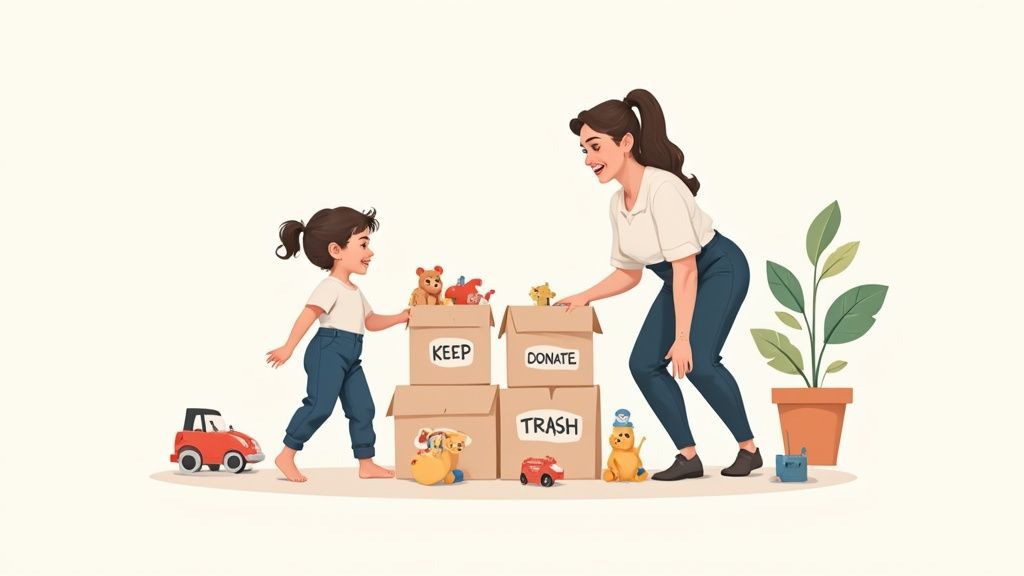
To keep things simple and head off decision fatigue before it starts, we're going to use a ridiculously straightforward system. All you need are four boxes, bins, or even just designated piles. The key is to label them clearly so everyone knows the plan.
- Keep: This is for the MVPs, the toys played with constantly, in great shape, and that still spark creativity.
- Donate: For the gently used toys that are ready for a new life. This is a perfect chance to talk about charity and helping other families.
- Store Away: A crucial box for sentimental treasures you can't part with (like that first teddy bear) or items destined for your toy rotation.
- Trash/Recycle: For anything broken beyond repair, missing critical parts, or that’s just plain unsafe.
Set these four boxes up right in the middle of the room. Just like that, you have a clear, visual framework for every single toy you and your child pick up. No guesswork needed.
Making Guilt-Free Choices Together
Getting your kids involved is a game-changer, but it requires a little strategy. Don't just hold something up and ask, “Do you want to get rid of this?” That question immediately puts them on the defensive.
Instead, frame the questions in a more empowering and concrete way.
Empower your child by asking positive, forward-thinking questions like, "Which toys are your absolute favorites that we should keep for playing?" or "Which toys do you think another kid would be really excited to have?"
This simple switch shifts the focus from loss to positive action. For the little ones (ages 2-4), their involvement might just be choosing between two similar cars. For older kids (ages 5+), they can take a much more active role, sorting items directly into the correct boxes themselves.
What Stays and What Goes
Having clear rules removes the emotion and makes the whole process go faster. As you handle each toy, run it through this quick mental checklist:
- Is it broken or missing parts? If a puzzle has lost half its pieces, it's just a box of frustration. Time for it to go.
- Has my child outgrown it? That baby rattle holds sweet memories for you, but if your kid is building LEGO cities, it’s clutter for them.
- Has it been touched in the last six months? If a toy has been buried at the bottom of the bin for half a year, it's a prime candidate for donation.
- Do we have duplicates? You really don't need five nearly identical dump trucks. Pick the favorite and let the others go bless another home.
This practical approach helps both of you make logical, less emotional decisions, keeping the decluttering train moving smoothly.
If you decide to donate or sell a bunch of items, tracking them can become a headache. To make it easier, our guide on how to use an outgrown gear resale and donation tracker offers a simple system to manage everything so nothing gets lost in the shuffle.
Navigating Sentimental Feelings
So, what about the toys that tug at your heartstrings? It’s so easy to project our own feelings onto our children’s things.
This is exactly what the Store Away box is for. You don't have to toss your baby's first stuffed animal or the wooden blocks your grandfather made. Pack them carefully into a labeled memory bin and store them away. This honors your feelings without letting sentimentality create daily clutter.
And for your child? If they’re having a tough time letting go of a toy they never play with, try the "maybe" box trick. Put the item in a separate box, out of sight, for a month. If they don't ask for it in that time, it’s a clear sign they’re ready to part with it. This little strategy gives them a sense of control and makes the final decision so much easier for everyone involved.
Sorting Toys for Smarter and Easier Playtime
Okay, the great toy purge is done. You're left with a curated collection of toys your kids actually love and play with. Take a moment to appreciate that win. It’s huge.
But this next step is what keeps the chaos from creeping back in. We're moving from piles on the floor to a smart, intuitive sorting system that makes sense for how your family actually lives.
This isn’t about creating a Pinterest-perfect playroom that no one is allowed to touch. It’s about building a logical system that helps your kids find what they want and, crucially, know exactly where it goes when they're done. A good system makes cleanup a natural part of play, not a dreaded chore you have to nag them about.
Choose Your Sorting Strategy
There is no single "right" way to sort toys. The best method is the one that clicks with your child's age, your space, and how they play. The goal is to make the categories so obvious that even a toddler gets it.
Let’s walk through a few practical approaches I've seen work time and again.
- Sort by Type: This is the classic for a reason because it works. All the building blocks go together. All the dolls live in one bin. All the Hot Wheels get parked in the same basket. It’s straightforward and makes finding that one specific car a breeze.
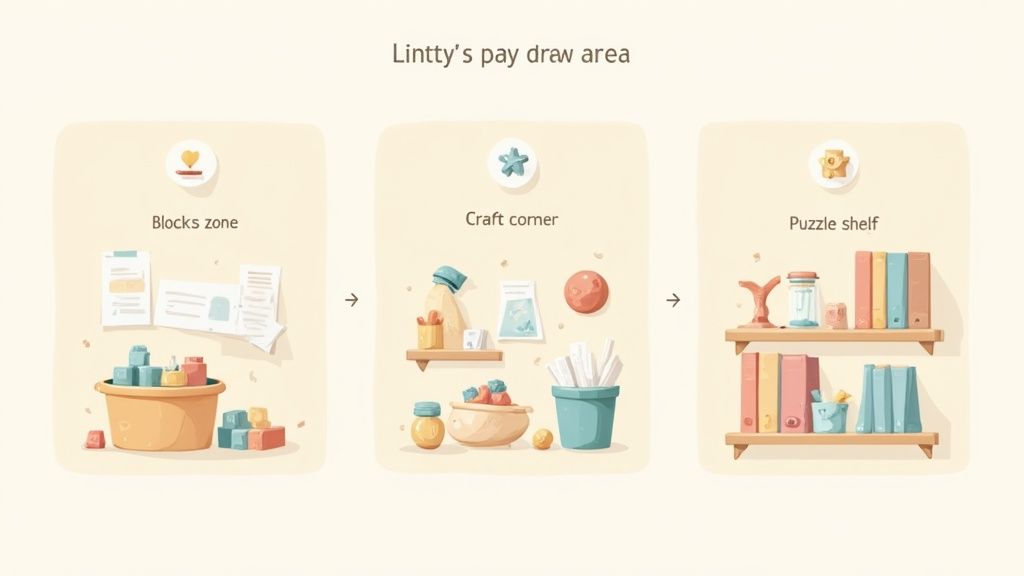
- Sort by Activity: This works beautifully if you can dedicate specific spots for different kinds of play. Think a "craft corner" with all the art supplies, a "building zone" with LEGOs and Magna-Tiles, and a "quiet nook" with books and puzzles.
- Sort by Child: If you have multiple kids, especially with a big age gap, this one's a sanity-saver. Sorting by owner prevents squabbles and keeps those tiny LEGO pieces away from the baby. Each kid gets their own designated shelves or color-coded bins.
You can also mix and match. Maybe you sort most toys by type but create a separate "messy science" activity bin. The key is to pick a lane and stay in it.
Creating Smart Play Zones
Once you have a sorting strategy, you can create "play zones." This just means intentionally setting up your space to support different kinds of play, and it's a game-changer for organization. Honestly, the research backs this up big time.
Proven methods include creating distinct play areas, with 60% of parenting experts advocating for dividing rooms into 'active play' and 'quiet zones'. It’s a simple change that can slash cleanup time by as much as 35%. Color-coding by child or toy type, like specific bins for STEM toys or building sets (which recently saw 12% market growth), prevents mix-ups and boosts safety, since studies show 15% of toy-related injuries are directly tied to clutter. You can find more data on trends in the toy market and see how these strategies align with current play patterns.
A play zone is a designated spot where a specific type of play is encouraged. It signals to your child what to do in that space and naturally contains the associated mess.
For example, a cozy corner with a soft rug, a bookshelf, and a beanbag becomes the reading zone. A small table on a wipeable mat becomes the art zone. This not only organizes the toys but also guides your child's play in a more focused way.
Practical Sorting in Action
Let's get real. How does this look when you're staring at a mountain of mixed-up toys?
- The LEGO Dilemma: Instead of one giant, overwhelming bin, try separating LEGOs into shallower, stackable containers. You could sort by color, by set, or by piece type (bricks, wheels, minifigures) depending on how your kid builds.
- The Arts and Crafts Avalanche: A rolling cart with multiple drawers is your best friend here. So is a hanging shoe organizer on the back of a door. Dedicate each drawer or pocket to a specific supply: crayons, markers, glue sticks, paper. Everything is visible and contained.
- The Stuffed Animal Invasion: These guys multiply overnight, I swear. Use a large, soft basket, a hanging hammock in a corner, or even one of those "bean bag" covers you can stuff them into. This gives them a clear home that isn't all over the bed.
By creating these intuitive categories and zones, you’re not just cleaning up; you're building a system that can run itself. The easier it is for your kids to understand where things belong, the more likely they are to help keep it that way. It's the first real step in teaching them how to organize their own space for the long haul.
Finding Smart Storage Solutions That Actually Work
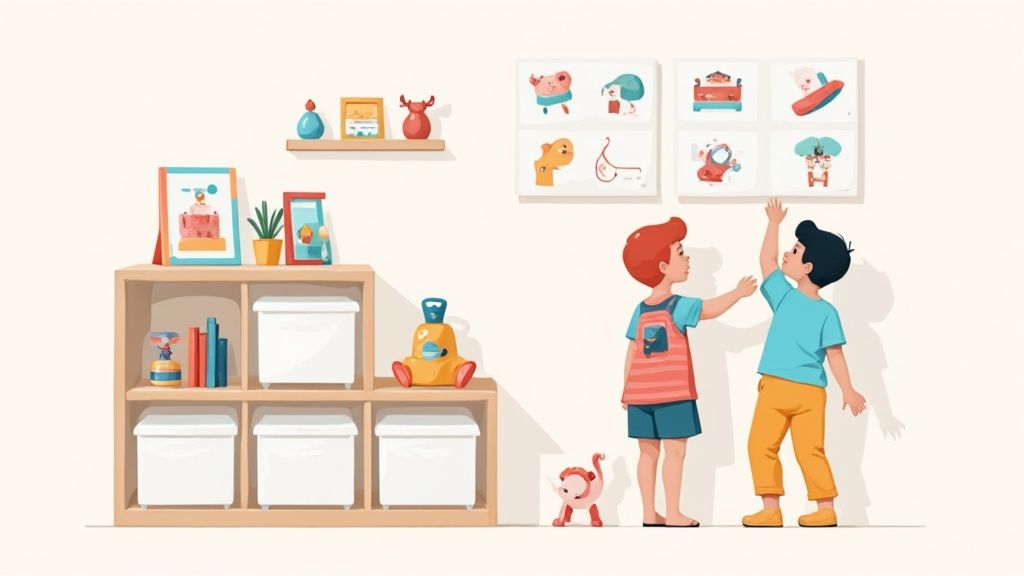
Alright, you've sorted the toys into logical groups. Now comes the fun part: giving everything a permanent home. This is where all that hard work pays off, turning a one-time cleanup into a system that actually lasts. The right storage isn't just about hiding the mess, it's about empowering your kids to find their own toys and, more importantly, put them away without your help.
Forget the idea that you need a dozen matching, expensive bins from a fancy store. Effective storage is all about access and visibility. The goal is a setup so intuitive that even your toddler knows exactly where the blocks go.
Choosing Kid-Friendly Storage
When you're picking out storage, get down on their level, literally. Think from your child's perspective. Heavy lids, tricky latches, or bins stacked out of reach are just invitations for frustration and, you guessed it, a bigger mess. The best solutions are the ones they can handle all by themselves.
- Cube Shelves: These are the holy grail of toy organization for a reason. They're low to the ground, so kids can see and reach everything. They're perfect for fabric bins or open baskets, making it a breeze to slide out a whole category of toys.
- Clear Containers: Whenever you can, go clear. The ability for a kid to see what’s inside a bin without dumping it all over the floor is an absolute game-changer. This one simple thing cuts down on the "Mom, I can't find it!" chaos dramatically.
- Vertical Wall Storage: Don't forget to look up! Wall-mounted shelves, picture ledges, or even pegboards are fantastic for smaller collections, art supplies, or showing off their proudest LEGO creations. It gets things off the floor, which is a lifesaver in smaller rooms.
To really conquer the chaos, you might need to invest in a few key pieces. It's worth looking into dedicated toy storage organizers to find systems that fit your specific space and needs.
The Power of Smart Labeling
Labeling is the glue that holds your whole system together. It takes all the guesswork out of cleanup and turns it into a simple matching game. But for this to work, the labels have to make sense to the littlest members of the family.
The most effective labels are visual. For toddlers and preschoolers, a picture is worth a thousand nagging requests to clean up. It empowers them to help long before they can read the words "building blocks."
Making visual labels is incredibly easy. Just snap a photo of the toys that belong in a bin, print it out, and tape it to the front. As your kids get older, you can add the word underneath the picture to help with word recognition. It’s a tiny step that gives them a huge sense of clarity and ownership.
Comparing Toy Storage Solutions
Picking the right container really comes down to your space, your budget, and what kind of toys you're trying to tame. Not all storage is created equal, and what works for stuffed animals is a disaster for LEGOs.
Here’s a quick rundown of the most common options to help you figure out what you need.
| Comparing Toy Storage Solutions | |||
|---|---|---|---|
| Storage Type | Best For | Pros | Cons |
| Open Bins & Baskets | Bulky items like stuffed animals, balls, and large blocks. | Easiest for kids to access; encourages quick cleanup. | Can look cluttered; small items get lost at the bottom. |
| Cube Shelves with Bins | Categorized toys like LEGOs, dolls, or art supplies. | Highly organized and customizable; hides visual clutter. | Bins can become a "dumping ground" if not labeled well. |
| Clear Shoebox Bins | Small collections, doll accessories, and specific toy sets. | Toys are easily visible; stackable and space-efficient. | Can be too small for larger items; many lids to manage. |
| Wall-Mounted Shelves | Displaying special toys, books, and model cars. | Frees up floor space; keeps delicate items safe. | Limited capacity; not ideal for toys with many small pieces. |
In the end, the best setup is usually a mix of these different types, tailored to the play zones you've created. Don't be afraid to experiment to find what works for your family. For even more inspiration, check out these 10 storage container organization ideas that can easily be adapted for toys.
Maintaining Order with Simple Routines and Rotations
So, you did it. You survived the great toy purge, you’ve sorted every last LEGO, and the playroom looks incredible. High five! But now comes the real test: keeping it that way. An organized playroom isn't a one-and-done project; it’s a living, breathing system that needs simple habits to survive the daily chaos of life with kids.
This is where you shift from a big overhaul to simple, consistent maintenance. The secret isn't constant cleaning. It's building smart routines and tapping into the magic of toy rotation. These two strategies will make your new system stick, turning upkeep from a daily battle into a natural part of your family’s rhythm.
The Power of Toy Rotation
Ever notice how a toy, buried for months, is suddenly the most exciting thing in the world when your kid rediscovers it? That’s the simple genius behind toy rotation. Instead of letting every toy be available all the time, you strategically hide a portion of them and swap them out every so often.
This one simple change has a massive impact:
- It Kills the Overwhelm: Fewer toys in sight means less visual noise and less overstimulation. This leads to deeper, more creative, and more focused play. Kids actually play more when they have less to choose from.
- It Makes Old Toys New Again: When a bin of toys reappears after a few weeks away, it feels like Christmas morning. You get all the excitement of new stuff without spending a dime.
- It Makes Cleanup a Breeze: Fewer toys out means tidying up takes minutes, not hours. This is a game-changer for both you and your kids.
Getting started is easier than it sounds. Just take about half the toys from each of your categories and pack them into those labeled storage bins. Stick them in a closet, the garage, or under a bed, anywhere out of sight. When you notice your kids getting bored with the current selection, do the big swap. To make it even easier, a digital toy rotation planner can help you keep track of what’s in play and what’s in storage.
Building Simple Daily and Weekly Routines
Consistency is the glue that holds your whole system together. By weaving tiny, manageable cleanup habits into your day, you teach your kids responsibility and prevent the mess from ever getting out of control again. The trick is to make it fast, fun, and something you do together.
The most successful routines are the ones that are short, specific, and happen at the same time every day. A '5-Minute Tidy' before bed can prevent small messes from turning into overwhelming disasters by morning.
Here are a few easy routines you can start tonight:
- The "Beat the Clock" Tidy-Up: This is my favorite. Set a timer for five or ten minutes, blast a fun, upbeat song, and challenge everyone to a race. "Can we get all the cars back in the basket before the song ends?" It turns a chore into a high-energy game.
- The One-Category Cleanup: "Clean your room" is a vague, overwhelming command for a kid. Instead, give them a micro-mission. "Your job is to find and put away all the blue blocks." Or, "Let's gather all the dolls and put them to bed." A focused task is way more achievable.
- The Weekly Reset: Pick one 15-minute slot a week, maybe Sunday afternoon, for a quick system reset. This is your chance to tackle the Hot Wheels that ended up in the dollhouse or the crayons that migrated into the LEGO bin. It keeps your categories clean and your system working.
When you combine the fresh energy of toy rotation with the steady rhythm of daily routines, you create an unstoppable system. You’re not just organizing toys once; you’re building the habits that keep your home peaceful and playful, day in and day out.
Your Top Questions About Organizing Kids' Toys, Answered
Even with the best system, you're going to have questions. Tricky situations pop up. Think of this as your go-to guide for troubleshooting the common challenges that come with learning how to organize kids' toys for the long haul.
We’ve gathered the most frequent questions we hear from parents to give you quick, practical answers. You’ve done the hard work of decluttering and sorting; now, let’s make sure those new habits stick.
How Often Should I Declutter And Rotate Toys?
Finding the right rhythm for decluttering and rotating is what prevents those future toy avalanches. A major declutter twice a year usually works beautifully. Aim for one session right before a birthday and another before the winter holidays, the two times new stuff is most likely to invade your home.
When it comes to toy rotation, every two to four weeks is a great starting point. That’s frequent enough to keep things feeling fresh and exciting for your child, but not so often that it becomes a massive chore for you. Just pay attention to your kid’s engagement. If they seem bored or aren’t playing as deeply, it’s probably time for a swap.
What Is The Best Way To Organize Tiny Toys?
Ah, the tiny toys. LEGOs, doll shoes, and Calico Critters can feel like the final boss of toy organization. The strategy here is simple: containment is everything. You have to subdivide and conquer.
- For LEGOs: Ditch the giant, bottomless bin. Instead, try shallow, sliding under-bed drawers or those stackable craft organizers with built-in dividers. You can sort by color, set, or piece type (bricks, plates, minifigures), depending on how your child actually builds.
- For Doll Accessories: Small, clear jewelry boxes or divided hobby containers are a game-changer for tiny shoes, purses, and tiaras. The clear lids let your child see everything at once without dumping it all out.
- For Art Supplies: A rolling cart with multiple small drawers is fantastic for crayons, markers, beads, and pom-poms, keeping them separate but still easy to grab.
The key is to match the container size to the item. The smaller the toy, the smaller the compartment should be. This is what prevents tiny, precious pieces from becoming a jumbled, useless mess at the bottom of a huge bin.
How Can I Get My Kids Motivated To Help Clean Up?
Getting kids on board with cleanup is less about discipline and more about making it a positive, routine part of the day. Turning it into a collaborative game is always more effective than barking a command. Instead of a vague “clean your room,” give them specific, manageable missions that feel like a fun challenge.
Try one of these motivation boosters:
- Make it a Race: Set a timer for five or ten minutes and crank up an upbeat song. Say something like, “Let’s see if we can get all the blocks away before this song ends!”
- Assign "Expert" Roles: Give each kid a specific job they can own. "You're the official Car Parker, and your job is to get all the cars back in their garage."
- Praise the Effort, Not Just the Result: Acknowledge their hard work along the way. A simple, “Wow, you are doing such a great job finding all the puzzle pieces!” reinforces the positive behavior and makes them feel proud.
What Are The Best Storage Hacks For A Small Home?
Living in a small space doesn’t mean you’re doomed to a life of toy chaos. You just have to get more creative and think outside the toy box. The goal is to maximize every forgotten inch by going vertical and looking for hidden opportunities.
Some of the most effective small-space solutions are simpler than you think:
- Go Vertical: Install wall-mounted shelves or picture ledges high up on the walls. They’re perfect for storing less-frequently used toys or displaying their proudest LEGO creations.
- Use the Back of the Door: An over-the-door shoe organizer with clear pockets is an absolute lifesaver for action figures, dolls, or art supplies.
- Find Hidden Spaces: Wheeled under-bed containers are ideal for stashing toy rotation bins or bulky play sets you don't need out all the time.
- Choose Multi-Functional Furniture: An ottoman with built-in storage or a play table with drawers underneath can hide a shocking amount of stuff in plain sight.
Keeping track of every toy, its designated bin, and what's currently in rotation can feel like a full-time job. Vorby transforms that chaos into calm. Our app lets you create a complete visual inventory of every toy your child owns. Just snap a photo, add a location (like "Cube Shelf, Bin 3"), and never again wonder where that one specific dinosaur is hiding. When it’s time for toy rotation, a quick search in Vorby shows you exactly what’s in storage, making swaps fast and effortless. Start your free trial at Vorby today and give every toy a permanent, findable home.