Downsizing is more than just moving to a smaller home; it's a strategic process of simplifying your life, reducing upkeep, and focusing on what truly matters for your next chapter. For many seniors, this transition can feel daunting, filled with decades of accumulated memories and possessions that tell the story of a life well-lived. However, with a thoughtful and organized approach, what seems like an overwhelming task can become an empowering and liberating experience. This transition is not about loss, but about intentionally curating a lifestyle that is more manageable, comfortable, and aligned with your current priorities.
This comprehensive guide is designed to provide a clear roadmap with actionable downsizing tips for seniors, helping you navigate every stage of the process with confidence. We move beyond generic advice to offer specific, practical strategies that address both the logistical and emotional aspects of this significant life change.
You will learn how to:
- Create a strategic timeline to avoid last-minute stress.
- Systematically sort your belongings using proven methods.
- Preserve precious memories by digitizing photos and documents.
- Effectively sell, donate, or discard items you no longer need.
- Involve loved ones in a supportive and productive way.
- Prepare your new space to be safe, accessible, and comfortable from day one.
By breaking down the process into manageable steps, this guide will help you turn a potentially stressful project into a positive journey toward a more organized, peaceful, and enjoyable future.
1. Start Early and Plan Strategically
The most common mistake in downsizing is underestimating the time and emotional energy required. Starting early isn't just a suggestion; it is the foundational strategy for a successful, low-stress transition. Beginning the process well ahead of any planned move transforms a monumental task into a series of manageable, thoughtful decisions.
This proactive approach allows you to sort through a lifetime of memories without the pressure of a looming deadline. Rushed choices often lead to regret, accidental disposal of cherished items, and overwhelming anxiety. By planning strategically, you give yourself the gift of time: time to reminisce, time to decide what truly matters, and time to handle the logistics of selling, donating, or gifting your possessions.
Why This Method is Crucial
Strategic planning is essential because it addresses both the practical and emotional aspects of downsizing. A retiree who plans to move to an active senior community in two years can dedicate a few hours each month to sorting, making the process feel less like a chore and more like a mindful curation of their life's next chapter. Similarly, a senior preparing for a move to an assisted living facility in eight months has adequate time to involve family, digitize important documents, and carefully decide which belongings will make their new, smaller space feel like home.
The goal is to make conscious, intentional choices rather than frantic, last-minute ones. An early start provides the space to honor your past while thoughtfully designing your future.
Actionable Tips for Implementation
To put this strategy into practice, consider the following concrete steps:
- Establish a Clear Timeline: Aim to start the process 6 to 12 months before your target move date. Mark key milestones on a calendar, such as "Complete Attic by March" or "Sort Photo Albums in April."
- Create a Master Inventory: Use a simple spreadsheet or a dedicated notebook to create a high-level inventory. List major items in each room and categorize them as Keep, Sell, Donate, Gift, or Discard. This visual overview helps you grasp the full scope of the project.
- Start with Low-Hanging Fruit: Begin with areas or items that carry less emotional weight. The garage, linen closet, or kitchen pantry are excellent starting points. Tackling these spaces first builds momentum and confidence.
- Set Achievable Micro-Goals: Break the project down into small, measurable tasks. Instead of "clean the basement," set a goal like "sort through one box of old books this Saturday." This prevents overwhelm and makes progress tangible.
2. Use the Four-Box Method for Sorting
Decision fatigue is one of the biggest obstacles in downsizing, as every single item requires a choice. The Four-Box Method offers a simple, powerful framework that streamlines this process, turning a potentially overwhelming task into a clear, systematic sorting session. This popular organizational technique, recommended by professional organizers and senior transition specialists, simplifies choices into four distinct categories.
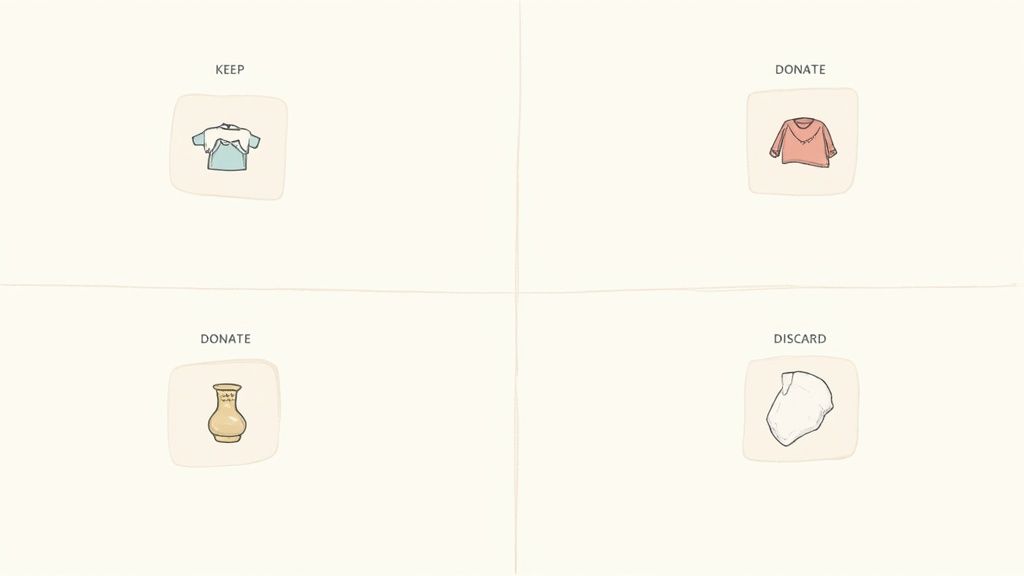
This method forces you to confront each object with a concrete action plan. You physically place items into one of four labeled boxes: Keep, Donate, Sell, or Discard. By eliminating ambiguity, it prevents the common habit of setting an item aside to "decide later," which only postpones the effort and creates more clutter. This technique is a cornerstone of many effective decluttering strategies. Learn more about how to declutter your home with proven methods.
Why This Method is Crucial
The Four-Box Method is effective because it provides a tangible, visual system for progress. For a senior sorting through a lifetime of possessions, it can be paralyzing to know where to begin. This method breaks down the process item by item. For example, when clearing out a closet, a senior can evaluate each piece of clothing and immediately assign it a destination. This creates momentum and provides a sense of accomplishment as the "Donate" and "Discard" boxes fill up, making the overall goal feel more achievable.
The goal is to make a definitive decision for every item you touch. This simple rule prevents second-guessing and keeps the downsizing process moving forward efficiently.
Actionable Tips for Implementation
To implement this sorting system effectively, follow these practical steps:
- Prepare Your Stations: Get four large, clearly labeled boxes or create designated zones in a room for each category. Use color-coded stickers or large markers to make each label easy to read from a distance.
- Work in Small, Focused Bursts: Instead of tackling an entire room, choose one small area, like a single drawer, a bookshelf, or a cabinet. Set a timer for 15 to 30 minutes to maintain focus and prevent burnout.
- Handle Each Item Only Once: Commit to making a decision as soon as you pick something up. Ask yourself if it is useful, beautiful, or deeply meaningful for the next chapter of your life. Place it in the appropriate box and move on.
- Process Boxes Regularly: Once a box is full, take immediate action. Move the "Discard" box to the trash, place the "Donate" box in your car for the next drop-off, and research the best platforms for items in the "Sell" box. This prevents sorted clutter from piling up.
3. Digitize Important Documents and Photos
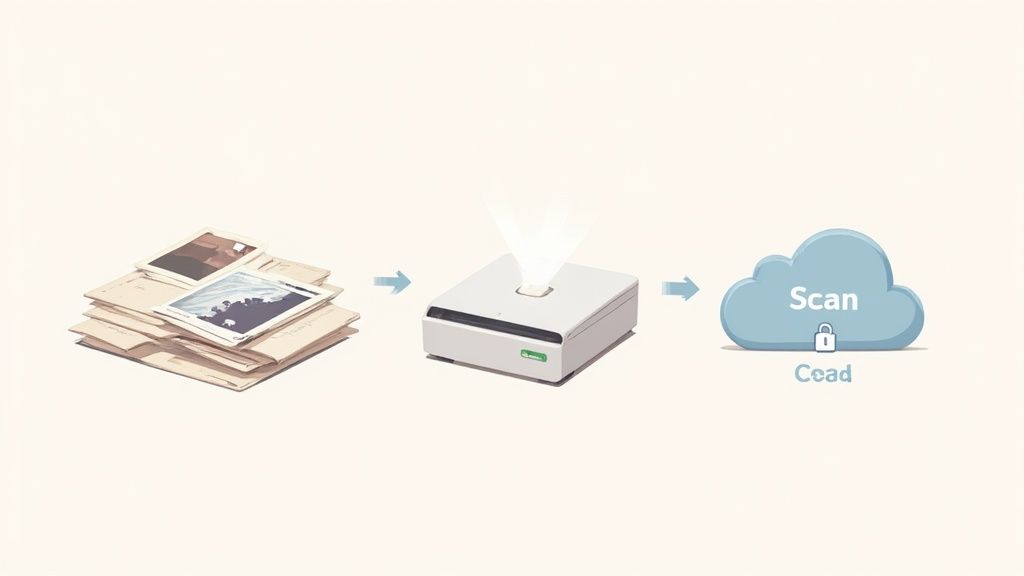
Decades of life accumulate a significant amount of paper: birth certificates, tax records, property deeds, and countless boxes of cherished photographs. Digitizing these items is a transformative downsizing strategy that converts bulky physical files into secure, easily accessible digital formats. This modern approach drastically reduces storage needs while safeguarding irreplaceable memories and critical information from physical damage or loss.
By converting physical documents to digital files, you can store a lifetime of records on a device smaller than a deck of cards. This not only frees up valuable physical space in a smaller home but also protects your legacy for future generations.
Why This Method is Crucial
Digitization is a key downsizing tip for seniors because it addresses both space constraints and preservation. A senior moving into a senior living apartment can eliminate an entire filing cabinet by scanning medical records, insurance policies, and financial statements. Similarly, turning shoeboxes filled with fading family photos into a digital album allows them to be shared instantly with grandchildren across the country, ensuring memories are passed on, not packed away.
The goal is to preserve the information and memories, not the paper they are printed on. Digitization offers security, accessibility, and a powerful way to declutter without loss.
Actionable Tips for Implementation
To successfully digitize your records and memories, follow these practical steps:
- Prioritize and Categorize: Start with the most critical documents: legal papers (wills, trusts), identification (passports, social security cards), and financial records. For photos, begin with the oldest or most fragile ones. Sorting them beforehand makes the process smoother; for more detailed guidance on this, learn more about how to organize important documents at home.
- Choose Your Tools: Use a high-quality flatbed scanner for delicate photos and important documents. For quick, on-the-go scanning, mobile apps like Adobe Scan or Google Drive's scanner are highly effective.
- Create a Clear Filing System: Organize digital files into logical folders on your computer (e.g., "Financial," "Medical," "Family Photos"). Within the photo folder, create subfolders by year or event (e.g., "1975 - Beach Vacation").
- Establish a Triple-Backup System: Do not rely on a single storage location. Save your files in at least three places: on your computer's hard drive (local), on an external hard drive stored separately (physical backup), and on a secure cloud service like Google Drive or OneDrive (cloud backup).
- Handle Old Photos with Care: When dealing with very old or delicate photographs, understanding the proper techniques is vital. For detailed guidance on this, you might find tips on how to preserve old photos helpful.
- Consider Professional Services: If the volume of documents or photos is overwhelming, professional scanning services like Legacybox can digitize everything for you, saving significant time and effort.
4. Sell Items Through Multiple Channels
Downsizing doesn't have to mean discarding valuable possessions for little to no return. Instead, it can be an opportunity to generate extra income to fund your transition or future endeavors. By strategically selling items across various platforms, you can maximize your reach, find the right buyers, and ensure you receive fair market value for your belongings. This approach transforms decluttering from a cost into a financially beneficial process.
This method moves beyond a simple garage sale, encouraging you to think like a savvy seller. It involves identifying the best marketplace for each type of item, from antique furniture to niche collectibles. A multi-channel strategy ensures your items are seen by interested buyers willing to pay a fair price, rather than just local bargain hunters. This is one of the most effective downsizing tips for seniors looking to optimize their financial outcome.
Why This Method is Crucial
A diversified selling strategy is essential because no single platform is ideal for every item. For example, a senior selling a vintage dining set might find the best offer locally via Facebook Marketplace to avoid shipping costs. However, a collection of rare stamps would fetch a much higher price on a global platform like eBay, where it can reach specialized collectors. Using multiple channels prevents you from leaving money on the table.
The goal is to match the item to the right audience. A smart selling plan not only adds to your finances but also ensures your valued possessions go to people who will truly appreciate them.
Actionable Tips for Implementation
To effectively sell your items, consider these practical steps:
- Categorize and Research: Group similar items together (e.g., furniture, collectibles, electronics). Research their value by looking up "sold" listings on eBay or using valuation tools. To maximize your earnings, research the best places to sell used furniture, from local shops to online platforms.
- Use High-Quality Photos: Good photos are non-negotiable. Take clear, well-lit pictures from multiple angles against a neutral background. Show any flaws or unique features in detail to build trust with potential buyers.
- Write Compelling Descriptions: Be honest and thorough. Include dimensions, condition, brand, age, and any interesting history. Use relevant keywords to help buyers find your listing.
- Choose the Right Platform:
- Local Sales (Facebook Marketplace, OfferUp): Best for large, heavy items like furniture and appliances where shipping is impractical.
- Online Marketplaces (eBay): Ideal for smaller, high-value, or collectible items that can be easily shipped to a wider audience.
- Consignment Shops: A great option for high-end furniture, designer clothing, or antiques if you prefer not to manage the sale yourself.
- Estate Sale Companies: Consider hiring professionals if you have a large volume of items to sell at once. They handle everything from pricing to cleanup for a percentage of the sales.
5. Measure Your New Space Before Moving
One of the most common and costly mistakes in downsizing is arriving at a new home with beloved furniture that simply does not fit. Measuring your new space isn't just a helpful tip; it's a critical, data-driven step that prevents logistical nightmares and emotional disappointment. This practical approach shifts your decision-making from guesswork to certainty, ensuring every item you choose to keep has a designated and appropriately sized place.
This process involves more than just knowing the square footage. It requires a detailed understanding of room dimensions, doorway widths, and hallway clearance. By gathering this information upfront, you can create a realistic floor plan and confidently decide whether that oversized armchair or heirloom china cabinet will work in the new environment, saving you from the stress and expense of last-minute removal or storage.
Why This Method is Crucial
This proactive measurement strategy is essential because it grounds the emotional process of downsizing in concrete facts. A senior moving into a one-bedroom apartment in a 55+ community can avoid the heartbreak of discovering their king-sized bed won't navigate a tight hallway corner. Similarly, someone transitioning to an assisted living studio can use precise dimensions to create a functional layout that maximizes comfort and mobility, preventing a cluttered and unsafe living area.
The goal is to design your new home on paper before you move a single box. This ensures your new space is a sanctuary of comfort and function from day one, not a puzzle with pieces that don't fit.
Actionable Tips for Implementation
To implement this strategy effectively, follow these specific steps:
- Conduct a Thorough Walkthrough: If possible, visit the new home with a tape measure, a notepad, and a camera. Measure the length and width of each room, and also note ceiling height, which can impact tall furniture like bookcases.
- Document Key Obstacles: Carefully measure the width and height of all doorways, hallways, and stairwells. These are the most common barriers to moving large items.
- Use Digital Tools: Leverage smartphone apps like MagicPlan or the built-in Measure app (on iPhones) to create digital floor plans. Taking a detailed video walkthrough can also help you recall specifics later.
- Create a to-Scale Floor Plan: Use graph paper or a simple online tool to draw your new space to scale. Cut out paper shapes representing your furniture (also to scale) to experiment with different layouts and determine what fits. This is one of the most effective downsizing tips for seniors who want to visualize their future home.
6. Involve Family Members in Decision-Making
Downsizing is not just a personal journey; it is a transition that affects the entire family. Including adult children and other loved ones in the process transforms a solitary task into a collaborative effort. It distributes the physical and emotional load, honors family history, and ensures cherished items find a meaningful new home.
This collaborative approach prevents misunderstandings and hurt feelings, especially when dealing with heirlooms and sentimental possessions. It provides a structured opportunity to share stories, pass on legacies, and make collective decisions about the family’s shared past. By inviting them to participate, you open the door for support, practical help, and strengthened relationships during a significant life change.
Why This Method is Crucial
Involving family is essential for both logistical efficiency and emotional well-being. A senior preparing to move can avoid the stress of guessing what their children might want by simply asking them. For example, an adult daughter might express a desire for her grandmother's china set, while a son might want the old workshop tools, solving distribution dilemmas before they become sources of conflict. This transforms downsizing from a chore into a shared act of curating the family's heritage.
The goal is to make the process a bridge for connection, not a source of contention. Shared decision-making honors everyone's feelings and memories while lightening the practical burden.
Actionable Tips for Implementation
To effectively integrate family into your downsizing plan, consider these steps:
- Schedule Dedicated Family Sessions: Set aside specific days or weekends for "downsizing parties." This makes the process an event, creating a focused, supportive atmosphere for sorting and reminiscing together.
- Create a Digital Showroom: For family members who live far away, take clear photos or a short video tour of items you are considering parting with. Share them in a group chat or private online album, allowing everyone to view and claim items remotely.
- Establish Clear Deadlines: Once an item is claimed, set a firm deadline for pickup or shipping arrangements. A rule like, "All claimed furniture must be picked up by the end of the month," keeps the process moving forward and prevents your home from becoming a storage unit.
- Document the Stories: As you sort through heirlooms, use a smartphone to record short videos of you explaining the history behind an antique desk or a collection of old photographs. This preserves the memory, which is often more valuable than the item itself.
7. Donate Items to Meaningful Causes
Letting go of possessions becomes much easier when you know they are going to a good cause. Donating items not only clears space but also provides a deep sense of purpose, allowing your belongings to start a new chapter helping others. This approach transforms the often difficult task of disposal into a meaningful act of philanthropy.
This method gives items a second life with organizations that support causes you care about, from local shelters to national charities. Many of these organizations offer convenient pickup services, which is particularly helpful for seniors, and provide the necessary documentation for tax deductions. It is a practical and emotionally rewarding way to manage unwanted furniture, clothing, and household goods.
Why This Method is Crucial
Donating is a powerful tool in the downsizing process because it aligns a practical need (getting rid of clutter) with a positive outcome (supporting a community). For a senior downsizing from a family home, donating gently used furniture to Habitat for Humanity ReStore helps fund housing for those in need. Similarly, giving professional clothing to an organization that helps people re-enter the workforce provides a tangible benefit, making the act of parting with the items feel like a contribution rather than a loss.
The psychological benefit of donation cannot be overstated. Knowing your possessions are making a difference provides a sense of closure and legacy that simply discarding them cannot.
Actionable Tips for Implementation
To make your donations effective and hassle-free, follow these specific steps:
- Align Donations with Your Values: Research and choose charities that resonate with you. If you are passionate about animal welfare, find a local animal shelter that needs blankets and towels. If you value supporting veterans, consider organizations like Vietnam Veterans of America (VVA).
- Verify Donation Guidelines: Before scheduling a pickup or dropping off items, visit the organization's website or call to confirm what they accept. Many charities have restrictions on items like mattresses, older electronics, or large appliances.
- Schedule Pickups for Large Items: For furniture and other bulky goods, schedule a pickup well in advance. Services from the Salvation Army or Habitat for Humanity ReStore can save you the physical strain of transport.
- Keep Meticulous Records for Taxes: Always request a receipt for your donation. For your records, take photos of the items you are donating and create a list with their estimated fair market value. This documentation is essential for claiming a tax deduction.
8. Create a Memory Preservation System
Downsizing doesn't mean discarding your life's most precious memories. Instead of keeping every physical memento, a memory preservation system allows you to honor your past while significantly reducing clutter. This approach involves thoughtfully selecting the most meaningful items and creating curated, organized archives that preserve their stories in a manageable format.
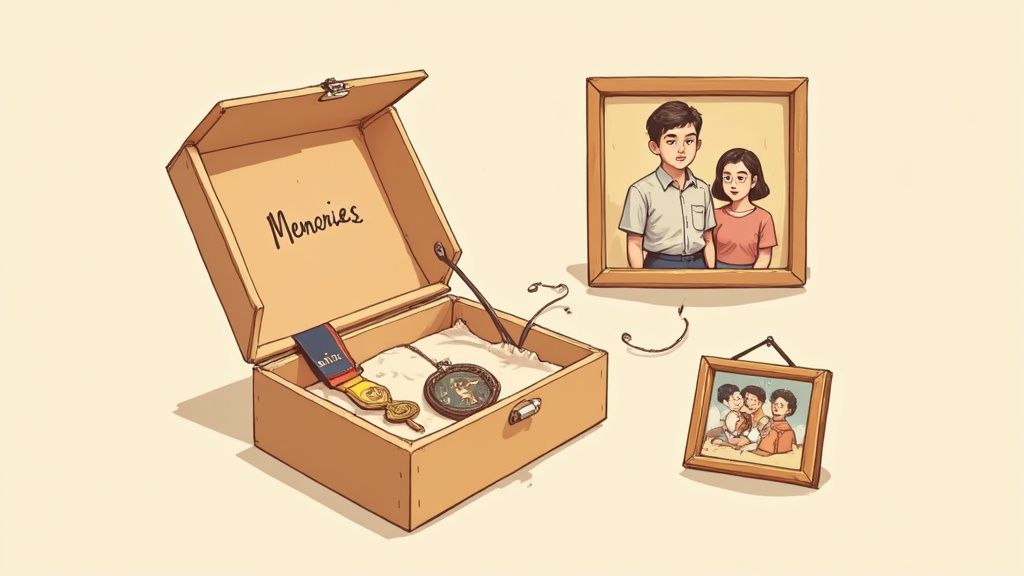
This method transforms a potentially overwhelming pile of keepsakes into an intentional collection. By creating memory boxes, shadow boxes, or digital galleries, seniors can protect and enjoy what matters most. This is one of the most emotionally rewarding downsizing tips for seniors because it focuses on preservation, not just elimination.
Why This Method is Crucial
A preservation system is crucial because it validates the emotional significance of your belongings without requiring you to keep everything. For example, a veteran can create a powerful shadow box with their military medals, insignia, and a few key photos instead of keeping an entire trunk of old uniforms. Similarly, a couple can compile a single memory box from their travels with postcards, ticket stubs, and select souvenirs, capturing the spirit of their adventures in a compact space.
The goal is to distill the essence of a memory into a tangible, curated collection that can be easily stored, displayed, and shared with future generations.
Actionable Tips for Implementation
To build your own memory preservation system, follow these practical steps:
- Create Themed Memory Boxes: Dedicate a specific, manageable-sized box for major life themes such as “Career,” “Children’s Early Years,” or “Hobbies.” Limit yourself to 2-3 boxes per major category to encourage selective curation.
- Use Shadow Boxes for Display: Display three-dimensional items like jewelry, medals, or small heirlooms in shadow boxes. Include small, typed labels to explain the significance of each item. Rotate these displays seasonally to enjoy different memories throughout the year.
- Go Digital with Photos and Stories: Scan old photographs to create digital albums and slideshows that can be easily shared with family. You can even use modern tools to help; for instance, you can learn more about AI home memory assistants that assist in cataloging and sharing memories.
- Document the Narrative: For each item you keep, write down its story or record a short video explaining its importance. This context adds immense value and ensures the memories tied to the object are not lost over time.
- Photograph Before Letting Go: For bulky items you cannot keep (like a piece of furniture or a large collection), take high-quality photographs. You can compile these into a photo book, preserving the memory without the physical object.
8-Point Comparison: Downsizing Tips for Seniors
| Item | 🔄 Implementation Complexity | ⚡ Resource Requirements | 📊 Expected Outcomes | 💡 Ideal Use Cases | ⭐ Key Advantages |
|---|---|---|---|---|---|
| Start Early and Plan Strategically | Moderate to high, requiring a multi-phase timeline and coordination | High time investment; low direct cost; planning tools | Smoother transition; reduced stress; fewer rushed decisions | Long-term moves; seniors with large inventories | High ⭐ better decisions, emotional processing, gifting opportunities |
| Use the Four-Box Method for Sorting | Low, since it's a straightforward 4-category process | Boxes/labels, physical space and energy | Clear progress; faster decisions; items ready to donate/sell | Room-by-room decluttering; when decision paralysis occurs | Easy ⭐ reduces indecision; adaptable; supports selling/donating |
| Digitize Important Documents and Photos | Moderate, with a scanning, organizing, and backup workflow | Scanner/apps, cloud storage, time or service fees | Large reduction in physical storage; searchable, shareable archives | Preserving photos, medical/legal documents; long-term access | High ⭐ space-saving, disaster protection, easy sharing |
| Sell Items Through Multiple Channels | High, because of listing, negotiations, and shipping/coordination | Time, photography/packaging, online skills, possible fees | Income generation; longer timeline; increased reuse of items | Valuable furniture/antiques; funding moving costs | Medium ⭐ monetizes items; environmental benefits; flexible channels |
| Measure Your New Space Before Moving | Low to moderate, with measuring and comparison tasks | Tape measure/apps, photos, possible site visits | Prevents fit issues; informed keep/discard choices; less post-move frustration | Moving to apartments or assisted-living with size constraints | High ⭐ avoids costly mistakes; saves time and money after move |
| Involve Family Members in Decision-Making | Moderate, involving scheduling and managing differing opinions | Time for meetings/calls; documentation; travel if needed | Shared workload; heirlooms allocated; stronger family communication | Heirloom distribution; multi-generational downsizing | High ⭐ reduces emotional burden; preserves items with family |
| Donate Items to Meaningful Causes | Low, due to donation logistics and documentation | Transport or pickup scheduling; donation receipts for taxes | Charitable impact; less clutter; possible tax deduction (no income) | Items in good condition; desire to support causes | Medium ⭐ easy disposition; environmental and philanthropic benefits |
| Create a Memory Preservation System | Moderate, including curation, labeling, and possible digitization | Memory boxes, display materials, photo services/apps | Curated keepsakes; storytelling opportunities; reduced sentimental clutter | Seniors wanting legacy keepsakes; curated displays | High ⭐ preserves meaning while minimizing volume; shareable formats |
Your Organized Future Awaits
The journey of downsizing is far more than just decluttering; it is a profound act of curating your life for a new, more manageable chapter. As we have explored, the process is a blend of practical strategy and emotional reflection. By starting early with a clear plan, you transform what could be an overwhelming task into a series of achievable milestones. You are not simply getting rid of things, you are making intentional choices about what to carry forward into a future defined by freedom, not by excess belongings.
Mastering these downsizing tips for seniors is about taking control of your environment and, by extension, your peace of mind. The transition from a larger home filled with a lifetime of accumulations to a more streamlined space is a significant accomplishment. It’s an opportunity to honor your past by preserving precious memories through digitization and thoughtful keepsakes, while simultaneously embracing a simpler, more organized future.
Key Takeaways for a Successful Transition
Reflecting on the strategies covered, several core principles stand out as essential for a smooth downsizing experience. Remember these key takeaways as you move forward:
- Patience and Planning are Paramount: Rushing leads to regret. The most successful downsizing efforts are those that are thoughtfully planned and executed over weeks or months, not days. A detailed timeline removes the pressure of last-minute decisions.
- Emotional Acknowledgment is Crucial: It is perfectly normal to feel a mix of emotions, from sadness and nostalgia to excitement and relief. Acknowledging these feelings and communicating them with family or friends is a vital part of the process.
- Action Overwhelms Anxiety: The feeling of being stuck is best overcome by taking small, consistent actions. Using a system like the Four-Box Method (Keep, Donate, Sell, Discard) for just 15 minutes a day can build incredible momentum.
- Focus on the Future, Not Just the Past: While it is important to honor memories, the primary goal is to create a new home that is safe, comfortable, and easy to navigate. Measuring your new space and planning layouts is a forward-looking activity that builds excitement for what is to come.
The True Value of a Streamlined Life
Ultimately, the most significant benefit of downsizing is not the tidy closet or the organized bookshelf; it is the liberation that comes with it. A simplified living space reduces the burdens of cleaning, maintenance, and a phenomenon known as "decision fatigue". When you are surrounded only by items that are useful, beautiful, or deeply meaningful, your home becomes a true sanctuary. This newfound simplicity frees up your time, energy, and mental space for hobbies, relationships, and new experiences.
By implementing these downsizing tips for seniors, you are giving yourself an invaluable gift. You are designing a lifestyle that prioritizes well-being and joy over the obligation of ownership. This is not an ending but a carefully crafted new beginning, one where you are in complete control of your surroundings. Embrace this transition with the confidence that you have the knowledge and tools to create a comfortable, organized, and truly wonderful next chapter.
Ready to take your newfound organization to the next level? Discover how Vorby can help you keep track of every cherished item you choose to keep, using simple QR codes and a powerful home inventory app. Visit Vorby to learn how you can instantly find anything in your new space and maintain perfect order with ease.