Storage containers are the unsung heroes of a decluttered home, but without a smart system, they can quickly become black holes of forgotten items. This guide moves beyond generic advice to provide a curated collection of actionable storage container organization ideas designed for modern households. We will explore practical, room-by-room strategies that transform chaotic bins into a streamlined, searchable, and highly efficient system. You will discover how to implement everything from vertical stacking and modular systems to sophisticated inventory management with scannable tags.
Each idea is broken down into specific, actionable steps, complete with recommended materials and real-world examples. Whether you are a busy parent managing household supplies, a collector tracking valuable items, or a homeowner looking to finally conquer the garage, these methods offer a clear path to lasting order. Before diving into these container-specific techniques, it can be helpful to understand broader organizational principles. For foundational knowledge on tackling larger spaces, consider this comprehensive guide on how to organize your storage unit.
Our goal is to help you not just store your belongings, but to create an accessible and intelligent inventory you can actually use. Get ready to turn your storage chaos into a model of efficiency.
1. Vertical Stacking and Wall-Mounted Storage
One of the most effective storage container organization ideas involves looking up, not out. Vertical stacking and wall-mounted systems transform unused wall space and vertical height into highly efficient storage real estate. This approach is ideal for maximizing capacity in smaller rooms, garages, basements, or closets where floor space is at a premium. By building your storage upwards, you keep floors clear and make items more accessible.
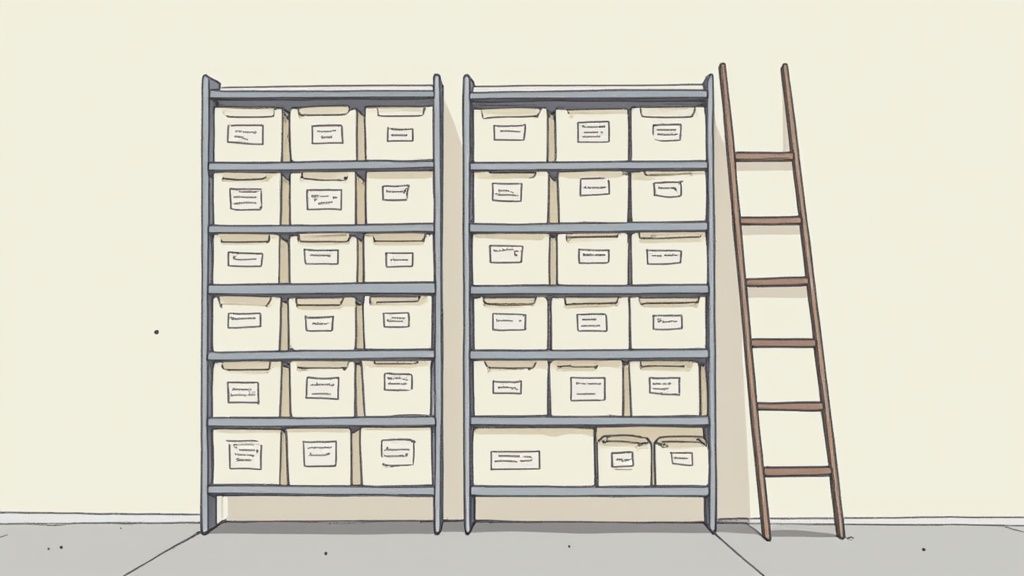
This method relies on modularity and stability, from interlocking stackable bins on a closet shelf to heavy-duty shelving units in a garage. The key is to create a structured system rather than a precarious pile.
Actionable Tips for Vertical Storage
- Anchor for Safety: Always anchor tall shelving units securely to wall studs to prevent tipping, especially in homes with children or pets.
- Zone by Frequency: Place frequently accessed containers at eye level (between your shoulders and knees). Store seasonal or rarely used items on the highest and lowest shelves.
- Standardize Containers: Using uniform container sizes, like those offered by Sterilite or Rubbermaid, ensures stable and neat stacking without wasted space.
- Go Clear: Whenever possible, use clear bins. Seeing contents at a glance saves you from having to unstack multiple containers to find what you need.
This strategy is foundational for any serious organization project because it leverages the most underutilized dimension in any room: its height.
2. Color-Coded Container System
A color-coded container system is one of the most intuitive storage container organization ideas, leveraging visual cues for instant identification. By assigning specific colors to different categories, rooms, or family members, you can quickly locate what you need without reading a single label. This method is exceptionally effective in shared spaces like garages, playrooms, or offices where multiple people need to find and put away items.
The system works by creating immediate mental associations: blue for bathroom supplies, red for holiday decorations, or green for camping gear. This visual shortcut streamlines the entire process of retrieval and return, making it easier for everyone in the household, including children, to maintain order.
Actionable Tips for Color-Coding
- Establish a Legend: Create and post a "color key" or master list near the storage area. This reference chart ensures everyone knows that yellow bins hold sentimental items and orange bins contain craft supplies.
- Be Consistent: Stick to your color assignments. If you run out of one color bin, use colored dot stickers or tape on clear or neutral-colored containers to maintain the system's integrity.
- Assign by Person or Category: In a family setting, assign each person a color for their personal belongings (winter clothes, school projects). Alternatively, assign colors by item category (e.g., electronics, linens, tools).
- Combine with Labels: For ultimate clarity, pair your color system with clear, descriptive labels. This creates a powerful two-factor identification method that is both fast and precise.
This strategy is perfect for those who are visually oriented and need a simple, scalable system that reduces mental clutter and search time.
3. Transparent Container Organization
One of the simplest yet most powerful storage container organization ideas is to choose transparency. Using clear or semi-transparent containers allows you to see the contents at a glance, eliminating the frustrating guesswork of rummaging through opaque boxes. This system merges effortless accessibility with visual order, making it incredibly easy to locate items quickly without disrupting your entire setup.

This "see-through" strategy is perfect for frequently used items in pantries, craft rooms, and playrooms. Brands like OXO Good Grips and Rubbermaid Brilliance have popularized this approach for everything from dry goods to art supplies, proving that visibility is a key component of sustainable organization.
Actionable Tips for Transparent Storage
- Label Anyway: Even with clear containers, labels are crucial. A simple label helps you quickly confirm contents, especially for similar-looking items like different types of flour or craft beads.
- Use Internal Dividers: For smaller, mixed items, use dividers inside a larger clear container. This keeps things like batteries, office supplies, or hardware sorted and visible.
- Protect from Light: If storing light-sensitive items like photographs or certain fabrics, place clear containers inside a dark closet or use a shelf with a curtain to prevent potential UV damage.
- Organize for Aesthetics: Since the contents are visible, take a moment to arrange them neatly inside the container. This creates a clean, uncluttered look on open shelving.
Adopting transparent storage is a fundamental shift toward a more functional system where finding what you need is as easy as looking for it.
4. Modular and Customizable Container Systems
For those whose storage needs are constantly evolving, modular and customizable container systems offer unparalleled flexibility. Unlike fixed shelving or one-size-fits-all bins, these systems are designed to be configured and reconfigured. This adaptability makes them one of the most dynamic storage container organization ideas, perfect for growing families, hobbyists with expanding collections, or anyone living in a space that serves multiple functions.
These solutions, popularized by brands like IKEA and Elfa, allow you to create a tailored storage landscape. You can mix and match shelves, drawers, and specialized inserts to perfectly fit your items and your space, from a custom home office setup to a highly organized closet.
Actionable Tips for Modular Storage
- Measure Meticulously: Before purchasing, measure your space (width, depth, and height) precisely. A well-measured plan prevents costly mistakes and ensures a perfect fit.
- Plan Your Layout: Sketch your ideal configuration on paper or use online planning tools offered by many retailers. This helps you visualize the final result and purchase only the components you need.
- Start Simple and Expand: Begin with a basic setup that meets your immediate needs. You can always add more units or accessories later as your requirements change or your budget allows.
- Invest in Quality: For systems you plan to use long-term, investing in higher-quality materials will pay off in durability and stability, especially if you anticipate reconfiguring them multiple times.
This approach transforms organization from a static setup into an active, adaptable system that grows and changes right alongside your life.
5. Zone-Based Storage Organization
An effective system for storage container organization ideas goes beyond just labeling bins; it involves creating a logical map of your space. Zone-based storage divides a larger area like a garage, basement, or attic into distinct, function-based zones. Each zone is dedicated to a specific category of items, making retrieval and restocking intuitive because everything has a designated home. This method prevents the common problem of having to search through multiple unrelated containers to find a single item.
Think of it as creating a mini-warehouse in your home. For example, a garage might have an automotive zone, a gardening zone, a sports equipment zone, and a seasonal decor zone. This logical grouping simplifies your inventory and makes it easy for anyone in the household to find what they need and put it back correctly.
Actionable Tips for Zone-Based Storage
- Map It Out First: Before moving a single container, sketch a simple floor plan of your storage area. Designate specific sections for each category based on space and accessibility.
- Prioritize Accessibility: Place zones containing frequently used items, like sports gear or basic tools, in the most accessible, easy-to-reach locations. Infrequently used items, such as holiday decorations, can occupy harder-to-reach spots.
- Use Clear Signage: Create large, easy-to-read signs or labels for each zone. This visual cue reinforces the system and eliminates guesswork, especially in large or cluttered spaces.
- Group and Conquer: Keep all containers related to a single category within their designated zone. This prevents category creep and maintains the integrity of your organization system.
This strategy is perfect for managing large, multi-purpose spaces where various types of items must coexist, turning potential chaos into a streamlined, functional system.
6. Label and Inventory Management Systems
Even the most perfectly stacked containers are useless if you can't remember what’s inside them. A systematic labeling and inventory management system is one of the most crucial storage container organization ideas because it creates a searchable, stress-free storage network. This approach transforms a pile of anonymous boxes into a well-documented library of your belongings, preventing forgotten items and making retrieval effortless.
This system can be as simple as a handwritten label or as advanced as a digital inventory with QR codes. The goal is to establish a consistent method that tells you exactly what is stored and where, eliminating guesswork and the need to open multiple bins.
Actionable Tips for Labeling and Inventory
- Choose Your Method: Decide on a consistent labeling format. For durable, easy-to-read labels, a label maker like a Brother P-touch is a great investment. To implement effective categorization and retrieval, consider the best way to label storage bins to find what works for your needs.
- Be Detailed: Go beyond general categories. Instead of "Kitchen," write "Holiday Baking Supplies: Cookie Cutters, Sprinkles." Include expiration dates for pantry items or emergency supplies.
- Create a Digital Twin: Photograph the contents of each container before sealing it and link the image to a digital inventory. For a deeper dive, learn more about how home inventory software can revolutionize your organization.
- Update Relentlessly: A labeling system is only effective if it's accurate. Make it a habit to immediately update a label or your digital inventory whenever you add or remove an item.
This strategy is fundamental for long-term storage, disaster preparedness kits, and any situation where quick, accurate access to your belongings is essential.
7. Rotation and First-In-First-Out (FIFO) System
For items with a shelf life, from pantry staples to emergency supplies, the First-In-First-Out (FIFO) system is a non-negotiable organization strategy. This method ensures that older items are used before newer ones, dramatically reducing waste and preventing the costly mistake of having to discard expired goods. It is a cornerstone of professional inventory management that is easily adapted for home use.
The concept is simple: when you buy a new item, you place it at the back of the shelf or container, pushing the older stock to the front where it will be seen and used first. This transforms your storage from a static holding area into a dynamic, rotating system.
Actionable Tips for a FIFO System
- Designate Front and Back: Physically and mentally designate a "front" (for older items) and "back" (for new items) in your pantry, fridge, or storage bin.
- Mark Expiration Dates: Use a marker to write the purchase or expiration date in large, clear numbers on the packaging or container lid. This makes it easy to spot the oldest items.
- Schedule Regular Checks: Set a recurring calendar reminder (monthly or quarterly) to quickly review your stock, pull forward older items, and check for anything nearing its expiration date.
- Use Dispensing Racks: For canned goods, consider a gravity-fed can dispenser rack. It automatically cycles the oldest cans to the front when you add new ones to the top.
This storage container organization idea is essential for managing food, medicine, and cosmetics, ensuring everything you own is safe, fresh, and ready for use. For a deeper dive into managing time-sensitive items, you can explore more about seasonal storage rotation.
8. Drawer Divider and Compartmentalization Systems
While large containers are great for bulk storage, the secret to organizing smaller items lies within. Drawer dividers and compartmentalization systems create dedicated homes for individual objects inside larger containers or drawers. This granular approach is one of the most effective storage container organization ideas for preventing a jumbled mess, keeping related items grouped, and making everything instantly findable. It turns chaotic junk drawers, toolboxes, or office supply bins into models of efficiency.
This method moves beyond simply putting things in a box; it focuses on creating a specific place for everything within the box. Products like OXO Good Grips drawer solutions and adjustable dividers from The Container Store offer incredible flexibility for customizing any space.
Actionable Tips for Compartmentalization
- Measure First: Before buying any dividers or trays, measure the interior dimensions (length, width, and height) of your drawer or container to ensure a perfect fit.
- Choose Adjustable Dividers: Opt for adjustable or interlocking dividers to create custom-sized compartments that can adapt as your storage needs change over time.
- Group Logically: Store similar items together. For example, group all your batteries, all your writing utensils, or all your small hardware in their own dedicated sections.
- Use Clear Organizers: Clear acrylic or plastic trays maintain visibility, so you can see all the contents of a drawer or container at a single glance.
This strategy is perfect for conquering chaos in kitchens, bathrooms, offices, and workshops where small, easily lost items accumulate.
9. Climate-Controlled and Specialized Storage Containers
Not all storage needs are created equal. For your most valuable, sentimental, or sensitive belongings, standard plastic bins may not offer sufficient protection. This is where specialized, climate-aware storage containers come in, providing a purpose-built environment to safeguard items from humidity, pests, light, and temperature fluctuations. This approach moves beyond simple containment to active preservation.
These solutions are essential for preventing irreversible damage like mildew on fabrics, fading of photographs, or corrosion of electronics. From airtight food canisters that keep pantry staples fresh to archival-quality boxes that prevent documents from yellowing, choosing the right container is a critical step in long-term storage container organization ideas.
Actionable Tips for Specialized Storage
- Match the Container to the Contents: Use acid-free archival boxes for photographs and important papers. Store wool sweaters or fine linens in cedar-lined chests to repel moths. Opt for waterproof, airtight bins for basements or garages prone to moisture.
- Add a First Line of Defense: Enhance protection by including desiccant packs inside containers holding electronics or metal items to absorb any ambient moisture.
- Invest for Irreplaceables: For items like wedding dresses, family heirlooms, or important collections, investing in museum-quality, specialized containers is a small price to pay for peace of mind and preservation.
- Conduct Periodic Checks: Even with the best containers, it's wise to inspect sensitive items annually to ensure they remain in pristine condition and to catch any potential issues early.
This strategy is less about tidying up and more about curating and protecting your most cherished possessions for years to come.
10. Under-Bed and Hidden Storage Solutions
Some of the most valuable storage real estate is often the most overlooked: the empty space under your bed, couch, and other low-profile furniture. Utilizing these hidden voids is one of the smartest storage container organization ideas for maximizing capacity without cluttering your living areas. This approach is perfect for apartments, dorm rooms, and any home where square footage is a precious commodity, keeping bulky or seasonal items completely out of sight yet accessible.
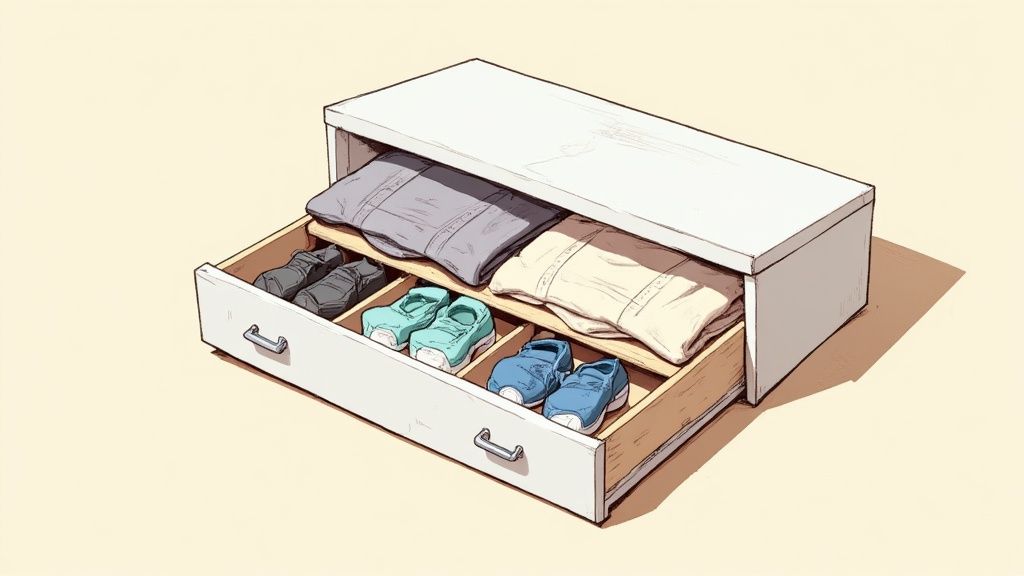
From long, shallow containers for off-season clothing to rolling drawers for gift wrap and extra linens, this method turns dead space into a functional, invisible closet. The key is selecting the right type of container that fits the clearance and protects your belongings from dust and pests. For tips on integrating these solutions seamlessly, you can explore ways to make hidden storage look good on Vorby.com.
Actionable Tips for Hidden Storage
- Measure First: Before buying containers, carefully measure the height, width, and depth of the space underneath your furniture. Account for any support legs or frame obstructions.
- Prioritize Infrequent Items: This space is ideal for things you access only a few times a year, such as holiday decorations, seasonal bedding, or sentimental keepsakes.
- Choose Wheeled Containers: Containers with built-in wheels or casters make it significantly easier to pull them out and push them back, especially on carpeted floors.
- Protect Your Contents: Use containers with secure, tight-fitting lids to keep dust, moisture, and pests out. For delicate textiles, consider adding cedar blocks or lavender sachets.
This strategy is a game-changer for reclaiming space, effectively increasing your home's storage footprint without adding a single piece of bulky furniture.
Quick Comparison: 10 Storage Container Organization Ideas
| Approach | 🔄 Implementation Complexity | 💡 Resource Requirements | 📊 Expected Outcomes | ⚡ Ideal Use Cases | ⭐ Key Advantages |
|---|---|---|---|---|---|
| Vertical Stacking and Wall-Mounted Storage | Moderate-High: requires measuring, anchoring and installation time | Shelving, stud anchors, uniform stackable bins, ladder; moderate cost | High floor-space savings; improved visual inventory; clutter reduction | Small garages, closets, retail walls, high-ceiling areas | Maximizes vertical space; safer (off floor); clear inventory visibility |
| Color-Coded Container System | Low: simple to adopt but needs initial planning | Colored bins or labels; low-moderate cost | Faster identification; reduced search time; consistent categorization | Multi-person households, schools, retail departments | Intuitive visual sorting; easy for children and multi-user spaces |
| Transparent Container Organization | Low: minimal setup, mostly purchase choice | Clear containers (plastic/glass); moderate cost; occasional protective materials | Immediate visual inventory; fewer duplicate purchases; easy monitoring | Kitchens, craft rooms, medical storage, pantries | Quick content recognition; clean aesthetic; inventory awareness |
| Modular and Customizable Container Systems | Moderate-High: planning, assembly and design time | Modular units, dividers, accessories; higher upfront cost | Highly adaptable layout; long-term scalability; professional look | Growing storage needs, home offices, custom closets | Reconfigurable; expands with needs; reduces future repurchases |
| Zone-Based Storage Organization | Moderate: requires mapping and regular review | Labels/signage, varied containers; low-moderate cost | Intuitive retrieval; reduced search time; easier maintenance | Garages, kitchens, basements, craft rooms | Logical grouping by use/frequency; simplifies upkeep |
| Label and Inventory Management Systems | Moderate: time-consuming initial setup; ongoing maintenance | Label makers, apps/spreadsheets, barcode/QR tools; variable cost | Accurate location tracking; prevents duplicates; remote checks | Businesses, emergency kits, shared household systems | Accountability and searchability; reduces lost/forgotten items |
| Rotation and First-In-First-Out (FIFO) System | Low-Moderate: requires discipline and routine checks | Date labels, accessible placement, simple tracking tools; low cost | Minimizes spoilage/waste; ensures fresher stock; cost savings | Food service, pantries, medical supplies, emergency kits | Reduces waste; improves safety and stock freshness |
| Drawer Divider and Compartmentalization Systems | Low: straightforward but needs measurement | Adjustable dividers, trays, inserts; low-moderate cost | Maximizes internal space; prevents item shifting; better small-item visibility | Drawers for tools, jewelry, office supplies, kitchen junk drawers | Granular organization; keeps small items accessible and stable |
| Climate-Controlled and Specialized Storage Containers | Moderate: select appropriate type and placement | Specialized boxes, desiccants, climate control; high cost | Preserved condition of sensitive items; extended lifespan; pest/UV protection | Archives, museums, electronics, long-term storage | Superior protection for valuables; prevents mold/rust/pest damage |
| Under-Bed and Hidden Storage Solutions | Low: easy placement; minimal setup | Low-profile rolling bins or drawers; low cost | Utilizes wasted space; out-of-sight storage; good for seasonal items | Small bedrooms, apartments, dorms, rarely accessed seasonal storage | Maximizes hidden space; reduces visible clutter; good for infrequent access |
Final Thoughts
The journey to an organized home is not about finding a single, magic solution; it's about building a sustainable system tailored to your life. The storage container organization ideas explored in this guide offer a comprehensive toolkit, moving beyond simple tidiness to create functional, efficient, and stress-free living spaces. By strategically combining these methods, you transform passive storage into an active, intelligent part of your home management routine.
From Chaos to Cohesion: Your Key Takeaways
We've covered a wide range of strategies, from foundational principles to advanced techniques. Remember these core concepts as you begin your organizational overhaul:
- Visibility and Accessibility are Paramount: The most effective systems, whether using transparent bins or detailed labels, ensure you can find what you need without a frustrating search. The goal is to make your belongings as easy to locate as they are to store.
- Systems Trump Sheer Effort: A well-designed system, like color-coding for different family members or zone-based storage for specific activities, does the heavy lifting for you. It establishes intuitive rules that make maintaining order a natural habit rather than a constant chore.
- Customization is Crucial: Your home and your life are unique. The true power of modular systems, drawer dividers, and smart labeling lies in their adaptability. Don’t be afraid to experiment and adjust these storage container organization ideas to perfectly match your inventory and your space.
Putting Your Plan into Action
Mastering these concepts is more than just an exercise in decluttering; it is an investment in your time and peace of mind. A well-organized home reduces daily friction, saves money by preventing duplicate purchases, and protects your valuable possessions. The immediate next step is to choose one small, manageable area, perhaps a single closet or a set of garage shelves, and apply one or two of the techniques we've discussed.
Start by assessing what you have. Do you need the instant visual access of clear containers? Would a robust labeling system save you from opening ten identical bins? By tackling one project, you build momentum and gain the confidence to implement these ideas throughout your home. The ultimate benefit is creating a space that truly supports your lifestyle, where everything has a logical place and is always within reach. This systematic approach is the definitive path to lasting order.
Ready to elevate your storage container organization ideas to the next level? Vorby transforms your physical containers into a searchable digital database with smart QR/NFC tags, allowing you to find anything in seconds using your phone. Visit Vorby to see how you can create a complete, shareable, and stress-free home inventory today.