Feeling overwhelmed by clutter? A well-designed organization method isn't just about tidiness; it's about reclaiming your time and peace of mind. Knowing exactly where to find your passport, that important warranty, or your favorite holiday decorations can transform your daily life from chaotic to calm. The frustration of searching for a misplaced item is a universal experience, but the solution is deeply personal. A one-size-fits-all approach to organization rarely works because your needs are unique.
The key is finding a system that matches your specific lifestyle, whether you're a busy parent juggling school forms, a passionate collector cataloging valuable items, or a digital nomad managing belongings across locations. This guide moves beyond generic advice to present eight distinct, actionable home filing system ideas. We will explore a comprehensive range of methods, from advanced digital inventories powered by AI to simple, effective physical filing techniques that have stood the test of time.
You will learn how to implement systems tailored to different needs, such as:
- Zone-Based Organization for room-specific clarity.
- Warranty and Maintenance Tracking to manage household assets.
- Collector-Specific Cataloging for specialized hobbies.
- Shared Household Inventories for seamless cohabitation.
Each idea is broken down with step-by-step instructions, essential supplies, and real-world examples to help you build a robust system that finally sticks. Get ready to stop searching and start living more efficiently.
1. Digital Inventory Management with Photo Documentation
Moving beyond traditional paper files, this home filing system idea uses digital photos as the core of your organizational method. Instead of just listing what you own, you create a visual catalog. Each item is photographed, and the image is stored alongside critical metadata, such as purchase dates, serial numbers, warranty information, and its physical location in your home. This approach transforms a simple list into a dynamic, searchable, and highly practical database of your belongings.
This method is particularly powerful for insurance purposes. In the unfortunate event of theft, fire, or damage, a photographic record provides indisputable proof of ownership and condition, streamlining the claims process. It's also invaluable for managing high-value collections, tracking electronics, and keeping tabs on home appliances.
Who Benefits from This System?
This system is ideal for:
- Homeowners and Renters: Creating a comprehensive inventory for insurance claims is a primary benefit.
- Collectors: Documenting the condition, provenance, and value of items like art, antiques, or rare books becomes simple and verifiable.
- Families: Tracking valuable electronics, furniture, and appliances across multiple rooms helps manage warranties and plan for replacements.
Implementation and Best Practices
To get started, choose a platform that suits your needs. You can create a custom database with a tool like Airtable or use dedicated apps like Vorby, which leverages AI to recognize items from photos and automatically categorize them.
Follow these tips for an effective visual inventory:
- Use Consistent Lighting: Photograph items in a well-lit area against a neutral background. This improves clarity and helps AI recognition tools work more accurately.
- Include a Scale Reference: For smaller items, place a common object like a ruler or a coin in the photo to provide a sense of scale.
- Capture Key Details: Take close-up shots of serial numbers, model numbers, and any unique identifying marks or existing damage.
- Tag Diligently: Use descriptive tags for both the item's category (e.g., "Kitchen Appliance") and its location ("Garage Shelf B"). This makes searching for items later much faster.
For a deeper dive into digital solutions, consider exploring dedicated guides on using efficient home inventory management software. These tools can significantly simplify the process of creating and maintaining a detailed inventory. For more specific applications, such as managing assets for estate planning, you can learn more about AI-powered estate inventory systems.
2. Zone-Based Organization with Location Mapping
This spatial home filing system idea prioritizes the physical location of items over complex categorical labels. Instead of filing items by "type" (like electronics or documents), you catalog them based on where they live in your home. The system divides your living space into distinct zones (e.g., kitchen, garage, master closet) and sub-zones (pantry shelf, drawer #3, under-bed storage bin). Each location is given a unique identifier, creating a mental or digital map that makes retrieval incredibly intuitive.

The core principle is simple: to find something, you just need to know its zone. This approach eliminates the guesswork of trying to remember which category you assigned an item to months or years ago. Modern implementations enhance this system with QR codes or NFC tags placed on boxes, shelves, and containers, allowing you to scan a location and instantly see a digital list of its contents.
Who Benefits from This System?
This system is ideal for:
- Families and Roommates: It simplifies finding shared items in common spaces and prevents things from getting lost when multiple people are putting items away.
- Frequent Movers: A zone-based system (e.g., 'Kitchen - Box 4') makes unpacking and setting up a new home significantly more efficient.
- Individuals with Large or Complex Storage: Anyone with extensive storage in a garage, attic, or basement can quickly locate specific tools, seasonal decor, or supplies.
Implementation and Best Practices
Begin by creating a clear map of your home, either on paper or using a digital tool. Assign a logical code to each room and major storage area. For example, 'GRG-S1-B3' could stand for Garage, Shelf 1, Box 3. Digital tools like Vorby excel at this, allowing you to link physical QR/NFC tags directly to your digital inventory.
Follow these tips for an effective zone-based system:
- Use a Consistent Naming Convention: Stick to a clear and logical hierarchy for your zones and sub-zones to avoid confusion.
- Make Labels Visible: Place labels or QR codes on the outside of containers at eye level for easy identification and scanning.
- Create a Master Reference Guide: Keep a central document or digital map that outlines all your zone codes and their corresponding physical locations.
- Update Immediately: When you move an item, update its location in your system right away. This discipline is crucial for maintaining the system's accuracy.
To fully leverage this method, you can explore digital platforms that specialize in spatial organization. For a detailed guide on creating a visual and searchable map of your belongings, you can find more information about a room-by-room inventory system. These tools are designed to make location-based tracking seamless and highly effective.
3. Category-Based Classification System
This traditional organizational approach groups items by their type or function, such as kitchen, tools, or electronics, rather than by their physical location. Items are cataloged within broad categories and further refined into subcategories, allowing you to quickly see everything you own of a particular type. This system is perfect for those who think in terms of ‘what I have’ instead of ‘where it is,’ transforming a simple inventory into a structured, relational database.
The strength of this home filing system idea lies in its intuitive logic. When you need to find a specific power tool, you can simply look under the "Tools" category instead of trying to remember if it's in the garage, the basement, or a shed. This method simplifies tracking collections, managing warranties for similar appliances, and creating comprehensive lists for insurance or estate planning purposes.
Who Benefits from This System?
This system is ideal for:
- Collectors: Perfect for organizing items by type (e.g., vintage toys, sports cards, rare books) to track acquisitions and value.
- DIY Enthusiasts: Efficiently manages tools, supplies, and project materials by grouping them by purpose (e.g., "Plumbing," "Electrical," "Gardening").
- Families: Simplifies tracking all electronics or all kitchen appliances together, making it easy to compare warranties and plan upgrades.
Implementation and Best Practices
To begin, you can use a spreadsheet, a dedicated database tool like Airtable, or an inventory app that supports robust tagging and categories. The key is to establish a clear hierarchy before you start adding items.
Follow these tips for an effective category-based system:
- Establish a Master List: Before you begin, create a master list of your main categories (e.g., "Electronics," "Furniture," "Documents") to ensure consistency.
- Limit Hierarchy Depth: Keep your category structure to two or three levels deep (e.g., Electronics > Audio > Headphones) to prevent it from becoming overly complex and difficult to navigate.
- Use Consistent Naming: Adopt a standard naming convention for all categories and subcategories to make searching and filtering predictable.
- Allow Multi-Tagging: For items that fit into multiple groups, use a system that allows for more than one category tag. A camping lantern could be tagged under both "Camping Gear" and "Emergency Supplies."
4. Receipt and Purchase-Based Filing System
This home filing system idea centers on purchase information, using receipts as the foundational document for organizing your belongings. Instead of cataloging items by category or location first, this method builds your inventory from its origin: the point of sale. Each item is logged through its digital or physical receipt, creating a detailed record organized by purchase date, vendor, or even price point. This approach automatically links your physical assets to crucial financial and warranty data.
The system is exceptionally effective for managing warranties, processing returns, and financial planning. By capturing purchase details at the source, you create a verifiable history that includes price, date, model number, and warranty period. This turns every receipt into a powerful data point for managing your household assets and budget.
Who Benefits from This System?
This system is ideal for:
- Families: Tracking appliance warranties, support expiration dates, and the purchase history of children's electronics is streamlined.
- Tech-Savvy Homeowners: Those who leverage receipt-parsing apps for all household purchases can build a comprehensive and automated inventory.
- Budget-Conscious Households: Easily track spending on seasonal items, home improvement projects, and other major expenses for better financial forecasting.
- Anyone Managing Returns: Quickly locate proof of purchase for items that need to be returned or exchanged within a specific window.
Implementation and Best Practices
To begin, you can use dedicated apps that automatically parse email receipts, like Vorby, or manually scan physical receipts into a digital system. Many modern budgeting platforms also offer features for tracking purchases that can be adapted for this purpose.
Follow these tips for an effective receipt-based system:
- Centralize Digital Receipts: Set up a dedicated email address or filter to automatically forward all online purchase receipts to your chosen platform.
- Scan Physical Receipts Immediately: Photograph paper receipts at the point of sale with your smartphone to create a digital backup before they can be lost or fade.
- Set Warranty Alerts: Use your system to create notifications for items approaching their warranty expiration date, ensuring you can address issues before it's too late.
- Link to Physical Locations: Connect each receipt entry to the physical location of the item in your home (e.g., "Living Room TV") to bridge the gap between financial record and physical inventory.
- Cross-Reference for Insurance: Regularly compare the purchase prices on your receipts with the current market value of your items to ensure your insurance coverage is adequate.
To optimize this system and minimize physical clutter, consider exploring effective receipt organization strategies to maintain a tidy and accessible record. For those looking to digitize this process, learn more about the best receipt scanning apps that can automate data entry and organization.
5. Container and Box Numbering System
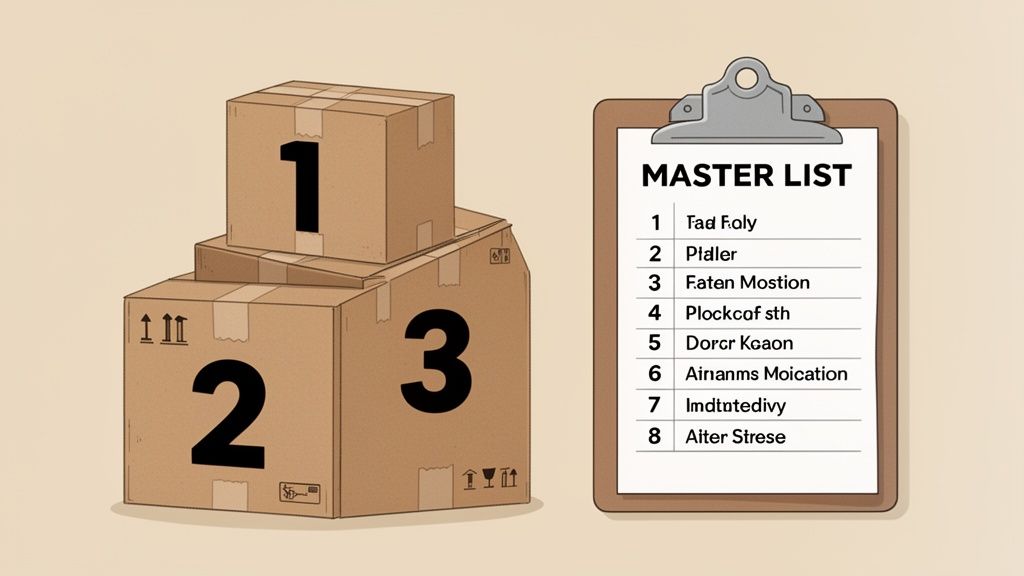
The container and box numbering system is a minimalist yet highly effective physical filing method. Instead of labeling containers with detailed content lists that quickly become outdated, this approach assigns a unique, sequential number to each storage box, bin, or container. A corresponding master inventory list, either digital or physical, tracks the specific contents of each numbered container. This decouples the physical container from its contents, allowing for flexible and dynamic organization.
This system is particularly brilliant for long-term storage, seasonal items, and major life events like moving or downsizing. It simplifies finding items stored in attics, basements, or garages without having to open every box. The master list becomes the single source of truth, providing a detailed, searchable catalog of everything you have stored away.
Who Benefits from This System?
This is one of the most versatile home filing system ideas, perfect for:
- Frequent Movers and College Students: Moving companies have used this system for decades because it ensures every box is accounted for and its contents are known without complex labels.
- Homeowners with Seasonal Storage: Easily track and locate holiday decorations, seasonal clothing, and patio furniture by consulting the master list instead of rummaging through identical bins.
- Families Managing Long-Term Storage: Ideal for archiving children's artwork, sentimental items, and important documents that are not needed frequently.
- Individuals Downsizing or Managing an Estate: Provides a clear, organized inventory of belongings for liquidation, distribution, or storage.
Implementation and Best Practices
To start, you need containers, permanent markers or labels, and a way to create your master list (a notebook, spreadsheet, or a dedicated app). A tool like Vorby can serve as your digital master list, allowing you to link photos of the contents to each box number for a visual reference.
Follow these tips for an efficient container numbering system:
- Use Durable, Visible Labels: Write numbers on multiple sides of each container using waterproof markers or adhesive labels. This ensures you can identify the box from any angle.
- Create Redundant Master Lists: Keep a physical copy of your inventory list in a safe, accessible place, and maintain a digital backup in the cloud (e.g., Google Sheets, Evernote).
- Photograph Contents: Before sealing each box, take a quick photo of the contents. This visual aid, linked to the box number in your digital list, can be incredibly helpful.
- Update Immediately: The system's integrity depends on the master list's accuracy. Make it a rule to update the list immediately anytime you add or remove an item from a numbered container.
- Color-Code for Priority: Use colored tape or stickers alongside the number to signify priority levels, room destinations, or access frequency (e.g., red for "unpack first" during a move).
6. Shared Household Inventory with Permission Controls
This collaborative home filing system idea is designed for shared living situations where multiple people need access to common household items, yet require different levels of control. The system allows an administrator to set access controls, assign items to specific users, track who has borrowed what, and generate reports on shared resource usage. It transforms a simple list into an interactive management tool for collective property.
This method is essential for maintaining harmony and accountability in multi-person households like families, roommate arrangements, or co-living spaces. By clearly defining ownership and tracking usage, it minimizes conflicts over shared resources, prevents items from getting lost, and simplifies the management of communal goods, from kitchen supplies to power tools.
Who Benefits from This System?
This system is ideal for:
- Roommates: Organizing and tracking shared items in common areas like the kitchen, living room, and bathroom to ensure everyone contributes fairly.
- Families: Managing shared tools, sports equipment, and high-value electronics, especially when tracking which child has a particular item.
- Co-living Communities: Maintaining a comprehensive inventory of shared resources in large collective households, from furniture to garden equipment.
- Shared Workspaces: Keeping tabs on office supplies, tech gear, and communal tools used by multiple colleagues or members.
Implementation and Best Practices
To implement this system, select a platform that supports multiple users and permission settings. Apps like Vorby are built for this, offering shared inventory features with unlimited user accounts and granular permission controls. Alternatively, you could use project management tools like Trello or a collaborative Google Sheet, though these may require more manual setup.
Follow these tips for an effective shared inventory:
- Establish Clear Roles: Before starting, define permission levels like "Admin," "Editor," and "Viewer." The Admin can add users and items, while a Viewer can only see the inventory.
- Assign an Inventory Manager: Designate one person or rotate the responsibility of keeping the inventory updated. This ensures accountability.
- Create a Simple Onboarding Process: When a new person joins the household, walk them through how to use the system to find, borrow, and return items.
- Use Communication Features: Leverage features like item requests or comments to improve communication. For instance, a user can request to borrow a tool, and the owner can approve it within the app.
- Set Automated Reminders: For frequently misplaced or high-value items, set up reminders to prompt users to return them to their designated spot after use.
7. Warranty and Maintenance Tracking Filing System
This specialized home filing system idea prioritizes the lifecycle of your belongings, organizing them by warranty status, maintenance schedules, and support information. Instead of grouping items by room or general category, this method indexes them by warranty expiration dates, manufacturer support status, and required upkeep. It creates a centralized hub for product manuals, warranty cards, service histories, and purchase receipts, ensuring you can manage household equipment efficiently.
This approach is invaluable for maximizing the value and lifespan of your investments. It helps you avoid paying for repairs covered under warranty, stay on top of preventative maintenance to prevent costly breakdowns, and maintain a complete service history. For homeowners, this detailed recordkeeping can even increase a property's value by demonstrating meticulous care of major systems.
Who Benefits from This System?
This system is ideal for:
- Homeowners: Tracking warranties and maintenance for appliances, HVAC systems, and water heaters is crucial for home management.
- Tech Enthusiasts: Managing guarantees and support for a collection of electronics and gadgets becomes streamlined.
- Families: Keeping a detailed service history for major systems provides peace of mind and simplifies repair processes.
- Home Sellers: Presenting complete maintenance records to potential buyers can be a significant selling point.
Implementation and Best Practices
The core of this system is proactive scheduling and diligent documentation. You can use a physical binder with date-based tabs or a digital tool like a spreadsheet, calendar app, or a dedicated home management platform. Apps like Vorby are designed for this, allowing you to store digital copies of manuals and link warranty expiration dates directly to an item's photo inventory.
Follow these tips for an effective warranty and maintenance file:
- Digitize Everything: Immediately scan or photograph all physical warranty documents, manuals, and receipts. This creates a secure, searchable backup.
- Set Calendar Alerts: Create digital calendar reminders for key dates, such as warranty expirations and scheduled maintenance for your furnace, AC, or water heater.
- Consolidate Contact Info: Keep a list of manufacturer support numbers and authorized service providers with your documents for quick access.
- Track Service History: Log every service call, repair, and part replacement. Note the date, the issue, the technician, and the cost to identify recurring problems.
- Archive Recall Notices: Forward any product recall emails or mailers to a dedicated digital folder for future reference.
8. Collector-Specific Cataloging System
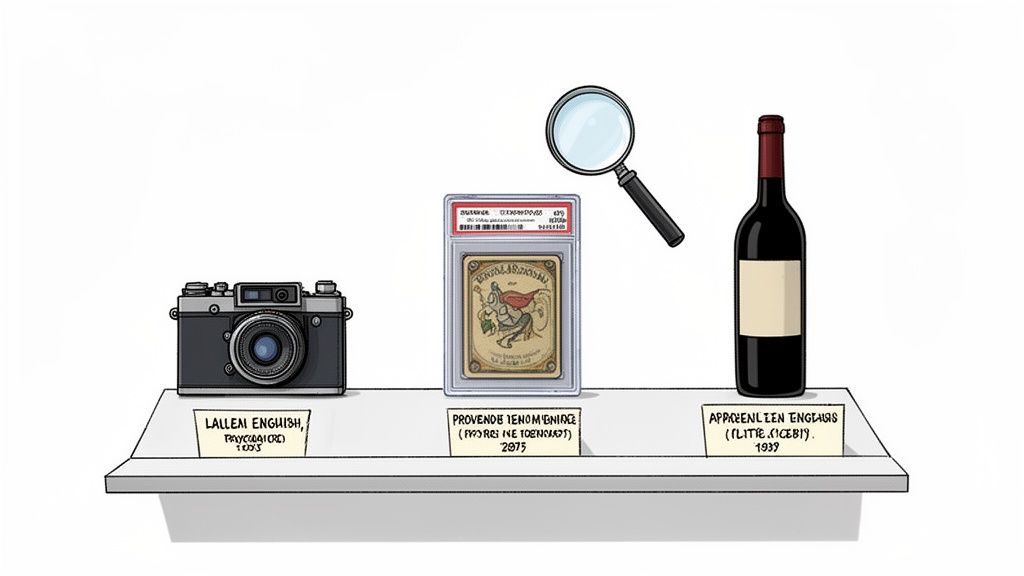
For hobbyists and serious collectors, a standard home filing system often falls short. A Collector-Specific Cataloging System is a specialized approach designed to manage collections with the level of detail they demand. It moves beyond simple lists to capture crucial metadata like provenance, condition grading, valuation, and rarity, providing a comprehensive record of each item's history and significance. This method is essential for curating, insuring, and eventually selling or passing down valuable collections.
This system provides context for each item, turning a simple inventory into a rich database that tracks not just what you own, but its entire story. For collections such as fine wines, antiques, sports memorabilia, or rare books, this detailed documentation is critical. It facilitates informed decisions about acquisitions, helps monitor market value fluctuations, and provides indisputable documentation for insurance and appraisal purposes.
Who Benefits from This System?
This highly detailed approach is perfect for:
- Serious Collectors: Individuals managing high-value collections of sports cards, fine art, antiques, or coins who need to track provenance and condition meticulously.
- Hobbyists: Enthusiasts of vinyl records, rare books, or vintage toys who want to organize their items with specific details like edition, pressing, or production run.
- Investors: Those who treat collectibles as assets and require precise data on acquisition cost, current market value, and condition for financial tracking.
Implementation and Best Practices
The key is choosing a platform built for detailed, customizable data. A tool like Airtable allows for the creation of bespoke databases, while specialized apps like Vorby enable tracking of collector-specific attributes alongside photo documentation. For niche collections, platforms like Discogs (for vinyl) or Vivino (for wine) offer community-driven data and valuation tools.
Follow these tips to build a professional-grade collection catalog:
- Use Standardized Grading: Adopt recognized grading systems relevant to your collection, such as PSA for trading cards or established scales for book and vinyl conditions.
- Document Provenance: Meticulously record the history of ownership for valuable items. This includes purchase receipts, auction records, and any certificates of authenticity.
- Separate Cost and Value: Keep a clear record of the acquisition price and regularly update the current estimated market value as a separate field.
- Take High-Quality Photos: Photograph items under consistent, neutral lighting. Capture close-ups of signatures, edition numbers, and any flaws to create a detailed condition report.
- Create Detailed Notes: Document every aspect of an item's condition, noting any repairs, wear, or unique features that affect its value and authenticity.
Home Filing Systems, an 8-Point Comparison
| System | 🔄 Implementation Complexity | ⚡ Resource Requirements | 📊 Expected Outcomes | ⭐ Key Advantages | 💡 Tips |
|---|---|---|---|---|---|
| Digital Inventory Management with Photo Documentation | Moderate to High, requiring app setup, consistent photo workflows and AI tuning | High, needing smartphones/camera, cloud storage, occasional AI processing | Detailed, visual searchable inventory; insurance- and warranty-ready documentation | ⭐⭐⭐⭐, visual accuracy, automated tagging, strong claims support | 💡 Use consistent lighting/backgrounds; include a scale; update photos after moves |
| Zone-Based Organization with Location Mapping | Moderate, needing to map zones, tag containers, QR/NFC placement | Low to Moderate, using labels, QR/NFC tags, simple mapping app | Fast item retrieval and intuitive location knowledge | ⭐⭐⭐⭐, quick locating, scales for shared homes, reduces search time | 💡 Use consistent naming, place QR codes at eye level, update locations immediately |
| Category-Based Classification System | Low to Moderate, by designing a category hierarchy and tagging rules | Low, using a spreadsheet or simple database; minimal hardware | Clear view of what you own, easier duplicate/overstock detection | ⭐⭐⭐, good for analysis, bulk updates, flexible tagging | 💡 Keep categories 2–3 levels deep; allow multiple tags; audit periodically |
| Receipt and Purchase-Based Filing System | Moderate, needing to set up receipt parsing and secure storage workflows | Moderate, using email capture, OCR/receipt apps, secure archive | Reliable purchase timeline, automated warranty and return tracking | ⭐⭐⭐⭐, automates purchase capture, strong warranty/financial trail | 💡 Forward receipts to a dedicated address, photograph paper receipts, link receipts to items |
| Container and Box Numbering System | Low, by labeling containers and maintaining a master list | Low, with labels, markers, optional photos; minimal tech | Simple box-level tracking ideal for moves and seasonal storage | ⭐⭐⭐, very simple, low-tech, scalable for bulk storage | 💡 Use waterproof labels, photograph contents before sealing, keep digital backup |
| Shared Household Inventory with Permission Controls | Moderate to High, requiring you to define roles, configure multi-user permissions | Moderate, with a multi-user app/accounts, devices, reliable sync | Reduced conflicts, tracked loans, clearer responsibility | ⭐⭐⭐⭐, accountability, controlled access, reduces duplicate purchases | 💡 Establish clear roles, onboard members, assign an inventory manager |
| Warranty and Maintenance Tracking Filing System | Moderate, by collecting documents, entering dates, integrating alerts | Moderate, using scans, calendar integration, secure storage | Timely maintenance and warranty claims; lifecycle visibility | ⭐⭐⭐⭐, prevents missed claims; centralizes manuals and service history | 💡 Scan warranties, set reminder alerts, log service/repair history |
| Collector-Specific Cataloging System | High, by defining specialized attributes, valuation and provenance workflows | High, needing expert knowledge, high-resolution imaging, possible app fees | Precise valuations, provenance records, exhibition/insurance-ready collections | ⭐⭐⭐⭐⭐, comprehensive tracking, supports appraisals and provenance | 💡 Use standard grading systems, professional photos, update valuations regularly |
Choosing Your Perfect System and Taking the First Step
We have explored a comprehensive array of home filing system ideas, from the tactical simplicity of a Container and Box Numbering System to the sophisticated detail of a Collector-Specific Cataloging System. Navigating through these methods, including digital inventory management, zone-based mapping, and warranty tracking, can feel overwhelming. Yet, the core message is one of empowerment: the perfect system is not a rigid, one-size-fits-all solution. Instead, it is a personalized framework that adapts to your life, your belongings, and your unique organizational style.
The true power of an effective home filing system lies in its ability to give you back your most valuable assets: time and peace of mind. No more frantic searches for a misplaced birth certificate, a specific tool, or a warranty card for a malfunctioning appliance. A well-implemented system transforms chaos into order, providing a clear, searchable map of your personal world.
Synthesizing Your Ideal Approach
The most successful organizers often don't choose just one system; they create a hybrid model tailored to their needs. This is where reflection becomes your most powerful tool.
- For the tech-savvy homeowner: A hybrid approach might combine a Digital Inventory Management system for high-value items (for insurance purposes) with a Zone-Based Organization system for everyday household goods. QR codes can link physical zones, like the garage or kitchen pantry, directly to their digital counterparts.
- For the busy family: A Shared Household Inventory is non-negotiable for coordinating shared spaces and items. This can be layered with a Receipt and Purchase-Based Filing System to manage the family budget, track spending, and simplify returns or warranty claims.
- For the dedicated collector: Your primary method will naturally be a Collector-Specific Cataloging System. However, you can integrate a Warranty and Maintenance Tracking system for items that require upkeep, such as vintage electronics or high-end watches, ensuring your prized possessions are well-maintained.
The key is to view these home filing system ideas not as isolated options but as a menu of components. You can pick and choose the elements that solve your most pressing organizational challenges. The goal is to build a system that feels intuitive and sustainable, not one that adds another layer of complexity to your life.
Taking Action: The First Crucial Step
The most significant barrier to organization is often inertia. The prospect of cataloging an entire home can be paralyzing, but the journey starts with a single, manageable step.
Key Insight: Don't try to organize everything at once. Success is built on small, consistent wins. Choose one "pain point" in your home, a single messy drawer, a cluttered closet, or one category of items like your collection of user manuals, and apply a system to it.
Start with a small, high-impact area. For example, gather all your important documents (passports, social security cards, deeds) and create a simple, categorized file box. Or, tackle the "junk drawer" by using a category-based system to sort its contents into smaller containers. Once you experience the immediate relief and control that comes from organizing just one small space, you will build the momentum needed to continue. This initial success serves as powerful motivation, demonstrating the tangible benefits of your efforts and making the larger project feel far less daunting.
Ultimately, mastering your home filing system is about more than just knowing where things are. It’s about creating an environment that supports your lifestyle, reduces stress, and allows you to focus on what truly matters. It’s an investment in your present and future self, paving the way for a more streamlined, efficient, and enjoyable life at home.
Ready to unify your physical and digital worlds? Vorby is the all-in-one tool designed to implement the best home filing system ideas we've discussed, using AI-powered search, QR/NFC mapping, and photo documentation. Start building your smart, searchable home inventory today at Vorby.