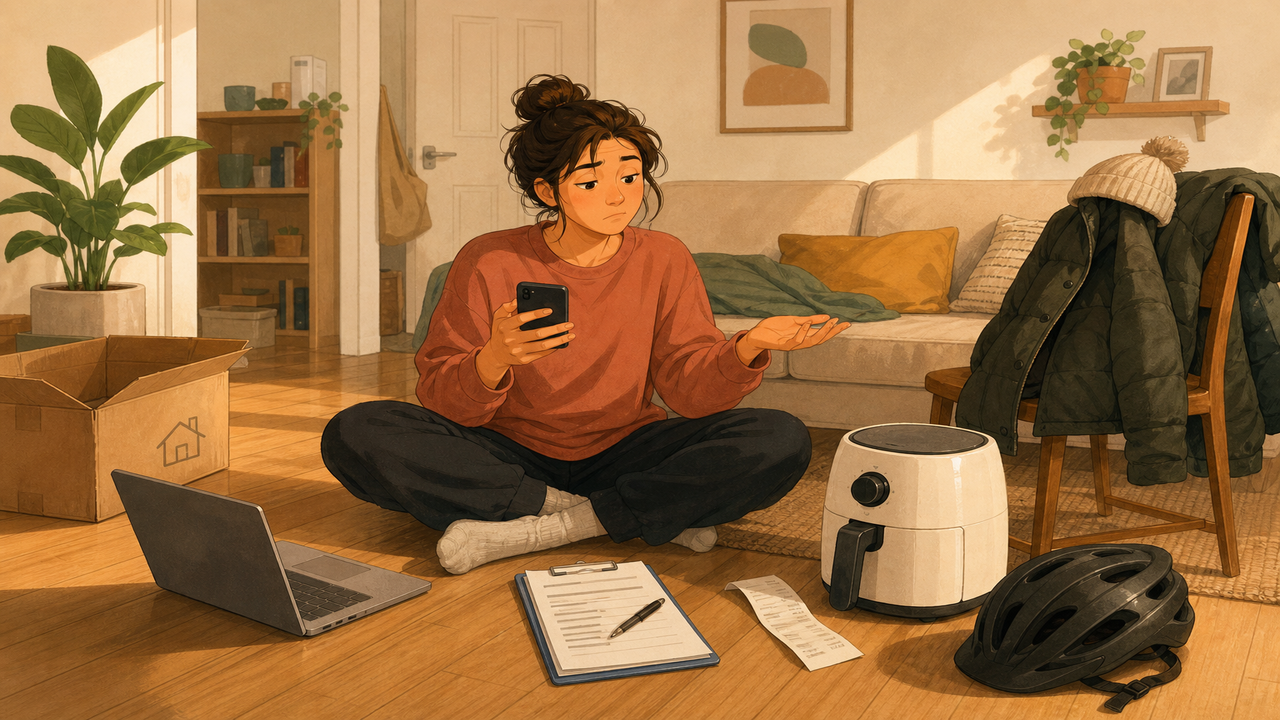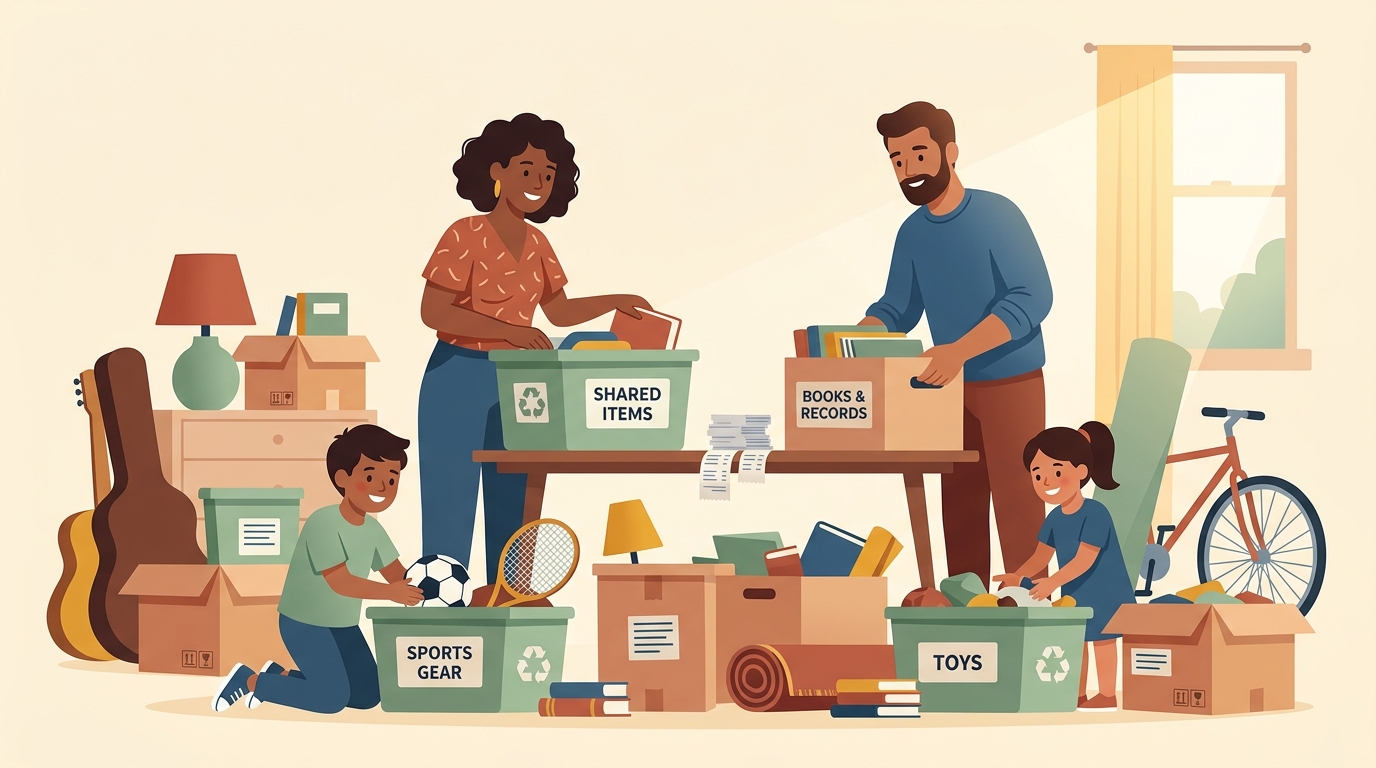
Home inventory blended families need is not just a nicer list of stuff. It is a household agreement, a moving record, an insurance file, and sometimes a custody-friendly way to keep peace when two adults, several kids, and years of separate belongings start living under one roof.
Blended family homes are full of ordinary objects with complicated stories. One couch came from the townhouse. One gaming console belongs to a teenager who is only there every other week. The dining table was bought together. The bicycle in the garage came from a grandparent. The wedding gifts are shared, the work laptop is not, and the box of winter coats might include three households worth of history.
That is why a blended family inventory should do more than say “kitchen” or “garage.” It should clarify ownership, location, condition, receipts, warranties, and shared use without turning the home into a courtroom. The goal is not suspicion. The goal is less confusion when someone moves rooms, a child goes back to the other parent’s house, a claim needs documentation, or a couple needs to decide what is truly shared.
Why blended families need a different kind of home inventory
Most home inventory advice assumes one household, one set of owners, and one history. Blended families rarely work that way. A couple may be merging two complete kitchens, two sets of furniture, several bins of kids’ keepsakes, duplicated tools, and belongings that still matter to people who do not live in the home full time.
The household is shared, but ownership is not always simple
A blended family can have individual belongings, child belongings, inherited items, co-owned purchases, and items bought for shared use. The same shelf might hold a child’s school tablet, a stepparent’s camera, a jointly purchased speaker, and a wedding photo album from a prior marriage. Pretending all of that is simply “ours” can work day to day, until it does not.
Clear inventory labels make ownership less emotional. “Maya’s violin, kept in hall closet, purchased by dad, used at both homes” is a neutral record. So is “sectional sofa, purchased together after move-in, shared household item.” A good record helps the adults avoid guesswork and gives kids confidence that their personal things will not disappear into the general household fog.
Blended families are common enough to deserve systems
Pew Research Center, analyzing U.S. Census Bureau data, reported that 17% of U.S. children under 18 lived in a blended family in 2023, meaning a household with a stepparent, stepsibling, or half sibling. Pew also notes that there is no single typical blended family arrangement. Some children live with a parent and stepparent, others live with half siblings, and some have family members who matter deeply but do not appear in the household count.
That last point matters for inventory. A child can have belongings in two homes. A stepsibling may stay part time. A parent may store bins for a child who is away at college. A home inventory for this kind of family needs to recognize movement, not just rooms.
The record should lower tension, not raise it
The wrong inventory tone can feel accusatory. Nobody wants a newly combined household to begin with a spreadsheet that seems to ask, “Who gets the blender if this fails?” The better framing is practical: what do we own, where is it, who uses it, and what proof would we need if something happened?
Couples can make the record together in short passes. Start with valuables, kids’ important items, and shared purchases. Leave sentimental negotiations for calm moments. The inventory is not the relationship. It is a tool that lets the relationship spend less energy on missing chargers, duplicated purchases, and awkward ownership assumptions.
Start with categories that match real family life
A blended household inventory should follow the way the family actually uses the home. Room-by-room organization is useful, but room names alone are not enough. Vorby’s moving inventory list guide makes the same point for moves: a room name is a tour, not an inventory. Blended families need the object, the owner, the location, and the context.
Individual belongings
Individual belongings are items that clearly belong to one person. That includes clothing, laptops, musical instruments, sports gear, jewelry, collectibles, work equipment, school devices, personal tools, and hobby supplies. These records should name the owner plainly.
For kids, include the practical custody detail when it helps: “travels between homes,” “stays at mom’s house,” “belongs in Quinn’s room,” or “shared with stepsibling only by permission.” That language may sound small, but it prevents everyday conflict. Kids in blended families often worry about territory, fairness, and privacy. A visible record can reinforce that their belongings still count.
Shared household items
Shared items are used by the household and maintained by the household. Furniture bought after the move, kitchen appliances, cleaning equipment, TVs in common spaces, dining sets, patio furniture, and holiday decor often fit here. Marking an item as shared does not remove its history. It just says how the family treats it now.
This is also where receipts and warranties matter. If the couple bought the refrigerator together, attach the receipt. If one spouse brought the washer into the marriage but both adults now rely on it, record both the origin and current use. The record can say “brought by Alex, household use” without turning it into a dispute.
Kids’ rotating and duplicated items
Blended families often duplicate the same category across homes: soccer cleats, school chargers, toothbrushes, jackets, medication bags, backpacks, toys, gaming accessories, and favorite blankets. Some items should travel. Others should stay put. Inventory helps adults decide intentionally.
Create a simple tag for items that rotate between homes. Add a note for anything that should not leave without discussion, especially medical devices, school equipment, expensive sports gear, passports, or legal documents. This is not about policing a child. It is about avoiding the Sunday night panic of a missing Chromebook charger when homework is due.
A blended family inventory is not a list of who owns more. It is a calm record of what belongs where, so the home can feel shared without making personal things feel erased.
What to record for each item
The best inventory fields are boring on purpose. They answer the questions that come up during moves, claims, repairs, handoffs, and household decisions. If a field does not help someone find, prove, repair, replace, or respect an item, skip it.
Ownership and use
Every important item should have an ownership note. Keep it simple: “Alex,” “Jordan,” “Maya,” “shared household,” “belongs to children,” “borrowed from grandparent,” or “owned by other household.” Then add a use note when ownership and use differ.
For example, a piano might belong to one spouse but be used by all kids. A bike might belong to a child but live at the blended household because the other home lacks storage. A set of tools might belong to one adult but be used for shared home projects. These details reduce the kind of small misunderstandings that become big arguments when people are tired.
Location, condition, and photos
Record where the item lives now, not where it theoretically belongs. “Garage shelf, blue bin,” beats “garage.” “Linen closet, top shelf, gray tub,” beats “upstairs.” If the family is actively moving or unpacking, add box numbers and photos of open boxes before taping them. Vorby’s post on what is in that box is especially useful when belongings from two homes land in one garage.
Condition photos matter for insurance, but they also matter for fairness. If one child receives a handed-down bike, a photo and condition note prevent later confusion about damage. If a couple stores heirloom dishes, a photo record helps distinguish existing chips from moving damage.
Receipts, warranties, and serial numbers
The Insurance Information Institute recommends keeping receipts when available and noting cost, purchase date, make, model, and other identifying details. It also advises storing a copy of the inventory away from the home so the record survives a loss. That guidance is especially important for blended families because documentation may be split across old email accounts, former addresses, and both adults’ purchase histories.
Add receipts for expensive shared purchases first: appliances, electronics, furniture, bikes, instruments, jewelry, tools, and computers. For anything with a serial number, photograph the serial plate. For warranties, attach the warranty record to the item, not to a general folder called “warranties.” A general folder is where proof goes to become a scavenger hunt.
How to merge two households without losing the story
Combining households is part logistics, part emotion. The inventory should make both parts easier. You are not just choosing which toaster stays. You are deciding what has utility, what has history, what belongs to a child, what belongs to the new household, and what needs to be sold, donated, stored, or returned.
Take a pre-merge pass before everything is mixed
Before the moving truck or weekend carloads begin, each adult should inventory the items they are bringing from their prior home. Focus on furniture, electronics, appliances, tools, kids’ items, sentimental objects, important documents, and anything stored in a garage, attic, basement, or storage unit.
This pre-merge pass creates a record before objects lose their context. Once two households are mixed, it becomes harder to remember which air fryer came from which kitchen or which bins contain a child’s old school projects. Photos taken in the original home can also help if something is damaged during the move.
Decide what is personal, shared, stored, or leaving
Use four labels during the merge: personal, shared, stored, and leaving. Personal items stay attached to one person. Shared items become part of the household. Stored items matter but do not need daily space. Leaving items are sold, donated, recycled, or given back.
This framework keeps the conversation practical. Instead of debating whether something is “important,” the family decides what role it will play. A child’s old trophies may be stored, not displayed. A former dining table may be sold after the new table arrives. A set of tools may remain personal but live in a shared garage. The categories let the household respect history without letting every object demand prime square footage.
Protect heirlooms and prior-marriage property
Some items carry family meaning that predates the current household. Wedding china from a first marriage, inherited jewelry, childhood furniture, legal documents, photos, keepsakes, and gifts from grandparents should be recorded with extra care. The record should name the item, owner, location, condition, and any intended future recipient if that has already been decided.
This is where tact matters. The inventory should not force estate planning or emotional closure before the family is ready. It simply prevents important objects from being treated like generic household clutter. If an item belongs to a child’s family history, label it that way.
Insurance, receipts, and the claim file nobody wants to build later
Insurance is not the warmest reason to make an inventory, but it is one of the strongest. Fire, theft, water damage, and storage losses do not wait until the household is settled. If anything, blended families are more likely to have valuable belongings in transition, with boxes in garages, storage units, cars, and temporary rooms.
Claims need specifics
The Insurance Information Institute says a home inventory can help people buy the right amount of insurance, settle claims faster, verify losses for tax purposes, and keep track of accumulated belongings. A claim needs item-level detail. “Electronics” is weak. “Nintendo Switch OLED, serial photographed, stored in den cabinet, used by kids” is useful.
Vorby’s renters insurance claim inventory guide explains the same principle for renters: the claim wants objects, not vague household goods. Blended families should apply that standard to both owned and shared spaces, including garages, sheds, storage cages, and kids’ rooms.
Review coverage after the merge
When two households become one, the value of contents can jump quickly. There may be two sets of electronics, more jewelry, more sports gear, more furniture, more tools, and more collectibles than either adult had alone. The inventory helps the family compare the value of belongings against renters or homeowners coverage limits.
Expensive items may need separate coverage or scheduled personal property, especially jewelry, art, instruments, high-end cameras, and specialty collections. The inventory does not replace advice from an insurance agent, but it gives the agent a more accurate picture than a couple trying to estimate from memory at the kitchen table.
Keep proof available to both adults
A blended family inventory should not live only on one person’s laptop. Store it somewhere both adults can access, with appropriate privacy for sensitive documents and children’s records. If one partner is the only person who can find the receipts, the household has a bottleneck.
For items connected to kids who move between homes, be thoughtful. Some records may need to be shared with a co-parent, such as school devices, medical equipment, or sports gear. Other records should remain inside the household. The point is not to overshare. The point is to make sure the right adult can act when something is lost, damaged, or needed quickly.
House rules that make the inventory useful
A home inventory only works if the family can maintain it without turning it into a second job. The rule is simple: update the record when an item enters, leaves, moves, breaks, or changes ownership. That sounds broad, but it becomes manageable when the household agrees on a few triggers.
Use buying and moving triggers
Add new items when they are purchased, especially anything over a family-defined threshold, such as $100 or $250. Attach the receipt right away while it is still easy to find. Add gifts when they are valuable, sentimental, or likely to move between homes.
Update locations during moves, room swaps, and custody schedule changes. If a teenager moves from the small room to the basement room, the monitor, console, desk, and school equipment should move in the inventory too. If bins go from a storage unit to the garage, update the bin location before everyone forgets.
Give kids age-appropriate ownership language
Kids do not need access to every household record, but they do benefit from clear language about their own belongings. A younger child can understand “this stays in your room” and “this travels in your backpack.” A teenager can help photograph their own electronics, instruments, sports gear, and school devices.
That participation matters. It teaches responsibility without making the child feel audited. It also helps adults avoid accidental overreach. A stepparent should not have to guess which objects are deeply personal to a child, and a child should not have to defend every item from scratch.
Schedule a seasonal reset
Blended family homes change quickly. Kids grow, sports seasons switch, bedrooms get rearranged, and duplicate items accumulate. A seasonal reset keeps the inventory current without requiring constant attention.
Pick four natural moments: before school starts, before holidays, after spring sports, and before summer travel. Use those resets to update clothing bins, sports gear, school technology, documents, bikes, luggage, and gifts. A 45-minute reset is enough if the household has been adding major purchases along the way.
Choosing a tool for blended family inventory
The best tool is the one the family will actually use. A spreadsheet can work for a short list. A photo album can work for a fast first pass. A dedicated home inventory app becomes more useful when the household needs search, item-level photos, receipts, rooms, categories, and shared access.
What to look for
- Item-level records: The tool should track objects, not just rooms or photo folders.
- Photos and receipts: You should be able to attach visual proof and purchase records to the item itself.
- Owner and location fields: Blended families need to know whose item it is and where it lives now.
- Search: If someone types “passport,” “cleats,” “Nintendo,” or “warranty,” the record should surface fast.
- Shared access: Both adults should be able to view and update the household record without passing around one device.
- Export or backup: Insurance and moving situations often require a copy outside the app.
Why a photo album is not enough for the long run
A photo album is a good start, especially during a hectic move. It is not a complete system for a blended family because it does not reliably answer ownership, purchase date, warranty, current location, or whether an item is personal or shared. Vorby’s home inventory app vs photo album comparison goes deeper on that difference.
For blended families, the missing context is the whole problem. A picture of a garage shelf may show ten bins. It does not tell you which bin contains a child’s keepsakes, which one belongs to a spouse, which one should go to the other home, and which one can be donated.
How Vorby fits the job
Vorby is built around the idea that a home inventory should be practical in real life. You can record items, rooms, categories, photos, details, and the context that helps a household find things later. For a blended family, that means the inventory can reflect the way the home actually works: individual belongings, shared purchases, kids’ items, boxes, receipts, and rooms that keep changing.
The product-aware way to use Vorby is not to inventory every spoon on day one. Start with high-value items, kids’ rotating gear, shared purchases, documents, sentimental items, and anything in boxes. Then build outward. The system becomes more valuable each time it answers a real household question.
FAQ: home inventory for blended families
What should a blended family put in a home inventory first?
Start with valuables, shared purchases, kids’ rotating items, important documents, electronics, furniture, tools, jewelry, instruments, sports gear, and anything stored in boxes or a garage. Those are the items most likely to create stress if they go missing, break, or need proof for insurance.
How do we label items that one spouse brought but everyone uses?
Use two notes: ownership and use. For example, “owned by Jordan, shared household use” is clearer than forcing the item into either personal or shared.
Should kids have access to the family inventory?
Kids can help with their own belongings, especially electronics, school devices, sports gear, and instruments. Adults should manage the full household record and keep sensitive documents private.
Can a home inventory help with insurance claims?
Yes. Item names, photos, receipts, serial numbers, and locations make it easier to show what existed before a loss. The Insurance Information Institute recommends home inventories for faster claims and better proof of belongings.
How often should blended families update the inventory?
Update major purchases immediately and review the record seasonally. Back-to-school, holidays, spring sports, and summer travel are natural times to refresh kids’ items and shared household gear.
Make the shared home easier to run
Blended families do not need more household mystery. They need a calm record of what is personal, what is shared, what belongs to the kids, and what proof exists when life gets messy.
Vorby gives blended families one place to track the belongings that make a merged home work. Start the record now, while the stories are still easy to remember.