Living in a small apartment doesn't mean you have to feel boxed in. In fact, cracking the code to organizing a small space is a skill that pays you back with a sense of calm and control. It’s not about chasing some impossible minimalist ideal; it’s about creating a functional, stress-free home where everything has a purpose and a place.
This whole idea of making a small space work isn’t just a niche trend anymore, it’s the new normal. With city living on the rise and rents doing what they do, more of us are finding ourselves in cozier homes.
A 2023 report from Furniture Today spotted a huge shift: a 13% jump in people downsizing or moving into smaller apartments. The same report saw a massive 71% spike in requests for services to clear out old spaces, proving that people are getting serious about living more intentionally.
When you realize the average new apartment in some big U.S. cities is just 661 square feet, you get why smart organization isn't just nice to have, it's essential. You have to make every single inch work for you.
The Four Pillars of Small Apartment Organization
Before we jump into room-by-room tactics, let's get the big picture right. Mastering a small space boils down to four core ideas. Think of them as the foundation for everything else you're about to do. Get these right, and you're already halfway to a home that feels bigger and breathes easier.
Here’s a quick look at the fundamental principles we'll be building on.
| Pillar | Core Principle | Example Action |
|---|---|---|
| Intentional Decluttering | Curate your belongings. Keep only what you truly need, use, or love. | Using the "one-year rule," meaning if you haven't touched it in a year, it's time to donate or sell it. |
| Strategic Zoning | Assign a specific purpose to every area of your home, no matter how small. | Creating a dedicated "work zone" with a small desk and a good task light, even if it's just a corner of your living room. |
| Multifunctional Mindset | Choose furniture and items that can serve more than one purpose. | Buying an ottoman that doubles as a coffee table and provides hidden storage for blankets or games. |
| Vertical & Hidden Space | Look up and look within. Use walls, doors, and overlooked nooks for storage. | Installing floating shelves above a doorway or using under-bed storage containers for seasonal clothes. |
Adopting this framework is the real first step. It shifts your thinking from just "tidying up" to strategically designing a home that supports your life.
Breaking Down the Core Concepts
So, what do these pillars actually look like in practice?
Intentional Decluttering: This is ground zero. You can't organize clutter. Before you buy a single bin or shelf, you have to decide what’s actually worth keeping. It's about making conscious choices and letting go of the rest without feeling guilty.
Strategic Zoning: This is how you bring order to an open-plan or studio layout. By creating distinct "zones" for activities, like working, eating, or relaxing, you give your space structure. It's a mental trick as much as a physical one, stopping your dining table from becoming a permanent office/laundry-folding station.
Multifunctional and Vertical Thinking: This is where the magic happens. We’ll get into furniture that works overtime, for example, coffee tables that lift into desks or beds with built-in drawers. At the same time, I'll teach you to start looking up. Your walls and the back of your doors are prime real estate for storage that draws the eye upward, making the whole room feel taller and more open.
The Strategic Purge: How to Declutter Without Overwhelm
Before you even think about clever storage hacks or that perfect multifunctional sofa, you have to face the stuff you already own. Let's be real: you can't organize clutter. The only way to truly reclaim your space is to get rid of what doesn't belong.
This isn't just about tossing things out; it's about making deliberate choices about what earns a spot in your limited square footage. For most people, this is the hardest part. It’s a minefield of guilt over sentimental gifts and anxiety about those "just in case" items. But skipping this step means you're just shuffling junk around, not actually solving the problem.
This simple visual breaks down the entire process, from purging the excess to maximizing what's left.
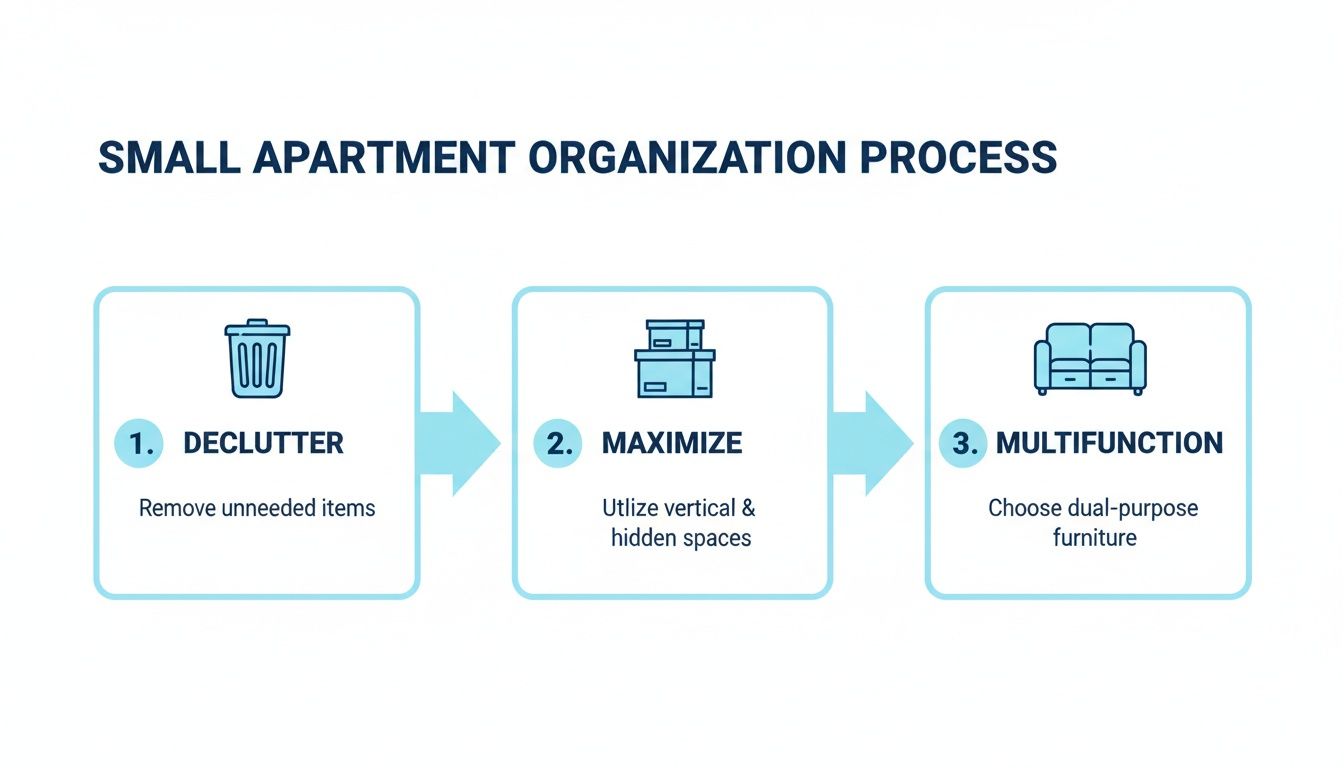
As you can see, getting rid of the excess isn't just a step; it's the foundation that makes everything else work.
Breaking It Down to Beat the Burnout
Trying to declutter your entire apartment in one go is a recipe for disaster. You'll burn out, get frustrated, and give up before you see any real progress. Don't do it.
Instead, start small. I mean really small. Pick one kitchen drawer. The medicine cabinet. That single shelf in the back of your closet that has become a black hole for random junk.
Winning these tiny battles builds momentum. It proves to you that you can make a difference, giving you the confidence to tackle bigger areas.
A method that works wonders is the Four-Box System. Grab four boxes or bins and give them a job:
- Keep: Things you actually use, genuinely love, or have a clear purpose for. These are the keepers.
- Donate/Sell: Items in good shape that you just don't need anymore. Let someone else enjoy them.
- Trash/Recycle: Be ruthless. Anything broken, expired, or unusable has to go.
- Relocate: This one is key. It's for anything that belongs in another room. This box stops you from getting sidetracked by wandering around your apartment putting things away one by one.
Focus on your chosen small zone and put every single item into one of those four boxes. When you’re done, immediately take out the trash, put the donation box by the door, and put the "relocate" items where they belong. That instant feeling of completion is incredibly motivating.
Dealing with Emotional and "Just in Case" Clutter
Okay, now for the tough stuff. What about the sentimental items you never use but can't imagine parting with? Or the gadgets you're hoarding "just in case"?
The key is to separate the memory from the object. You can cherish a memory without needing to store the physical item that represents it. Taking a photo of a sentimental piece can often preserve the feeling without taking up physical space.
For all those "just in case" items, ask yourself some tough questions:
- Honestly, when did I last use this?
- If a situation came up tomorrow where I needed this, could I borrow it, rent it, or buy a replacement for under $20?
- Is the stress of storing this thing worth the tiny chance I might need it someday?
More often than not, the mental and physical space you gain is far more valuable. If you find yourself getting stuck, our complete guide on how to declutter your home dives deep into room-by-room strategies that can help you push through.
Staying on Track with Simple Rules
Once you've done the hard work, the next challenge is keeping the clutter from creeping back in. A couple of simple habits can make all the difference.
The most powerful is the "one in, one out" rule. Every time you bring something new home, a similar item has to leave. New pair of jeans? An old pair gets donated. It creates a natural balance that prevents things from piling up again.
Another game-changer is the 10-minute daily reset. Before you go to bed, spend just ten minutes putting things back where they belong, for instance, fluff the pillows, put the remote away, and clear the counter. This tiny routine stops small messes from snowballing into overwhelming chaos.
Finally, after you've purged and have a pile ready to go, consider using professional junk removal services for the big stuff. It’s the final, satisfying step that clears the deck so you can start building a truly organized home.
Alright, you've done the tough part and purged the clutter. Now comes the fun bit: finding a smart, stylish home for everything you decided to keep. Organizing a small apartment isn't about just hiding your stuff; it's about creating clever, easy-to-use systems that make your space feel bigger and work better for you. This is where you get to reclaim your square footage by thinking a little differently about storage.
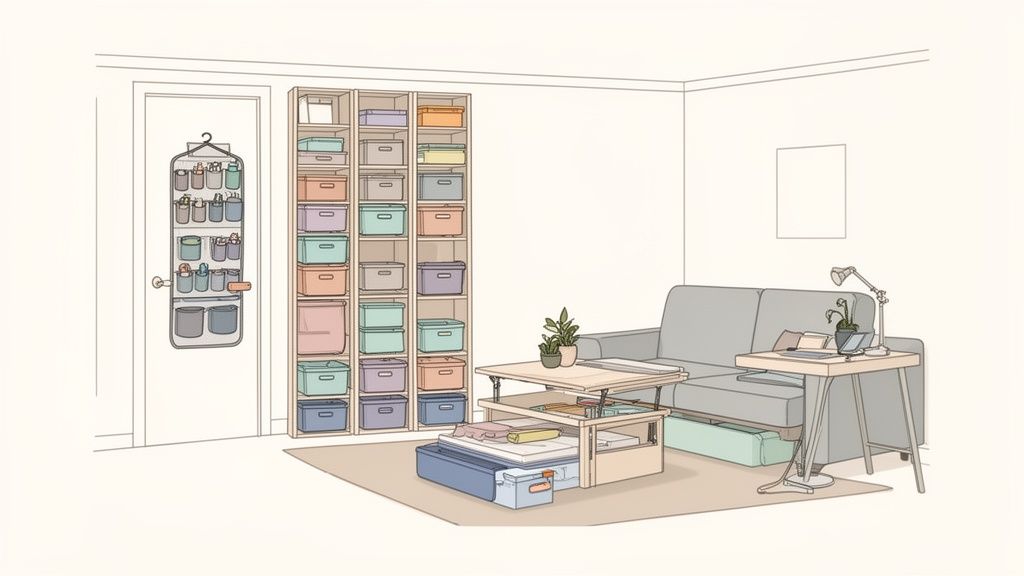
As living spaces get tighter, the demand for these kinds of solutions is exploding. The global market for home organization is expected to hit $11.5 billion by 2035, and it’s no wonder why. With new apartments in major U.S. cities now averaging under 800 square feet, renters are desperate for ways to make their homes more functional. It’s also driving a 40% increase in requests for things like peel-and-stick wallpaper as people look for creative ways to personalize their smaller homes.
Think Vertically to Free Up Floor Space
The most overlooked real estate in any small apartment is the wall space above your head. When you draw the eye upward, you create an illusion of height and add a ton of storage without sacrificing a single inch of floor space. Honestly, leaving your walls bare is one of the biggest missed opportunities in a small home.
Instead of a wide, short bookcase that eats up precious floor area, go for a tall, narrow one that stretches toward the ceiling. It’s a simple swap that can double your shelving while taking up a fraction of the footprint.
Here are a few vertical power players I always recommend:
- Floating Shelves: These are fantastic for displaying decor, books, or even kitchen supplies without the visual weight of traditional furniture. I love installing them in otherwise dead spots, like just above a doorway or your TV.
- Wall-Mounted Desks: A fold-down desk is a game-changer. It gives you a dedicated workspace that completely vanishes when you're done for the day, freeing up the entire area.
- Over-the-Door Organizers: Don't just relegate these to shoes. They are incredibly versatile. Use one in the pantry for spices and snacks, in the bathroom for toiletries, or behind a closet door for cleaning supplies.
Uncover the Potential of Hidden Storage
What you can't see is just as important as what you can. Hidden storage is your secret weapon against that feeling of visual clutter, letting you tuck away seasonal items, extra linens, and anything you don't use daily. The key is making sure these items stay accessible, even when they’re out of sight.
The best storage solutions solve a problem without creating a new one. A beautiful ottoman with storage is fantastic, but if it’s too heavy to move or a pain to open, you’ll never use the storage inside. Prioritize accessibility.
Under-bed storage is a classic for a reason. Look for slim containers with wheels so you can easily slide them out to grab out-of-season clothes or extra bedding. Vacuum-sealed bags are another favorite of mine; they compress bulky comforters and winter coats to a fraction of their size before you stow them away. To really nail this, check out our guide with more creative storage container organization ideas.
Embrace the Power of Multifunctional Furniture
In a small apartment, every single piece of furniture needs to earn its keep. Single-purpose items are a luxury you just can't afford when space is this tight. Multifunctional furniture isn't just a trend; it's the foundation of smart, small-space design, blending style and function to save you valuable floor space.
And we're talking way beyond the old college futon. Modern designs offer incredible versatility. A lift-top coffee table can morph into a dining table or a work-from-home desk in seconds. A storage ottoman can hide blankets while doubling as extra seating when friends come over. You can even get creative by upcycling old furniture into clever storage solutions that perfectly fit your space and style.
Multifunctional Furniture Investment Guide
Making a few strategic swaps can completely change the feel of your apartment. Here’s a quick look at how replacing standard pieces with hardworking alternatives can free up a surprising amount of space.
| Standard Furniture | Multifunctional Alternative | Space-Saving Benefit |
|---|---|---|
| Coffee Table | Lift-Top Coffee Table | Provides a hidden compartment and elevates to a dining or work surface, eliminating the need for a separate desk. |
| Standard Bed Frame | Bed with Built-in Drawers | Offers deep, accessible storage for clothing or linens, potentially replacing an entire dresser. |
| End Table | Nesting Tables | Gives you multiple surfaces when you need them for guests, but tucks away into a single small footprint when you don't. |
| Accent Chair | Storage Ottoman | Serves as comfortable seating, a footrest, and a concealed storage unit for electronics, games, or blankets. |
By choosing furniture that does double (or even triple) duty, you immediately reduce the total number of items you need. This not only frees up physical space but also simplifies your environment, making it feel more open and calm. Each piece serves at least two functions, effectively doubling its value in your home.
Creating a Digital Map of Your Home
You've done the hard work. You decluttered, went vertical, and filled your space with furniture that pulls double duty. Your apartment is physically organized, but there's one last piece to the puzzle: mental organization.
It doesn’t matter how perfectly you’ve arranged everything if you can’t remember which under-bed bin holds the guest towels versus the winter sweaters. This is where a digital map of your home comes in. It’s the final step that makes all your physical effort pay off.
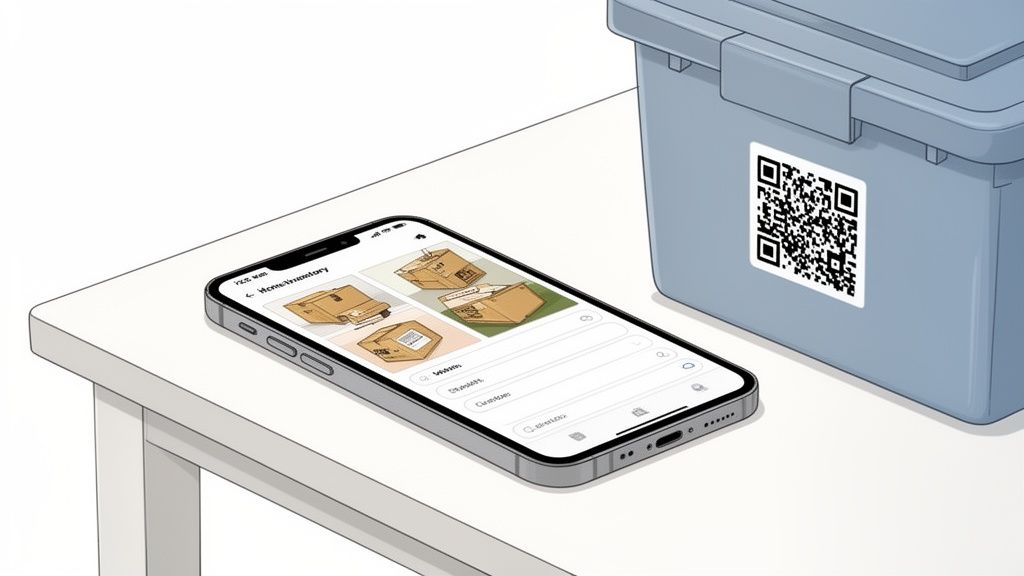
Think of it as creating a searchable database for everything you own. Instead of tearing apart closets looking for your passport or that one specific charging cable, you just look it up on your phone. This system turns your static storage into a dynamic, intelligent resource that puts an end to the frustrating search for good.
Getting Started with a Home Inventory System
A "digital home inventory" sounds complicated, but it can be as simple as a spreadsheet or as powerful as a dedicated app. The goal is to create a living record of what you own and exactly where it is. This is a game-changer for anything in deep storage, like seasonal decor shoved in the back of a closet or important documents filed away.
The most effective modern approach is to use dedicated software. You can learn more about finding the right inventory software for your home in our detailed guide, which breaks down what features to look for. These tools use your phone’s camera to make the whole process surprisingly fast and simple.
Here’s a practical way to get started without feeling overwhelmed:
- Start small. Don't try to catalog your entire apartment in one go. Pick a single, contained space, maybe your pantry, a specific storage closet, or just the bins under your bed.
- Snap photos of everything. As you pack a bin or organize a shelf, take a quick picture of the contents. A good inventory app will let you attach this photo to that specific container or location.
- Be descriptive, but quick. Give each item or group of items a simple, searchable name. Think about the words you’d actually use to find it later, like "blue hiking backpack," "extra bath towels," or "holiday decorations."
Supercharge Your System with QR Codes
This is where your digital map becomes truly powerful. Many inventory apps let you generate and print unique QR codes for each storage bin, box, or even cabinet. The process is straightforward and ridiculously effective.
You just assign a code to a container in the app, print it on a sticker, and slap it on the outside of the bin. From now on, you can scan the code with your phone to instantly see a full list (and photos!) of what’s inside without ever opening the lid.
Imagine this: You need to find your spare set of keys. Instead of dumping out three different "junk" drawers, you search your inventory app. It tells you they’re in the "Entryway Cabinet, Top Shelf." You just saved yourself 15 minutes of frantic searching.
This method transforms how you approach small-space living. It moves you beyond simple tidiness and into true, functional efficiency. The demand for clever organization like this is a direct response to shrinking living quarters. The U.S. home organization market hit $14.2 billion in 2023, and closet organizers alone are projected to grow to $8.25 billion by 2025. These numbers show a huge shift toward systems that make small homes more manageable. You can read more about the booming market for small space solutions on Dataintelo.com.
Practical Perks of Your Digital Map
Beyond just finding things faster, a digital inventory offers a few other benefits that are perfect for apartment dwellers.
- Insurance Peace of Mind: Having a complete, photographed record of your valuable belongings is priceless if you ever need to file an insurance claim for theft or damage.
- Moving Day Sanity: When it’s time to move, your digital map is a lifesaver. You can track boxes, direct movers, and know exactly what’s in each container as you unpack.
- Preventing Double Purchases: Ever buy something only to realize you already had one buried in a closet? A quick search of your inventory can save you money and stop unnecessary clutter from coming in the door.
- Sharing with Roommates: For shared spaces, a digital inventory helps everyone know where common items are stored, like cleaning supplies or spare lightbulbs, ending the "who used the last of the..." debates.
By creating this digital layer on top of your physical organization, you build a resilient system that adapts with your life. It ensures the effort you put into organizing your home pays off every single day by giving you back time and peace of mind.
Alright, you’ve done the hard work. You’ve decluttered, zoned every room, and maybe even started labeling bins. The big overhaul feels incredible, but here's the tough truth: a one-time purge won't keep your apartment organized forever.
The real secret to lasting order isn’t found in a single marathon cleaning session. It’s built in the small, consistent habits you create afterward. Think of it less like a project with an end date and more like a practice.
This is where all that effort really starts to pay off. By weaving a few simple routines into your daily and weekly life, you stop clutter before it even has a chance to take root. You shift from constantly reacting to messes to proactively maintaining a state of calm.
These habits don't need to be huge, time-sucking chores. In fact, their power lies in their simplicity. They're so easy to adopt that they eventually become as automatic as brushing your teeth.
The Power of the 10-Minute Tidy
If you adopt only one new habit, make it this one: the 10-Minute Tidy. It's a short, focused reset you do every single day, either right before bed or just before you leave in the morning. The goal isn't a deep clean; it’s just to return your apartment to its baseline state of "put together."
Just set a timer for ten minutes and move with purpose through your main living areas. You’re not scrubbing floors or reorganizing drawers. You're just putting things back where they belong.
A typical 10-Minute Tidy might look like this:
- Surface Sweep: Wipe down the kitchen counters and your coffee table.
- Item Reset: Put the remote back in its basket, hang up the jacket you threw on the chair, and return books to the shelf.
- Mail Sort: Quickly sift through any mail on the counter. Junk gets recycled immediately, while bills or important docs go to their designated spot.
- Pillow Fluff: A quick fluff of the sofa cushions is a tiny detail that makes the whole room feel instantly tidier.
This little routine prevents the daily pile-up of minor clutter, the stuff that quickly snowballs into an overwhelming mess. It’s a tiny investment that pays huge dividends for your peace of mind.
Your Weekly Refresh Routine
While the daily tidy keeps surface clutter from taking over, a weekly refresh helps you maintain the deeper organization you worked so hard to create. This isn’t another massive project. It’s a focused, 15 to 20-minute task where you tackle one small "zone."
Think of it as routine maintenance for your organizational systems. The trick is to rotate through different zones each week so the workload always feels light and manageable.
The goal of a weekly refresh is to prevent organizational backsliding. By checking in on one small area each week, you ensure that your systems are still working and that clutter hasn't started to creep back into drawers and closets.
Here’s a sample four-week rotation you could try:
- Week 1 Pantry Check: Spend 15 minutes on one pantry shelf. Wipe it down, check expiration dates, and neaten up any containers or food packages.
- Week 2 Medicine Cabinet Edit: Quickly sort through your medicine cabinet. Consolidate nearly-empty bottles and safely dispose of anything that's expired.
- Week 3 Digital Declutter: Take 20 minutes to clear your computer’s desktop, organize a few digital folders, or unsubscribe from a bunch of junk email lists.
- Week 4 Nightstand Reset: Clear everything off your nightstand, wipe it down, and put back only the absolute essentials. Find new homes for the stack of books, stray cups, and tangled cords that have inevitably gathered there.
This rotating approach prevents burnout and keeps every corner of your apartment in good shape over the long haul.
The Ultimate Rule for Long-Term Success
Finally, the single most powerful habit for preventing new clutter is the "one in, one out" rule. It’s incredibly simple but profoundly effective, especially in a small apartment where every single item fights for space.
The rule is exactly what it sounds like: for every new non-consumable item you bring into your home, a similar item has to leave.
- Buy a new sweater? An old one gets donated.
- Get a new coffee mug as a gift? One from the back of the cabinet has to go.
- Upgrade your laptop? The old one is sold or recycled.
This habit forces you to be intentional about every purchase and creates a closed-loop system for your belongings. It’s the ultimate safeguard that ensures your beautifully organized apartment stays that way, turning all your hard work into a sustainable, clutter-free lifestyle.
Answering Your Most Common Small-Space Questions
Even with the best intentions, organizing a small apartment can throw some curveballs. You hit a wall trying to figure out where to start, or you realize you have zero closets to work with. It's frustrating, but completely normal.
Let's tackle some of the most common questions people ask when they're staring down a cluttered small space. Think of this as your go-to guide for those nagging problems that can stall your progress.
What Do I Do If My Apartment Has No Storage?
This is a classic small-apartment problem, especially in older buildings. When you don't have closets, you have to get creative and literally build your own storage. The trick is to stop thinking about traditional furniture and start seeing every open surface as an opportunity.
Here are the three non-negotiables for creating storage out of thin air:
- Go vertical, always. Your floor space is precious, but your walls are a goldmine. Tall, skinny bookshelves or modular wall-mounted shelving systems are your best friends. They draw the eye up, making the room feel taller while giving you a ton of space for books, bins, and decor.
- Multifunctional furniture is a must. Every large piece you own should do at least two jobs. A storage ottoman is the perfect hiding spot for extra blankets. A bed frame with built-in drawers can completely replace a bulky dresser. A lift-top coffee table keeps remotes, magazines, and chargers out of sight.
- Hunt down those overlooked nooks. The back of a door? Prime real estate. The empty wall above the toilet? Perfect for shelving. And the biggest missed opportunity of all is the space under your bed. Simple rolling bins or vacuum-sealed bags can store an entire season's worth of clothing down there.
Where Should I Even Begin? The First Step Is Always the Same.
It's so tempting to run to The Container Store and buy all the pretty bins and organizers, but please, don't. You absolutely cannot organize clutter. If you just shove disorganized stuff into nice boxes, all you have is prettier, more expensive clutter.
The first thing you must do is declutter.
Pick one small, ridiculously manageable spot to start. I'm talking about your kitchen junk drawer, a single nightstand, or one shelf on a bookcase. Empty it out completely. Then, sort every single item into one of three piles: keep, donate, or trash. Only after you've cut down what you own can you see what kind of storage you actually need.
The purge is the most critical part of the entire process. It’s what builds momentum and ensures you’re only making a home for things you genuinely need and love. That’s the real foundation of an organized space.
How Can I Trick the Eye and Make My Tiny Living Room Feel Bigger?
Making a small room feel more spacious is all about creating visual illusions. It's less about getting rid of things and more about being clever with how you arrange what you keep.
First, buy furniture with legs you can see. A mid-century modern sofa or a console table that's lifted off the ground creates a sense of openness because you can see more of the floor. It’s a simple trick that makes a huge difference.
Next, find the wall opposite your main window and hang the biggest mirror you can find. It will bounce light all over the place and create an illusion of depth, sometimes making the room feel twice as large.
Finally, think light and bright. A light, cohesive color palette on the walls and for your biggest furniture pieces (like your sofa) will make the whole space feel more airy. Keep the small decor to a minimum, because a few intentional, well-chosen pieces will make the room feel more expansive than a dozen little knick-knacks.
Ready to create a digital map of your home so you never lose anything again? Vorby is an AI-powered home inventory service that helps you catalog, find, and manage everything you own. Generate QR codes for bins, track warranties, and find items instantly with a simple search. Start your free trial at https://vorby.com and transform your newly organized apartment into a smart, searchable space.