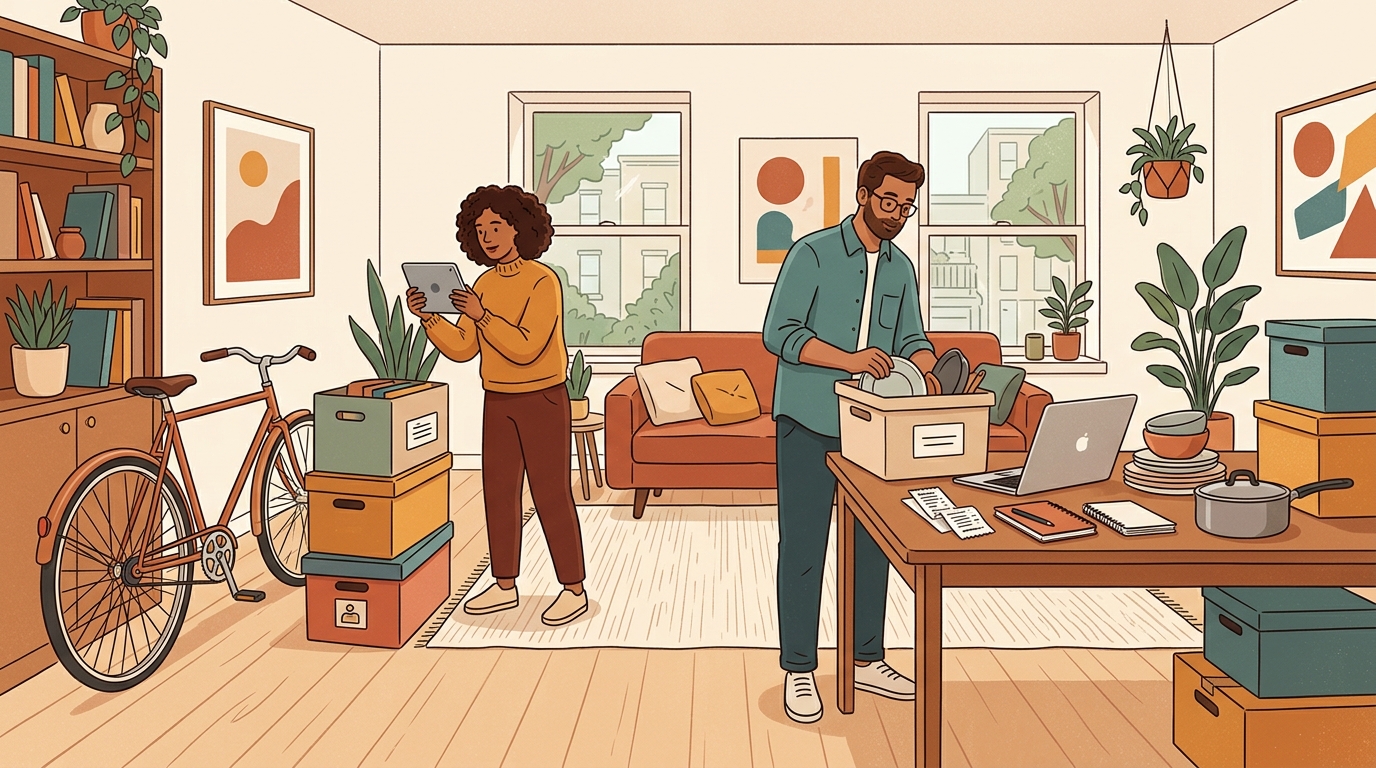
A renter home inventory guide is not busywork. It is the record you wish you already had when a pipe bursts, a laptop disappears, a storage closet floods, or a landlord says damage was already there. Renters live with a strange mix of responsibility and limited control. You may not own the walls, roof, plumbing, or locks, but you do own the bed, sofa, cookware, clothes, electronics, sports gear, tools, documents, heirlooms, and everything else that makes the place yours.
The problem is that most renters only think about documentation after something goes wrong. By then, the exact model of the stolen laptop is fuzzy, the receipt for the mattress is buried in email, the serial number for the bike is gone, and the photos on your phone show a room from the wrong angle. A good inventory fixes that before stress takes over.
This guide focuses on the practical version, not a perfectionist cataloging project. You need enough detail to support an insurance claim, separate your belongings from a roommate's, prepare for a move-out conversation, and prove what was in your home at a specific time. That means photos, item names, dates, values, receipts, serial numbers, room labels, and a simple update routine.
Why renters need a possession record before anything goes wrong
Your landlord's policy is not your policy
The most important insurance misunderstanding for renters is simple: your landlord's insurance protects the building, not your belongings. The Insurance Information Institute explains that a landlord may insure the structure, but that policy will not replace your personal possessions or pay your living expenses while the unit is repaired. Renters insurance exists because your stuff is your responsibility, even when the loss starts with something you did not cause.
That distinction matters in apartment buildings, duplexes, campus housing, and rented houses. A kitchen fire in another unit can smoke-damage your clothes. A roof leak can ruin electronics. A stolen backpack can wipe out a laptop, headphones, medication, keys, and documents in one afternoon. When you file a claim, the insurer does not know what you owned unless you can show it.
Renters also face losses that do not look like dramatic disasters. A package theft, a leaking upstairs bathroom, a broken storage-room lock, a roommate's guest damaging furniture, or a contractor moving items during repairs can all create the same question: what was there, what condition was it in, and who is responsible? A possession record gives you a starting point before everyone involved starts reconstructing events from memory.
Renters are under real financial pressure
Documentation is especially important because renters often have less financial room to replace everything at once. The U.S. Census Bureau reported that over 21 million renter households spent more than 30% of income on housing costs in 2023, representing 49.7% of renter households for whom rent burden is calculated. Statista's residential housing data put the number of renter-occupied housing units in the United States at 46.2 million in 2025. This is not a niche problem.
When almost half of renter households are cost-burdened, a loss is not just inconvenient. It can become debt, delayed bills, a missed move, or a smaller emergency fund. Pew Research Center housing affordability reporting and National Association of Realtors affordability research point to the same practical reality: many renters stay renters longer because buying is expensive, so rental-life systems need to be durable. A well-documented claim can shorten the distance between loss and reimbursement. It can also help you buy the right amount of coverage before you need it.
Claims and disputes reward specifics
Insurance claims, move-out disagreements, roommate reimbursements, and landlord disputes all favor specific records over memory. A claim that says "living room electronics" is weaker than a record showing a Samsung television, a game console, a router, a soundbar, purchase dates, serial numbers, photos, and estimated replacement values. A deposit dispute is easier to discuss when you have dated move-in and move-out photos, notes about existing damage, and a list of what belonged to you.
A renter inventory turns "I think I had that" into "Here is the record, here is the photo, and here is what it cost to replace."
What to document in a renter home inventory
Start with categories, not perfection
The fastest way to stall is to start with the idea that every spoon, sock, and paperback needs its own record. For a renter, the better first pass is category-based. Capture the expensive, hard-to-replace, claim-relevant, and dispute-prone items first, then fill in the rest over time.
Use these categories as your baseline:
- Electronics: laptops, tablets, phones, TVs, speakers, routers, monitors, cameras, game consoles, chargers, and smart home devices.
- Furniture: bed frames, mattresses, sofas, desks, dining sets, dressers, bookcases, lamps, rugs, and patio furniture.
- Kitchen and small appliances: cookware, mixers, air fryers, espresso machines, microwaves, knives, dishes, and shared pantry equipment.
- Clothing and personal items: coats, shoes, bags, jewelry, watches, sports uniforms, luggage, and seasonal clothing.
- Tools and hobby gear: bikes, instruments, camping gear, camera gear, craft equipment, power tools, and gaming equipment.
- Documents and valuables: passports, birth certificates, financial files, collectibles, heirlooms, and items with sentimental value.
Record replacement value, not wishful value
For insurance, the useful number is usually what it would cost to replace the item today with something comparable. That does not always match what you paid. A couch from a warehouse sale may cost more now. A three-year-old laptop may be cheaper to replace with a similar model. A discontinued piece of gear may have a realistic used-market price. Note the purchase price when you know it, then add a current estimated replacement value.
The Insurance Information Institute separates renters coverage into actual cash value and replacement cost. Actual cash value subtracts depreciation. Replacement cost covers the cost of replacing possessions without that depreciation, up to policy limits. Your inventory helps either way because it gives the adjuster item details, dates, and supporting proof.
Capture ownership details that people forget
For each high-value item, record the item name, brand, model, serial number, purchase date, where you bought it, estimated value, room location, owner, and receipt or photo proof. If you share a home, add whether the item is yours, a roommate's, shared, borrowed, or owned by the landlord. That small ownership field prevents future arguments.
Do not skip ordinary-looking items that are expensive in groups. Bedding, towels, dishes, books, children's gear, pantry appliances, cables, chargers, and cleaning tools may not feel like claim items one by one, but replacing a full household at once is costly. Category photos and rough quantities are enough for the first pass.
If you need a deeper comparison of proof types, Vorby's guide to receipts, photos, and written records for home inventory explains when each format is strongest. The short version: photos show existence and condition, receipts show price and date, and written records connect the dots.
A room-by-room method renters can finish in one weekend
Do a video sweep first
Before you make a detailed list, walk through the rental with your phone and record a slow video of every room, closet, cabinet, storage area, garage space, balcony, and entryway. Open drawers and doors. Pan across shelves. Say the date out loud. Mention big items as you see them. The video is not the final inventory, but it gives you a time-stamped backup if you miss something in the written pass.
For renters, video sweeps are useful because homes change quickly. A roommate moves in. A partner brings furniture. A landlord replaces an appliance. A storage unit gets reorganized. A single baseline video gives you a reference point before the details scatter.
Work from the most expensive rooms first
Start where the value is concentrated. For many renters, that means the bedroom, living room, office corner, kitchen, and storage spaces. The closet may matter more than it looks because coats, shoes, bags, and specialty clothing add up. The kitchen may include shared appliances, wedding gifts, cookware sets, knives, and gadgets that nobody remembers buying until they are gone.
Use a simple pass in each room:
- Photograph the whole room from two angles.
- Photograph each high-value item close enough to identify it.
- Capture model and serial numbers for electronics and bikes.
- Add a short note for anything borrowed, shared, landlord-owned, or already damaged.
- Attach or save receipts for items over your claim threshold.
Your threshold can be personal. Some renters document every item over $50. Others start at $100 or $250. The right number is the one you will actually maintain.
Use a move-in and move-out lens
Renters should document possessions and unit condition at the same time. They are separate records, but they support each other. Take photos of your belongings, then take photos of walls, floors, appliances, windows, doors, fixtures, stains, dents, scratches, and anything that could affect a security deposit later. Keep the landlord-condition photos in a separate album or tag so they do not clutter your belongings list.
If you live with roommates, this is also where ownership clarity matters. Shared couches, cookware, rugs, and electronics create drama when someone moves out. Vorby's moving-out checklist for roommates and deposits covers the household side of that handoff, including how to prevent "who bought this" arguments from becoming deposit fights.
Moving is also when inventories get honest. You find boxes you never opened, cords without devices, cookware nobody uses, and shared items that have no clear owner. Treat packing as a cleanup pass: update the owner, remove what you donate, photograph packed valuables, and keep the record current before the truck is loaded. That way the inventory follows you into the next rental instead of becoming a stale file from the last apartment.
Receipts, photos, serial numbers, and proof that holds up
Photos show existence and condition
Take photos that would make sense to someone who has never been in your home. A close-up of a laptop corner is less helpful than a photo showing the whole laptop, its brand, and the desk where it lives. For furniture, show the whole piece and any notable condition details. For expensive clothing, photograph the label and the full item. For bikes, photograph the frame, serial number, lock, accessories, and where it is stored.
Condition photos matter because they reduce ambiguity. If a landlord claims a stain, scratch, or broken fixture was your fault, dated move-in photos can show the difference between pre-existing wear and actual damage. If an insurer asks whether a damaged item was usable before a loss, a recent photo helps.
Receipts show date, cost, and replacement basis
Receipts are not always required, but they are powerful. Save digital receipts from email, retailer accounts, payment apps, and PDF confirmations. For older items without receipts, keep a written estimate and a photo. For gifts, note the giver and approximate value. For secondhand purchases, save marketplace messages, payment screenshots, or a note explaining where the item came from.
Renters often underestimate how much receipt organization matters until tax season, reimbursement requests, or claims require proof. Vorby's guide to the best receipt organizer apps for home is useful if your receipts are spread across Gmail, camera roll screenshots, retailer portals, and shoebox paper.
Serial numbers help with theft and recovery
Serial numbers are boring until they are the most important detail you have. Laptops, cameras, bikes, instruments, game consoles, tablets, monitors, and some tools have unique identifiers. Record them before anything is stolen. Police reports, insurance claims, and recovery databases all work better when the item can be identified precisely.
For bikes, photograph the serial number on the frame and the full bike from both sides. Add accessories such as racks, lights, locks, bags, and child seats because those replacement costs stack quickly. For electronics, record the model number and serial number separately. Model tells the adjuster what kind of item it is. Serial number proves which one was yours.
Special situations for renters, roommates, and shared living
Roommates need ownership labels
Shared living creates inventory confusion because items enter the home from different people at different times. One roommate buys the sofa. Another brings the television. Everyone uses the air fryer. Somebody's parents donate a dining table. Six months later, nobody remembers whether the rug was a gift, a shared purchase, or something the previous tenant left behind.
Add an ownership label to each item: mine, roommate, shared, landlord, borrowed, or unknown. If an item is shared, add how it was paid for. If one person reimbursed another, attach the receipt or payment note. This sounds formal, but it is calmer than debating ownership during a move-out weekend.
Landlord disputes need condition records
Your possession inventory protects your belongings. Your condition record protects your deposit. Keep both. Photograph the unit before you move in, after you unpack, before repairs, after repairs, and before you return keys. Send major move-in condition notes to the landlord or property manager in writing so the date is documented.
Do not rely on memory for pre-existing damage. A cracked tile, torn screen, loose handle, scratched floor, stained carpet, or chipped countertop may be obvious on move-in day, then invisible to everyone six months later. A dated photo and a short note are faster than a dispute.
Storage areas deserve their own pass
Renters often store high-value or claim-relevant items outside the main living space. Think basement cages, garage corners, bike rooms, detached sheds, balcony storage boxes, coat closets, under-bed bins, and off-site storage units. These areas are easy to forget because they are not part of daily life.
Create a separate storage category and photograph every bin before closing it. Label boxes with plain words instead of mystery codes. If the storage area is shared, record which shelves or bins are yours. If a lease or building rule limits what can be stored there, save that document with your housing records.
How to keep the inventory current without turning it into a chore
Use the receipt moment
The easiest update happens when you buy something. After a purchase, take one photo, attach the receipt, and add the item before packaging disappears. This works for appliances, furniture, electronics, tools, sporting goods, luggage, and anything that would be painful to replace. If you wait until the next annual review, the receipt will be harder to find and the serial number may be hidden behind a mounted monitor or crowded shelf.
For online purchases, save the confirmation email or PDF. For in-store purchases, photograph the paper receipt before it fades. For marketplace purchases, screenshot the listing and payment confirmation. Then add one sentence in your inventory so future you understands what the proof means.
Review before renewals, moves, and roommate changes
A renter inventory does not need weekly maintenance. Review it at natural transition points: lease renewal, renters insurance renewal, roommate move-in, roommate move-out, major purchase, decluttering weekend, or before a move. Those moments already involve paperwork and decisions, so adding inventory review fits the rhythm.
During a review, check three things. First, are high-value items still present and correctly valued? Second, did you add new purchases and remove items you sold or donated? Third, are shared items and landlord-owned items clearly labeled? If you can answer those questions, your system is alive.
Choose a system you can search later
A spreadsheet can work if you are disciplined, but renters often need photos, receipts, tags, locations, ownership labels, and household context in one place. That is where a purpose-built inventory system is easier to maintain. Vorby's comparison of Vorby versus a spreadsheet for household inventory breaks down the tradeoff for people deciding whether to keep a basic file or use a dedicated home inventory app.
The best system is searchable when you are stressed. You should be able to find "laptop," "bike," "receipt," "shared," or "bedroom" without digging through albums and email threads. You should also be able to show a landlord, insurer, roommate, or family member only the relevant record, not your entire personal filing cabinet.
Backups matter too. If your phone, laptop, and paper folder are all in the damaged apartment, the inventory is trapped with the loss. Keep the record in a cloud-backed system or export a copy after major updates. A renter inventory is only useful if you can reach it from a hotel, a friend's couch, a claims call, or the sidewalk outside a locked building.
FAQ: renter home inventory guide
Do renters really need a home inventory?
Yes. Renters need a home inventory because their landlord's insurance usually protects the building, not their personal belongings. An inventory helps with renters insurance claims, police reports, replacement planning, and move-out disputes.
What should renters inventory first?
Start with electronics, furniture, bikes, tools, kitchen appliances, jewelry, documents, hobby gear, and expensive clothing. Then add lower-value categories as time allows.
Are photos enough for a renters insurance claim?
Photos are helpful, but the strongest record combines photos with item names, estimated values, purchase dates, receipts when available, and serial numbers for theft-prone items. Photos prove existence and condition; receipts prove cost and timing.
How often should I update my renter inventory?
Update it after major purchases and review it before lease renewal, insurance renewal, roommate changes, or moving. A twice-a-year review is enough for most renters if new items are added when purchased.
Should roommates make one shared inventory?
Roommates can keep one shared household record if each item has an ownership label. Mark items as mine, roommate, shared, landlord-owned, borrowed, or unknown so move-out conversations stay factual.
Renters protect themselves by making possessions visible before there is a claim, dispute, or rushed move. Vorby gives renters one calm place to document what they own and keep the record ready when it matters.


