Let’s be honest, the idea of cataloging everything you own sounds like a monumental chore. It’s one of those tasks that always gets pushed to the bottom of the to-do list, right next to cleaning the gutters and finally organizing the garage.
But creating a home inventory is genuinely one of the smartest things you can do for your financial security and peace of mind. It’s more than just a list; it’s a detailed record of your personal possessions, complete with photos, descriptions, and values. Think of it as a comprehensive map of what you own and where it is.
This Isn't Just About Insurance (But It's a Huge Part of It)
Most people think about inventories in worst-case scenarios, and for good reason. After a fire, flood, or theft, trying to remember every single item you owned is nearly impossible.
According to the insurance industry, a shocking number of homeowners are underinsured, simply because they drastically underestimate the total value of their belongings. An inventory provides concrete proof of ownership and value, which can make or break an insurance claim and get you paid faster.
The Everyday Wins Are Just as Big
Beyond disaster prep, the practical, day-to-day benefits are where a home inventory really shines. It transforms otherwise chaotic tasks into simple, manageable projects.
- Make Your Next Move a Breeze: Imagine knowing the contents of every single box without ripping it open. A good inventory makes packing, moving, and especially unpacking remarkably efficient.
- Declutter with Confidence: When you see exactly what you own, laid out in a list, it becomes painfully obvious what’s a duplicate, what’s unused, and what you no longer need. This clarity helps you make smart decisions about what to sell, donate, or discard.
- Manage Heirlooms and Sentimental Items: Documenting important family pieces, complete with their history and significance, ensures those stories are preserved. It also makes the tough conversations around estate planning much, much easier.
An inventory brings a surprising amount of calm and control to your life. It moves the abstract idea of "all my stuff" into a concrete, organized, and useful format, empowering you to manage what you own effectively.
And forget about clunky spreadsheets and dusty notebooks. Modern tools, including apps powered by AI, can automate most of the heavy lifting. Features like image recognition and receipt scanning turn what was once a tedious chore into an empowering weekend project.
Knowing exactly what you have, what it’s worth, and where to find it provides a level of organization that genuinely reduces stress and saves you a ton of time.
Your Game Plan for a Successful Home Inventory
Jumping into a home inventory without a plan is a surefire way to get overwhelmed and quit halfway through. Trust me, a little prep work transforms this project from a soul-crushing chore into a smooth, manageable task. This is your setup phase, and getting it right saves hours of headaches later.
The secret is to break the entire project into smaller, bite-sized pieces. Don't even think about trying to tackle your whole house in one weekend. That’s a recipe for burnout. Instead, figure out an approach that actually fits your life.
Choose Your Inventory Method
First things first, you need to decide how you're going to tackle this. There are really two main strategies, and neither one is right or wrong. It's about what works for you.
- Room by Room: This is the classic approach and for good reason. You focus on one space, say, the kitchen or the home office, and you don't move on until it's done. Checking a whole room off your list gives you a real sense of progress and keeps the momentum going.
- Category by Category: This method has you grouping similar items together, no matter where they live in the house. You might tackle all your electronics first, then move on to all the furniture, then artwork, and so on. This can be a much faster way to estimate values and make sure you aren't documenting the same TV twice.
If you're getting ready for a move, weaving your inventory process into your packing strategy is a game-changer. Thinking about both at the same time is incredibly efficient, so you might want to look at an ultimate moving house packing checklist to get your efforts aligned from the start.
The best method is the one you'll actually stick with. Whether you go room by room or category by category, consistency is what gets you to the finish line.
The whole point of this exercise is to gain security, organization, and control over your belongings, which this graphic lays out perfectly.
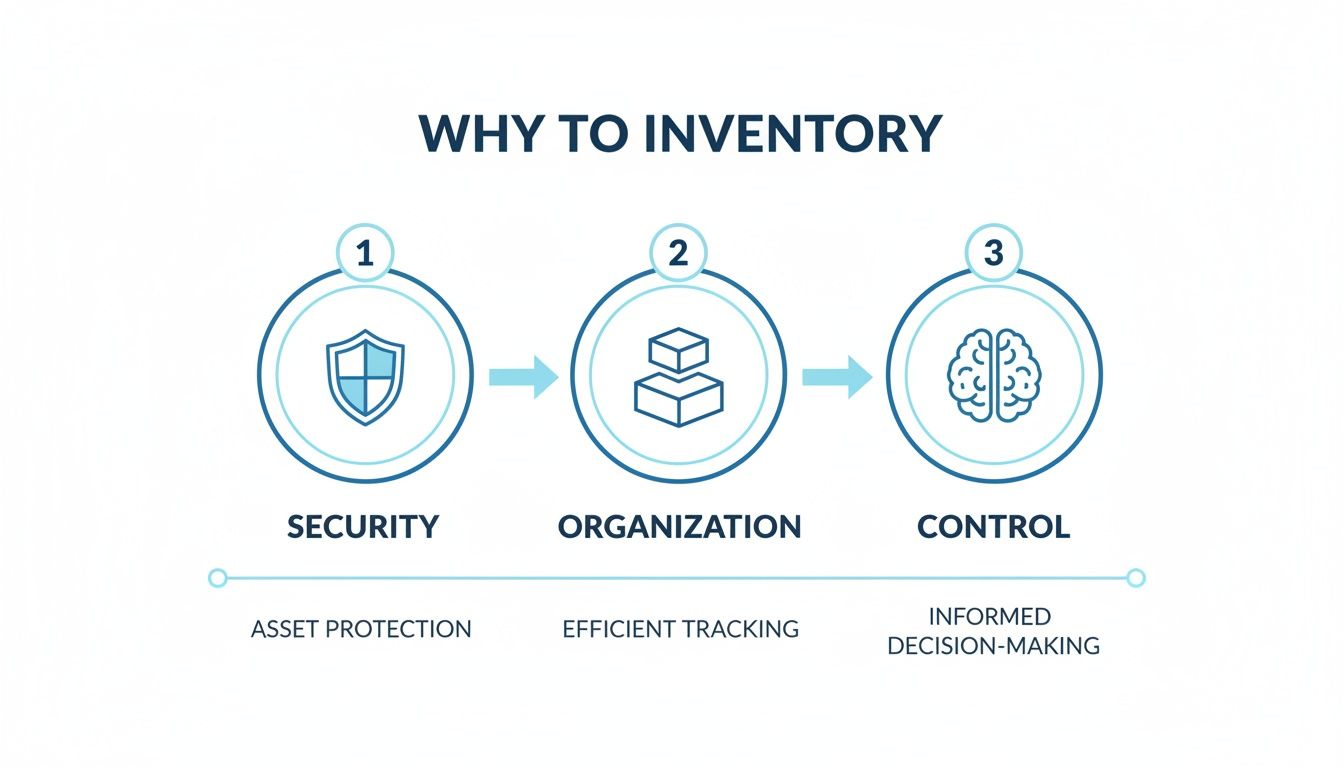
It’s a simple flow: the act of creating the inventory directly leads to better protection for your assets and a much greater handle on everything you own.
Gather Your Tools and Schedule Time
Once you've got a strategy, pull together a few simple supplies. You really don't need much to get started, and having everything in one place makes the process feel less like a chore.
- Your smartphone is your best friend for photos and videos.
- A measuring tape for noting down dimensions.
- A notebook or just a notes app for quick thoughts.
- Good lighting makes for clearer photos, so open the blinds or bring in a lamp.
Finally, and this is crucial, actually block out time on your calendar. Treat it like a dentist's appointment you can't miss. Scheduling one or two-hour sessions a few times a week is so much more sustainable than trying to cram it all into a single Saturday. It keeps you fresh and prevents it from feeling like a marathon.
How to Document Your Possessions Like a Pro
Alright, with your game plan set, it's time to get into the heart of the matter: actually documenting your stuff. This is where you create the detailed record that makes all this effort worthwhile. The goal isn't to get bogged down in useless details, but to capture the right information quickly so you have exactly what you need when you need it.
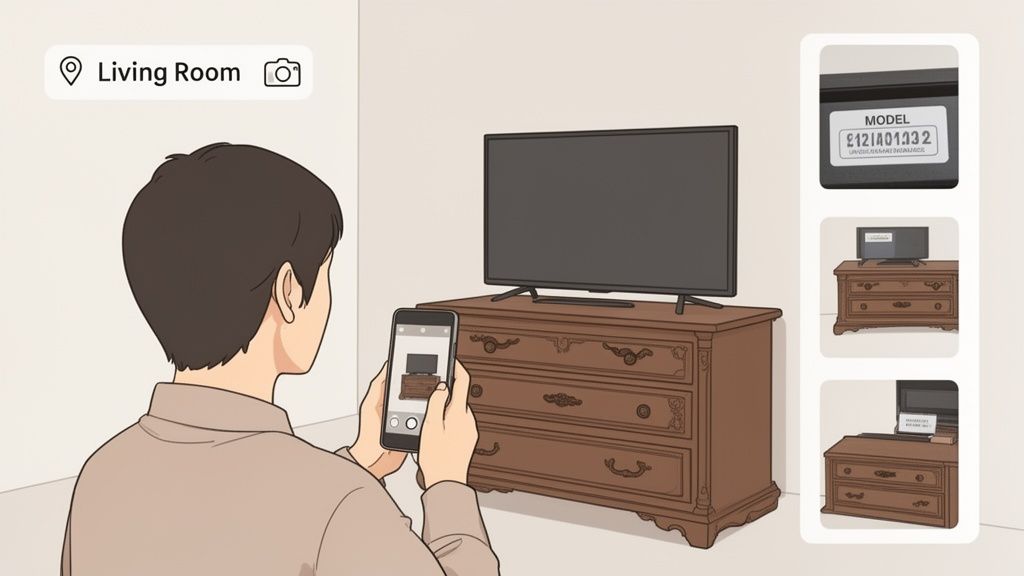
A truly great inventory is more than a simple list, it's a searchable, visual database of your life's belongings. For every important item, you need to capture a few key pieces of information that tell its full story.
Capture the Essential Details
Here's a simple truth: different items need different details. A generic description is almost useless when you’re filing an insurance claim or trying to find a warranty receipt. The trick is to be specific without wasting time.
For instance, when you get to your TV, just writing down "Living Room TV" won't cut it. You absolutely need the brand, model number, and serial number. These are almost always on a sticker on the back of the device, and they are non-negotiable for any insurance or warranty claim. The same goes for your computer, your refrigerator, and any other piece of electronics.
When it comes to things like furniture or antiques, the focus shifts a bit. For that old dresser your grandmother gave you, you’ll want to note:
- Brand or Manufacturer: If you know it.
- Condition: Make a quick note of any existing dings, scratches, or unique marks. This is your baseline.
- Purchase Date and Price: If you have this info, it's gold for establishing value. If it was a gift or inheritance, just note that.
Think of each entry as a mini-profile for your item. Your goal is to capture enough information to uniquely identify it and prove its value, leaving no room for guesswork.
Getting this down systematically is what separates a casual list from a professional-grade inventory. If you need a good starting point, using a well-structured home inventory list template can give you a clear framework for what to collect for different types of items.
To make this even easier, here's a quick cheat sheet for what to record for common household categories.
Essential Information to Document for Different Item Categories
| Item Category | Essential Details to Record | Photo/Video Tips |
|---|---|---|
| Electronics | Brand, model number, serial number, purchase date, price, warranty info. | Get a close-up of the model/serial number sticker. Shoot a short video of it powering on. |
| Furniture | Manufacturer, material (e.g., oak, leather), dimensions, condition notes, purchase date/price. | Take photos from multiple angles, including any existing wear and tear. |
| Appliances | Brand, model/serial number, purchase date, warranty expiration, energy efficiency rating. | Capture the manufacturer's label inside the door or on the back. Keep a photo of the receipt. |
| Jewelry & Collectibles | Description, materials (e.g., 14k gold), appraisal value, purchase date, photos of markings/stamps. | Use a plain background and good lighting. Take close-ups of any unique details or artist signatures. |
| Tools & Equipment | Brand, model number, power source (corded/battery), purchase date. | Photograph tools with their cases and any accessories that came with them. |
This table isn't exhaustive, but it covers the basics that will make your inventory truly functional. The key is consistency; capture the right details every time.
Master Visual Documentation
You’ve heard it a million times: a picture is worth a thousand words. In the world of home inventory, it's worth a thousand dollars, or more. Photos and videos are the ultimate proof of ownership and condition. Insurance adjusters love them because they eliminate ambiguity.
But don't just snap one blurry photo and call it a day. Develop a simple, repeatable process for each major item:
- Start wide: First, take a picture of the item in its natural habitat, for instance, the couch in the living room, or the mixer on the kitchen counter. This provides context.
- Get all the angles: Walk around the item and get shots of the front, back, and sides. This shows its complete condition.
- Zoom in on the vitals: This is critical. Get sharp, readable close-ups of serial numbers, model numbers, brand logos, or any other identifying marks. A clear photo of a serial number is irrefutable proof.
- Document the flaws: If an item already has some wear and tear, photograph it. This creates an honest record of its condition before anything happens, which protects you later.
For your really high-value items or large collections (like books or tools), a short video clip can be incredibly powerful. Just walk around the item while narrating what it is and zoom in on the important details. It takes less than a minute and creates a dynamic, undeniable record.
Organize with Locations and Tags
Finally, an inventory is useless if you can't find anything in it. This is where a little bit of digital organization pays huge dividends. As you add each item, assign it a specific location.
And I mean specific. Don't just say "Garage." Say, "Garage, Right Wall, Shelf 3, Blue Bin." Instead of "Kitchen," try "Kitchen, Lower Cabinet, Left of Sink." This level of detail means you can find any item in your home in seconds.
Adding a few descriptive tags like "electronics," "warranty," or "heirloom" supercharges your ability to search. With tags, you can instantly pull up every item with an active warranty or find all the family heirlooms in one click.
Let's face it: creating a home inventory with a pen and paper is a relic of the past. Why would you, when the phone in your pocket can turn a tedious chore into a smart, nearly automated process? The right tech doesn't just speed things up; it makes keeping your inventory updated almost effortless.
This isn't just about convenience. With immense economic pressure on households, since middle-income buyers can now only afford 21% of homes for sale, a steep drop from 50% before the pandemic, every dollar and every square foot of storage matters. Strategic inventory management has become a critical tool for maximizing your space and truly understanding the value of what you own.
Let AI Do the Heavy Lifting
One of the biggest game-changers is AI-powered image recognition. Instead of manually typing out "Samsung 55-inch Frame TV, Model QN55LS03BAFXZA," you just snap a photo. That's it. Many modern inventory apps can look at the picture, identify the product, and automatically pull in the brand, model, and even a stock photo for you. This feature alone can cut your documentation time in half.
For pulling details like serial numbers directly from your photos, tools that can turn images into editable data are incredibly useful. They eliminate typos and make sure your records are perfectly accurate without squinting at tiny labels.
Then there's the magic of automatic receipt parsing. By connecting your email, an inventory app can scan for digital receipts from places like Amazon or Best Buy. When it finds one, it automatically creates a new inventory entry, complete with the purchase date, price, and a link to the original receipt. No more digging through your inbox.
By leaning on technology, you shift from being a data entry clerk to being a manager of your household assets. The focus moves from tedious typing to smart organization.
This automated approach ensures new purchases are never forgotten. It quietly builds a rich, detailed history of your possessions without you having to lift a finger every time a new box arrives. To see how these features come together, it's worth exploring what to look for in good home inventory software.
Organize Your Physical Space with Digital Tags
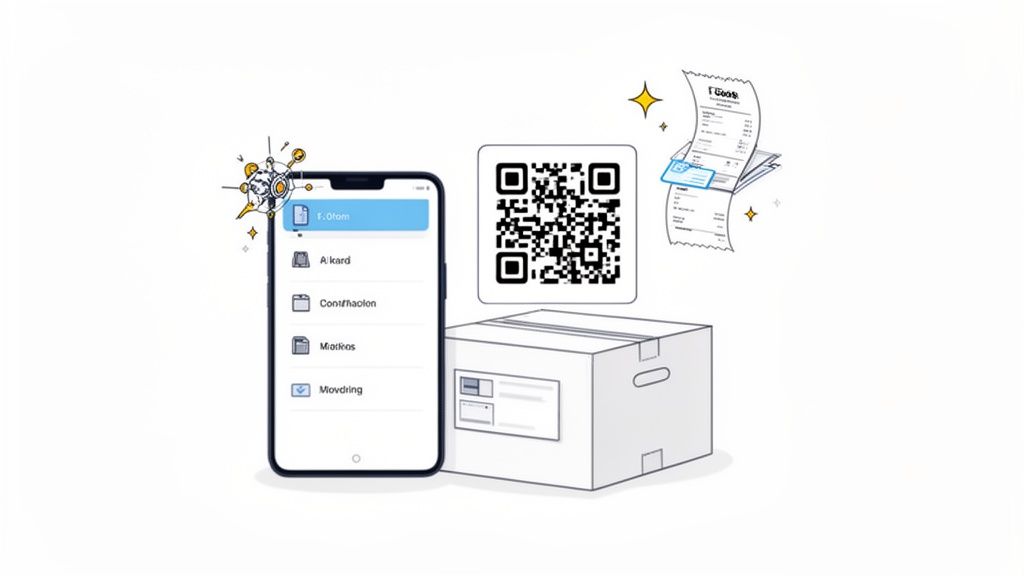
Technology also bridges the gap between your digital list and your physical stuff. This is where QR codes and NFC tags become your new best friends, offering a brilliant way to label storage bins, boxes, or even entire rooms.
Here’s how it works in the real world:
- Generate a Code: In your inventory app, you create a unique QR code for a specific container, like that box labeled "Attic Holiday Decorations."
- Stick It On: Print the code on a simple sticker and slap it on the physical box.
- Scan and See: The next time you're wondering if this is the box with the tree skirt, just scan the code with your phone. A complete list of its contents pops up on your screen. No more tearing open boxes just to check.
This method is an absolute lifesaver for cluttered storage areas, garages, and basements. It removes all the guesswork from finding stored items and makes seasonal tasks, like pulling out holiday decor or finding your camping gear, incredibly efficient. You can know what's inside a dozen different boxes without moving a single one.
Keeping Your Inventory Alive: Why Maintenance is Everything
So you’ve created a detailed home inventory. That’s a huge first step, and honestly, you should feel pretty good about it. But the real power of that inventory isn’t in the making of it; it's in keeping it accurate, secure, and ready for the long haul. This is what turns a one-time project into a genuine asset for your household.
The most obvious, and critical, reason for this is insurance. After something unexpected like a fire, flood, or theft, your documented inventory becomes your single strongest tool. You can generate detailed reports in minutes, complete with photos and values, and send them straight to your insurance agent. This hard proof cuts through the red tape, streamlines the claims process, and ensures you get the coverage you've been paying for. We've got more tips on this in our dedicated guide to preparing your home inventory for insurance.
Secure Your Data with Smart Backups
Think about the cruel irony here: the worst possible time to lose your inventory data is right after the disaster that requires you to use it. If your inventory only lives on your home computer, a single hard drive failure, fire, or theft could wipe out all that hard work in an instant.
This is why secure cloud backups aren't just a nice feature; they're non-negotiable. A reliable inventory system automatically syncs your data to the cloud, protecting it from whatever happens at your house. It means your records are safe and sound, accessible from any device, anywhere in the world, exactly when you need them most.
The whole point of an inventory is to provide proof and peace of mind after a loss. Ensuring that data is securely backed up off-site is the only way to guarantee it can actually do its job.
Managing a Shared Household Inventory
In most homes, stuff isn't just "yours" or "mine," it's "ours." Belongings are shared, moved, and used by multiple people. A modern inventory system has to reflect that reality, allowing for easy collaboration without turning into a digital free-for-all.
For sharing to actually work, you need a few key things:
- Permission Controls: You should be able to grant access to family members or roommates, letting them view or add items without giving them the power to accidentally delete your priceless vinyl collection records.
- Real-Time Syncing: When one person adds a new gadget or updates the location of a box in the attic, those changes should appear instantly for everyone. No more texting, "Hey, where did you put the...?"
These tools are game-changers for coordinating shared spaces, tracking family heirlooms, or just helping everyone find what they’re looking for faster.
This need for organized household management also taps into broader trends. Housing realities create unique challenges for homeowners depending on where they live. For instance, some areas in the Southeast have seen housing inventory grow by 23% compared to 2019, while the Northeast is facing much tighter constraints. This means families organize their possessions differently based on geography, making smart, efficient systems crucial for managing limited space. You can explore more data on how housing inventory varies across the U.S. to see how these local dynamics play out.
Beyond just a list of items, a great inventory can become the central command center for your entire home. By attaching digital copies of user manuals and warranty info to the items they belong to, you can finally clear out that cluttered junk drawer for good. You can even set reminders for warranty expirations or scheduled maintenance, turning your inventory from a passive list into a proactive tool for managing your most valuable assets.
Common Questions About Home Inventories
Even with the best plan, you’re going to hit a few questions once you start inventorying. That's completely normal. Let's tackle some of the most common hurdles right now so you can keep moving forward with confidence.
Getting these details sorted out from the start will save you a ton of time and second-guessing down the road.
How Often Should I Update My Home Inventory?
This is one of the most practical questions, and the answer really has two parts. For a major review, aim for once a year. It’s a great habit to get into. Just block out an hour or two to scan through your inventory, make sure everything is still accurate, and catch anything new you might have missed.
But the real secret to keeping your inventory useful is to make small updates as you go. When you buy that new laptop or finally sell that old armchair, take two minutes to add or remove it from your list. Many modern inventory apps can even automate this by scanning digital receipts from your email, which makes ongoing maintenance almost effortless. Your annual review then becomes a quick check-in, not a massive project.
How Should I Document Inherited Items or Gifts?
What about that antique clock from your grandparents? Or a valuable gift you received without a receipt? When you don't have proof of purchase, detailed documentation becomes your best friend. For these items, you essentially have to build a case for their existence and value.
For any item that lacks a receipt, your photos and notes are the proof. The goal is to create a record so clear and detailed that an insurance adjuster has no questions about the item's specifics or condition.
Be ridiculously thorough in your approach:
- Take excellent photos and videos. Capture the item from every single angle. Get close-ups of any maker's marks, signatures, unique details, or even existing flaws.
- Record every known detail. Write down its approximate age, the manufacturer (if you know it), its current condition, and any family history that goes with it.
- Get a professional appraisal. For anything you believe is highly valuable, like jewelry, art, or rare antiques, investing in a formal appraisal is a wise move. You can then attach a digital copy of that appraisal directly to the item's entry in your inventory, providing undeniable proof of its worth.
Do I Need to List Every Single Book and Dish?
Absolutely not. Please don't. Getting bogged down in cataloging every single fork and paperback is a fast track to burnout. For large collections of lower-value, everyday items, the key is to group them together logically. It’s about efficiency, not exhaustive detail.
For example, you can create a single entry for your "Kitchen Dinnerware Set" and just note the total piece count (e.g., "32-piece set") and its estimated replacement cost. For a book collection, a quick video panning slowly across your bookshelves can serve as excellent visual proof for insurance purposes.
The important exception here is for any high-value individual items within those collections. If you own a signed, first-edition book or a rare piece of designer china, those deserve their own separate, detailed entries. This hybrid approach gives you complete coverage without driving you crazy.
Ready to stop wondering and start organizing? Vorby uses AI to make taking an inventory simple and powerful. From automatic item recognition to QR code organization, you’ll have a complete, searchable map of your home in no time. Start your free 14-day trial and see how easy it can be.