
Think about the last time you had to find a warranty for a glitchy appliance. Where did you even start? A messy junk drawer? A stack of papers in the office? Maybe you just gave up. That frantic, frustrating search is exactly why home inventory software exists.
It’s a digital database for everything you own, replacing chaotic spreadsheets and sticky notes with a clean, searchable system for your belongings.
What Is Home Inventory Software and Why You Need It
Imagine the absolute worst-case scenario: a fire or a flood. Now, try to list every single thing you owned from memory for an insurance claim. Every book, every kitchen utensil, every piece of clothing. It's an impossible, overwhelming task.
This is where home inventory software becomes your lifeline. It's more than just a checklist; it's a comprehensive, digital record of your life's possessions. Think of it as your own personal librarian, but for your stuff.

With the right tool, you can log each item with photos, scan receipts, and add details like purchase dates and warranty info. The next time you need that user manual, you can pull it up on your phone in seconds instead of digging through a filing cabinet. The goal here is simple: to give you clarity and control over everything in your home.
It’s More Than a Simple List
At its core, a good home inventory system is really about buying yourself peace of mind. It takes the fuzzy, abstract idea of "everything I own" and turns it into concrete, documented proof. This proof is absolutely invaluable when life throws a curveball.
A detailed inventory gives insurance companies the exact information they need to process a claim quickly and fairly. It replaces stressful guesswork with hard facts, which is a game-changer when you're already dealing with a tough situation. Planning a move? The software helps you track which items are in which boxes, turning unpacking from a chaotic free-for-all into an organized, efficient process.
A well-maintained home inventory is one of the most effective tools for financial preparedness. It provides a clear, actionable record of your assets, which is critical for estate planning, insurance claims, and personal financial management.
The Modern Necessity for Organization
Let's be honest, our lives are busy. Keeping track of everything can feel like a full-time job. We've all got electronics with warranties about to expire or seasonal decorations buried somewhere in the attic. Knowing what you have and where to find it saves a surprising amount of time and money.
A digital inventory isn't just for collectors or people with mansions full of priceless art; it’s an incredibly practical tool for any modern household.
The benefits kick in almost immediately:
- Simplified Insurance Claims: You’ll have ready-to-go proof of ownership with photos, serial numbers, and purchase prices. This can be the difference between a fast payout and a drawn-out battle.
- Efficient Moving and Decluttering: Cataloging everything forces you to decide what to keep, donate, or sell. Plus, it makes sure that sentimental vase doesn’t get lost in transit.
- Better Financial Planning: You can’t properly insure your belongings if you don’t know their total value. This is also critical for estate planning.
- Everyday Convenience: Find that obscure charging cable, check a warranty, or pull up a user manual without turning the house upside down.
Ultimately, using home inventory software is a proactive step toward smarter household management. It’s one of those rare things that offers both security and convenience in a single, powerful package.
Key Features of a Great Home Inventory System
Choosing the right home inventory software is like picking the perfect toolbox; you need the right tools for the jobs you actually have to do. Not all systems are the same. Some are just glorified digital notepads, while others have genuinely powerful features that can simplify your life.
A truly great system moves way beyond basic list-making. It should feel intuitive from the second you start using it, turning a potentially mind-numbing task into something quick and even satisfying. The goal is to find software that works for you, not the other way around.
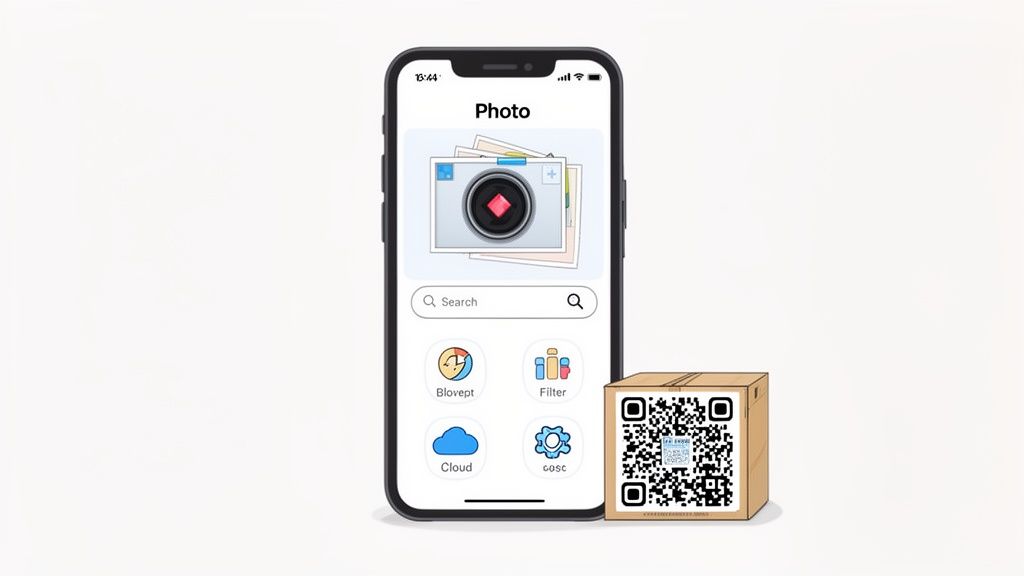
Before diving into the bells and whistles, let's nail down the essentials. The table below breaks down the core features you should look for and, more importantly, why they matter in a real-world home setting. These are the non-negotiables that make or break a system.
Essential Features of Home Inventory Software
| Feature | What It Does | Why It Matters for Your Home |
|---|---|---|
| Intuitive Item Entry | Lets you add new items quickly, for example, snap a photo, add a brief note, and save it in seconds. | If it's a pain to add things, you won't do it. Simple entry is the single most important factor for keeping your inventory current. |
| Photo & Doc Uploads | Allows you to attach photos, receipts, warranties, and appraisal documents directly to an item. | A picture is everything for an insurance claim. Having receipts and warranties attached means no more frantic paper searches. |
| Powerful Search | Enables you to find items instantly by name, room, category, or custom tags you create. | When the basement floods, you need to find the "sump pump warranty" in 5 seconds, not 50 minutes. |
| Secure Cloud Backup | Automatically saves your inventory data to a secure online server. | Your phone could get lost, stolen, or broken. Cloud backup ensures your valuable inventory isn't lost along with it. |
| Reporting & Exports | Generates a shareable PDF or spreadsheet of your items, complete with photos and details. | This is your proof for insurance adjusters or a vital document for estate planning. A simple export saves hours of work. |
| Custom Fields & Tags | Gives you the flexibility to add your own data fields (e.g., "Purchase Date") or tags (e.g., "Camping Gear"). | Your home is unique. This lets you organize your stuff in a way that actually makes sense to you, not just the app developer. |
Think of these features as the foundation. Without them, you’re just creating more work for yourself. A good system handles these basics effortlessly, freeing you up to get organized without the headache.
Advanced Features That Make a Real Difference
Once you've confirmed the basics are covered, you can look for the features that truly set a system apart. These are the tools that transform a good app into an indispensable part of your household management.
A barcode scanner, for instance, is a massive time-saver. Instead of manually typing in the product name and model of that new TV, you just scan the barcode on the box, and the info populates automatically. Our guide on using inventory software with barcode scanning shows just how much faster this makes the whole cataloging process.
The most impactful features are those that slash manual effort. When an app can automatically identify an item from a photo or let you scan a QR code on a storage box to see its contents, it saves you time and makes you far more likely to keep your inventory up to date.
Here are a few other high-value features to keep an eye out for:
- Custom Fields and Tags: Your home is unique, and your inventory system should be too. The ability to add custom fields (like "Date of Appraisal" for your art) or tags (like "Camping Gear") lets you create a truly personalized organization system.
- Reporting and Exports: Generating a PDF or spreadsheet of your entire inventory is non-negotiable for insurance purposes or estate planning. This feature gives you a portable, shareable record of everything you own.
- Multi-User Access: If you live with family or roommates, shared access is a game-changer. It allows everyone to add items and search the inventory from their own devices, keeping the whole household on the same page. No more "Hey, have you seen the...?" texts.
Putting Your Home Inventory App to Work in the Real World
Let's be honest: an app is just an app until it actually solves a problem. A home inventory list sitting on your phone is just data. But when life throws you a curveball, that data becomes your secret weapon.Think about that sinking feeling when a water pipe bursts and floods your home office. Instead of racking your brain trying to remember every single piece of electronic gear for an insurance claim, you just open your app.
Within minutes, you can pull up a detailed report complete with photos, serial numbers, and scanned receipts for your computer, monitor, and printer. This isn't just about making things easier; it’s about handing your insurance agent undeniable proof of what you owned and what it was worth. A solid report can be the difference between a quick, fair payout and a month-long headache.
Make Moving Less of a Nightmare
Moving is ranked as one of life’s most stressful events, and a big reason why is the sea of identical brown boxes. This is where inventory software for home management completely changes the game.
Turn that chaos into a simple, organized system. As you pack, just slap a QR code sticker on each box. Before you tape it shut, do a quick scan of the items going inside, for example, "kitchen plates," "silverware," and "coffee maker." When those boxes land in your new place, a quick scan with your phone tells you exactly what’s inside without ever touching a box cutter.
This simple workflow saves you hours of frustrated searching and lets you unpack with a plan. You can find the coffee maker and toiletries for that first morning or your kid's favorite toy for the first night, making a new house feel like a home that much faster.
For Collections, Roommates, and Everything In-Between
A home inventory isn't just for disasters and major life changes. It's a lifesaver for managing specific, high-value collections. Whether you're into rare books, vintage vinyl, or expensive camera gear, the software lets you track every last detail.
You can create custom fields for an author’s signature, an album's release year, or a lens's focal length. Suddenly, you have a rich database ready for insurance, appraisal, or just for your own reference. It’s also brilliant for renters or anyone in a shared living space. You can easily track who owns the living room TV or the fancy blender, preventing those awkward "who paid for what" conversations down the line.
A detailed, digital record is a powerful organizational habit. A key benefit of maintaining a home inventory is its utility in practical home management tasks; for instance, it provides a crucial first step when exploring strategies for decluttering your home effectively.
Ultimately, your inventory app becomes the brain for your entire household. It turns a vague mental list of your belongings into real, actionable information you can use to protect your assets, simplify big moves, and bring a much-needed sense of order to your daily life.
Why Digital Home Management Became So Important
The way we live has fundamentally changed. Our homes aren't just homes anymore; they’re offices, classrooms, and sometimes even mini-warehouses for a side hustle. That spare room? It might be pulling double duty storing inventory for an Etsy shop. The living room table? It’s now a conference room.
This new reality creates a whole new set of organizational headaches. The old ways of keeping track of things, like a messy spreadsheet, a dusty notebook, or just trying to remember it all, simply can't keep up. They’re too clunky, too slow, and totally disconnected from our modern, mobile lives.
This is exactly why inventory software for the home has gone from a "nice-to-have" for a few ultra-organized people to an essential tool for almost everyone. It’s a clean, digital answer to the age-old question: "What do I own, and where the heck is it?"
A Market Responding to How We Live Now
The numbers don't lie, since this is a massive shift. The market for home inventory apps is exploding, set to jump from USD 1.39 billion to a whopping USD 4.56 billion by 2032. This isn't just another tech trend. It shows a deep change in how we think about organization, security, and peace of mind. You can learn more about what's driving this growth.
This isn't just about cool apps, either. It's driven by real-world needs. More people are realizing how critical a detailed home inventory is for an insurance claim, especially with the unfortunate rise in floods, fires, and other climate-related events. At the same time, with the "digital nomad" lifestyle becoming more common and a workforce that moves around more than ever, having a portable, digital list of your belongings is just plain practical.
Think of a digital inventory less as a chore and more as a foundation. It’s not about obsessively cataloging every paperclip, but about creating a resilient, organized home base so you can handle whatever life throws at you.
Why Digital Is the New Standard
Managing your household assets on a screen is no longer a futuristic concept; it's just smart. Here’s why it’s become the go-to strategy for modern households:
- Our Stuff Is More Valuable and Complex: Let's be honest, the average home now has a ton of expensive electronics, smart gadgets, and specialized gear. Trying to track warranties, purchase dates, and serial numbers for all of it on paper is a nightmare.
- Life Is More Fluid: We're not as tied to one place anymore. Whether you're moving for a job, downsizing, or juggling items between your apartment and a storage unit, a cloud-based inventory gives you one single, reliable source of truth you can access from anywhere.
- It Saves Your Sanity (and Time): A good digital system saves you from those frustrating searches for a misplaced warranty, a user manual, or that one specific cable you know you have somewhere. That’s mental energy you can spend on things that actually matter.
In the end, the move to digital home management is about keeping up with the world we live in. We expect our photos, finances, and files to be smartly organized online, so it only makes sense to give our physical belongings the same treatment.
How AI Is Making Home Inventories Smarter
Artificial Intelligence isn't some far-off sci-fi concept anymore; it's a practical tool that’s completely changing how we manage our homes. In the world of home inventory, AI acts like a brilliant assistant who takes over the most tedious parts of the job for you. The result? The entire process becomes faster and far more accurate.
Forget spending hours typing out descriptions for every single thing you own. Let's be honest, the biggest reason people give up on creating an inventory is the soul-crushing amount of manual data entry it requires. AI tackles this problem head-on.
From Photos to Facts, Instantly
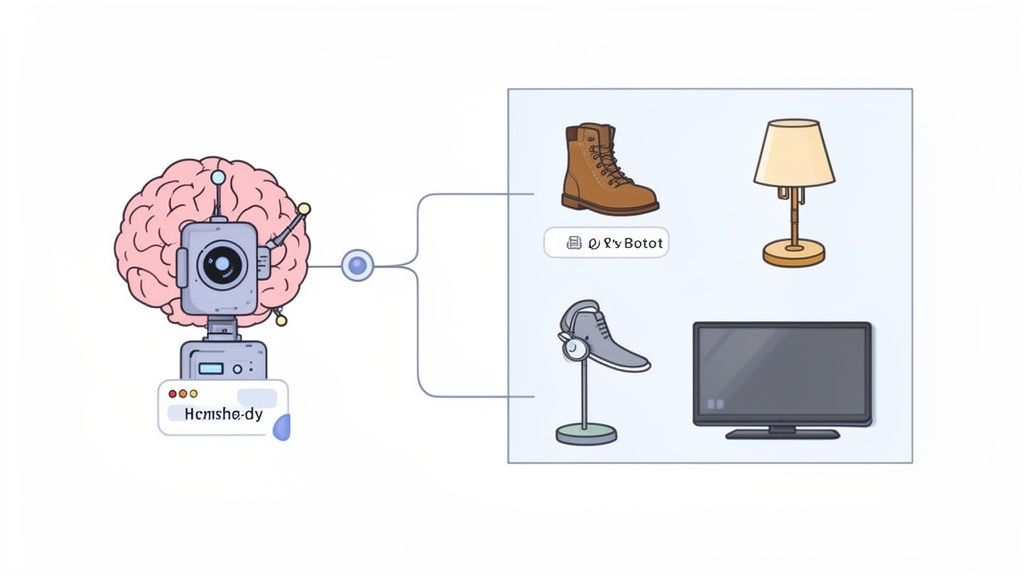
The most powerful AI feature in modern inventory software for home is image recognition. It’s simple: you snap a picture of an item, and the AI gets to work, analyzing the image to automatically identify what it is. It can often figure out the brand, model, and even suggest a category for you.
The whole point of AI here is to eliminate friction. When you can catalog an item in seconds just by taking a photo, you're much more likely to actually keep your inventory up to date.
This means that instead of manually typing "Sony PlayStation 5 Disc Edition," you just take a picture, and the system does the heavy lifting. This single feature transforms cataloging from a mind-numbing chore into a quick, almost effortless task. You can see just how AI-powered item recognition makes this possible.
Ask Your Inventory Questions
Another game-changing AI application is natural language search. This lets you talk to your inventory system like you'd ask a person a question. No more fumbling with exact keywords or navigating complicated filters.
Instead, you can simply ask:
- "Where did I store the camping tent?"
- "Show me all my camera equipment."
- "What electronics are still under warranty?"
The system understands what you mean and instantly gives you the answer, pointing you to the right room, box, or shelf. This intuitive approach makes finding your belongings feel natural and immediate, completely removing the guesswork.
Beyond just tracking what you have, AI is also getting smart enough to offer insights into the condition and expected lifespan of your belongings. This opens the door to things like predictive maintenance in smart homes via AI diagnostics. These features all work together, turning your inventory from a static list into a living, intelligent resource for managing your home.
Your First Home Inventory Project Step by Step
Starting a home inventory can feel like deciding to clean out the entire garage at once, since it’s a project so big you don’t even know where to begin. The secret? Ignore the whole house. Instead, pick one small, manageable space to build some momentum.
Your first target should be something you can knock out in 15 minutes. Think small. This could be your desk drawer, the medicine cabinet, or that one kitchen drawer full of random gadgets. The goal isn't to catalog everything you own in a single day; it's to score a small win that proves this whole process is actually pretty painless.
Gathering Your Tools and Information
Before you start snapping pictures, take a second to gather what you’ll need. This simple prep step is the difference between a smooth workflow and a chaotic scramble that makes you want to quit.
Have these ready to go:
- Your Smartphone: You’ll be using its camera to capture photos and scan any important papers.
- The Inventory App: Have your chosen inventory software for home open and ready on your phone.
- Relevant Documents: If you’re tackling your home office, grab any warranties or receipts for the electronics in that space.
Just getting these few things together turns the task into a focused activity instead of a frantic hunt for stuff.
The best way to build a habit that sticks is to make the first step almost laughably easy. By starting small and being prepared, you replace that feeling of being overwhelmed with a little jolt of accomplishment, which makes you far more likely to keep going.
Establishing Your Workflow
Once you’ve picked your small starting area, you need a simple, repeatable workflow. This is the pattern you'll follow for every item, and before you know it, the process will become second nature.
A great workflow looks like this:
- Pick an Item: Take one thing out of the drawer or off the shelf. Just one.
- Snap a Photo: Get a clear picture of the item. If it has a serial number, take a separate, close-up photo of that, too.
- Add Key Details: Use your app to give the item a name and assign it to a location (e.g., "Office Desk Drawer").
- Attach Documents: If you have the receipt or warranty handy, quickly scan and attach it.
- Tag It: Apply a few relevant tags like "Electronics" or "Warranty." This is a game-changer for finding things later.
By following this exact sequence for each item, you create a rhythm. If you're just starting out and not sure what details matter most, a pre-made guide can be a huge help. You can find an excellent home inventory list template to see what information is most valuable to record for different types of items. This simple little project builds the foundation for a complete, organized, and genuinely useful home inventory.
Frequently Asked Questions About Home Inventory Software
Jumping into a new digital tool always brings up a few questions. It’s smart to wonder about things like data security or how much time you’ll really have to sink into this. Getting those answers sorted out upfront is the best way to start your home inventory project with confidence.
Let's tackle the most common questions people have when they're thinking about using inventory software for home management.
Is My Personal Data Safe
This is a big one, and rightly so. Reputable platforms treat security as their top priority, using end-to-end encryption to lock down your information. Think of it this way: your personal data, photos of your valuables, and any financial details are protected with the same high-level security your online bank uses. Always look for a provider that’s upfront about their security measures, since it's your private information, after all.
How Much Time Does It Take
The thought of cataloging an entire house can feel like a mountain to climb, but you don't have to conquer it all at once. The trick is to start small. Just focus on one room or even a single category, like your electronics. Carving out just 15 to 30 minutes a day can chip away at the project, and before you know it, you’ll have a complete inventory in a few weeks without ever feeling overwhelmed.
This simple, repeatable process is all it takes to get the ball rolling.
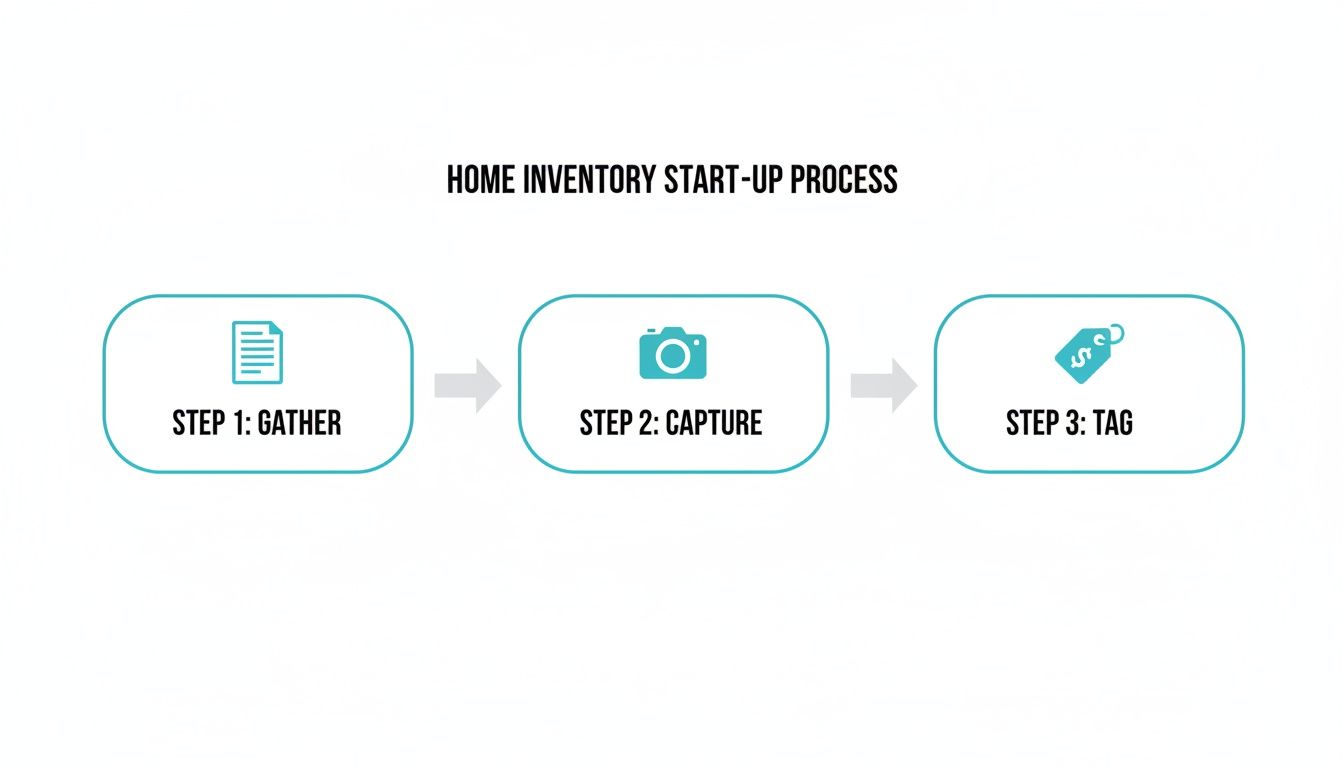
This workflow, which consists of Gather, Capture, and Tag, breaks the whole task down into a few manageable steps.
Can This Handle Specialized Collections
Absolutely. Modern inventory software is a dream for collectors. Whether you’ve got valuable art, a library of rare books, or vintage electronics, you can create custom fields to track the details that matter most. Think of a book's ISBN or the specific provenance of a piece of artwork.
The ability to attach high-resolution photos, appraisal documents, and original receipts directly to each item entry creates an invaluable and detailed record for insurance, potential resale, or personal reference.
This turns a simple list into a rich, detailed archive of the possessions you value most.
Ready to bring clarity and control to your home? Vorby uses powerful AI to make cataloging your belongings fast and effortless. Start your free trial today and discover a smarter way to stay organized. Get started with Vorby.