Staring at a mountain of boxes after a move is overwhelming. I've been there. Before you can even think about organizing, you need a baseline, a starting point for everything you own.
The quickest way I've found to get a handle on it is to create a digital catalog as you unpack. Forget the clipboard and paper. Use photos and simple apps to build an organized list from day one. This approach cuts through the chaos immediately and sets you up for success down the road.
Your Starting Point for Home Inventory
Whether you're settling into a new place, getting your paperwork in order for insurance, or just trying to live a more organized life, establishing your beginning inventory is the most critical first step. Think of it as creating a "before" picture of all your belongings.
This initial list becomes the foundation for everything. It helps you understand exactly what you own and where it is, ending the constant guessing game of "where did I put that thing?"
The value here goes way beyond just being tidy. For most of us, it's about peace of mind. Knowing you have a detailed record can be incredibly calming, especially when life gets hectic. And this doesn't have to be some monumental chore; the right tools and a smart approach make it manageable, even rewarding.
Why Your Starting Inventory Matters
Creating an accurate list from the get-go is more than an organizational exercise. It’s a practical safeguard against loss and a tool for smarter financial planning. The benefits really shine in a few key situations:
- Insurance Preparedness: A detailed inventory is your best friend if you ever have to deal with a claim from theft, fire, or a natural disaster. It's the concrete proof of ownership that adjusters need.
- Moving and Relocating: It helps ensure nothing gets left behind or lost in transit. You'd be surprised how much this can save you in replacement costs.
- Financial Clarity: When you actually see the value of your assets tallied up, it can be a real eye-opener that informs your budgeting and financial goals.
- Organizational Efficiency: Once you know what you have, you're way less likely to buy duplicates, and you can actually find things when you need them.
If you need a structured way to get started, you might want to check out our guide on creating a home inventory list template.
Picture this: you've just moved into your first apartment, surrounded by boxes. Tackling your beginning inventory right then is a game-changer. It's shockingly easy to lose track of things during a move. In fact, a recent survey revealed that 41% of movers lost items worth over $1,000 simply due to poor tracking.
To avoid becoming part of that statistic, here's a pro tip: just snap photos of every room as you unpack. Modern tools can auto-catalog a huge percentage of common items instantly, saving you hours of manual entry.
This decision tree gives you a simple way to figure out where to start, depending on whether you're more of a visual person or a list-maker.
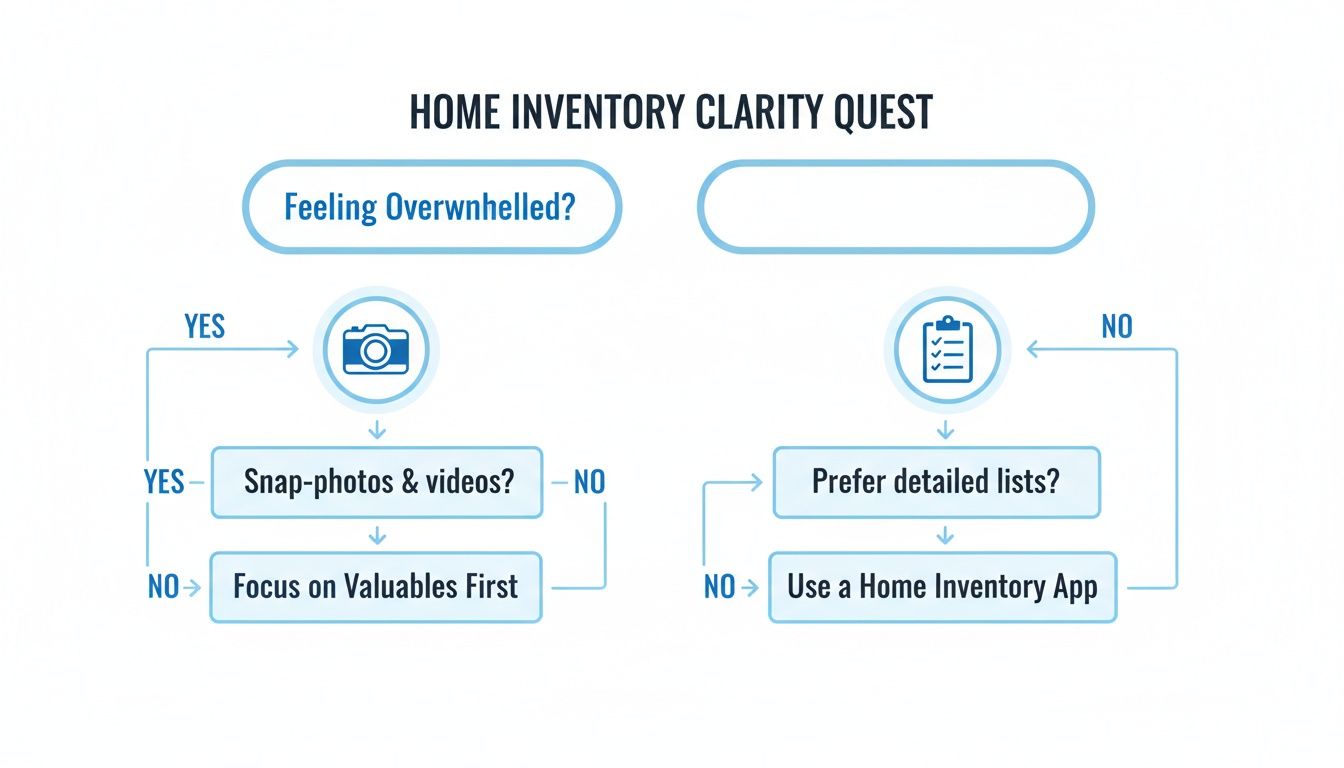
The real takeaway here is that the best method is the one you'll actually stick with. Both paths lead to the same destination: a complete and useful inventory.
The Hands-On Approach: A Physical Count
Sometimes, the most reliable numbers come from the most old-fashioned method: physically counting what you have. I know, the thought of counting every single item in your home sounds absolutely exhausting. But the secret isn't to power through it; it's to avoid doing it all at once.
Success here is all about breaking a massive job into small, satisfying wins.
Forget trying to inventory the entire house in a single weekend, as that’s a recipe for burnout. Instead, just pick one, single, contained space to start. Think one kitchen cabinet, or the closet in the bathroom. By narrowing your focus, you turn an overwhelming monster of a task into a manageable project you can knock out in under an hour. This strategy is gold because it builds momentum and makes the whole process feel way less daunting.
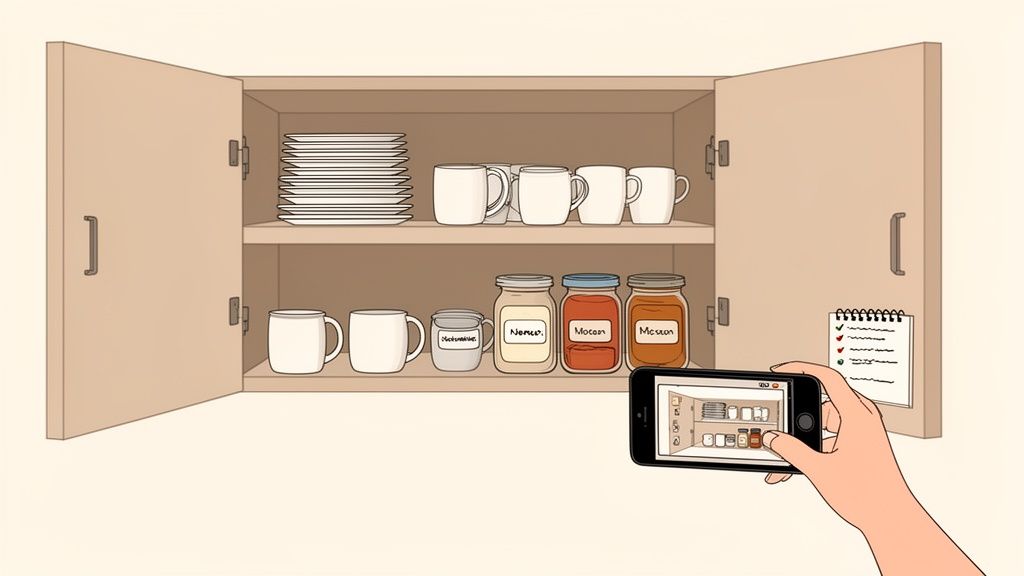
Here's a pro tip from people who've mastered this: before you even start writing things down, grab your phone. Take a quick "before" photo of the shelf or cabinet you're about to tackle. This creates an instant visual record and serves as a great reference point if you get interrupted mid-count.
Making the Count Faster and More Accurate
Once you've picked your starting point, the next move is to group similar items together. Pull everything out of the space and create piles. For instance, put all your cleaning supplies in one spot and all your bath towels in another. This technique, known as batching, makes the actual counting process significantly faster and dramatically reduces the chance of missing something.
From there, you can list these grouped items in a simple notebook or a spreadsheet. The key is just to be consistent with whatever method you choose as you move from one small area to the next.
A physical count isn't just about finding your beginning inventory. It's a prime opportunity to declutter and organize as you go. You'll rediscover forgotten items and can decide what to keep, donate, or discard, making your space more functional in the process.
Let's look at a real-world scenario, like that cluttered garage we all seem to have. A family might feel completely paralyzed by the sheer volume of stuff packed in there. Instead of just giving up, they decide to tackle one single shelf each Saturday morning.
They apply this simple process:
- Empty the Shelf: They take everything off one shelf, placing it all on a tarp in the driveway.
- Group and Sort: Tools go in one pile, gardening supplies in another, and old paint cans in a third.
- Count and Record: They count each group, noting "8 assorted screwdrivers" or "3 bags of potting soil" in their inventory app.
- Organize and Return: Before putting items back, they wipe down the shelf and place everything back in a more organized way, often using labeled bins.
By repeating this small, achievable cycle, they completely transform a chaotic garage into a functional space over the course of a few weeks. Each completed shelf is a small victory that makes it easier to keep going. This hands-on approach to finding your beginning inventory not only builds an accurate list but also delivers a powerful sense of accomplishment, one shelf at a time.
Using Digital Records to Rebuild Your Inventory
What if you could build a surprisingly detailed inventory list without ever leaving your chair? In our digital lives, nearly every purchase leaves a trace. This modern, detective-style approach uses those records to reconstruct your beginning inventory from scratch.
This method is an absolute lifesaver if you do most of your shopping online. Instead of spending hours on a manual count, you’re simply piecing together the records you already have. It turns a tedious chore into a much more manageable puzzle.
Uncovering Clues in Your Email and Statements
Your email inbox is a gold mine. Receipts from Amazon, Wayfair, Target, and countless other online retailers contain everything you need: detailed descriptions, purchase dates, and prices for many of your belongings.
Just search your inbox for terms like "order confirmation," "your receipt," or a specific retailer's name, and you'll instantly pull up dozens of items. This trick is especially great for cataloging those smaller, more recent purchases you might otherwise forget.
Credit card statements offer another critical layer of information. While they usually lack itemized details, they are perfect for jogging your memory about bigger buys. Scanning a few months of statements can help you identify purchases from brick-and-mortar stores that never sent you an email receipt.
Automating the Digital Search
Sure, you could sift through emails and statements manually, but modern tools can do most of the heavy lifting for you. Several apps are built specifically to scan and categorize email receipts, pulling all the key information into a clean, organized list. These tools can turn hours of tedious searching into a hands-off experience.
For busy parents and anyone in a shared household, this digital approach is a game-changer. A clear inventory can finally put an end to those endless "Where's my stuff?" arguments. You can use natural language search to find items from an old move-in scan or let email parsing automatically add new purchases as they happen.
Considering how many new items the average household buys via e-commerce each year, this becomes essential for tracking everything from toys to tech. It can slash the time it takes to find something compared to digging through boxes.
Key Takeaway: Combining your digital records gives you a powerful, multi-layered view of your possessions. Start with email for detailed, recent purchases, then use credit card statements to fill in the gaps for larger, in-person buys.
If you have a mix of digital and paper records, consolidating them is a smart move. Check out our guide on how to digitize paper documents for some simple and effective methods. This creates a single, searchable source of truth for your entire inventory, making it infinitely easier to manage over time.
Valuing Your Items for Insurance and Resale
Your inventory isn't just a list of stuff; it's a financial snapshot of your assets. This becomes painfully obvious when you're dealing with valuable collections, whether it's electronics, antiques, art, or even a closet full of designer handbags. Knowing their true value isn't just for peace of mind; it's a practical necessity for insurance and potential resale.
Figuring out the beginning inventory for these special items goes beyond just noting their existence. It means you need to log the purchase price and date for every single piece. This is the only way to track how its value shifts over time.
A Real-World Example with Camera Gear
Let's take a photography enthusiast. Their collection of camera bodies and lenses isn't just a hobby; it’s a serious investment that can easily run into the tens of thousands. A simple system to log each new piece of gear can make all the difference.
Imagine a basic spreadsheet or an inventory app with just a few key columns:
- Item: Canon R5 Camera Body
- Purchase Date: 06/15/2022
- Purchase Price: $3,899
- Current Resale Value: (This is a field you'd update annually)
This small bit of effort is what connects being organized with being financially savvy. In situations like estate sales, this kind of accurate valuation isn't just helpful, it's absolutely essential for ensuring fair pricing and proper documentation.
For collectors, nailing down your beginning inventory feels like creating a treasure map of your own valuables. Unfortunately, many people lose significant value every year simply from poor tracking. To avoid this, get in the habit of photographing your collections the moment you acquire them. You can read more about why a detailed home inventory for insurance is so critical and how this one step can save you a fortune.
Pro Tip: Don't rely on memory. Scan and save digital copies of your receipts for high-value items. This gives you undeniable proof of purchase and original cost, which is invaluable for both insurance claims and for tax purposes if you ever decide to sell.
For dedicated collectors, the hunt for new items is constant. A recent Collectibles Insurance study found that millions in potential value are lost in the U.S. each year due to shoddy tracking. Collectors often add dozens of items annually through auctions or private sales where receipts might be inconsistent. Using an app to manage this constant inflow leads to a much faster, more accurate valuation process than trying to keep up with manual spreadsheets. This simple act of documentation transforms a pile of possessions into a well-managed portfolio of assets.
Of course. Here is the rewritten section, crafted to sound like it was written by an experienced human expert, not AI.
Common Home Inventory Traps (And How to Sidestep Them)
Creating a home inventory is one of those projects where good intentions can quickly go sideways. You start with a burst of energy, but a few common mistakes can derail the whole process, leaving you with a half-finished list that’s more frustrating than helpful.
The goal isn't just to make a list of your stuff. It's to create a reliable, living document you can actually use, whether for an insurance claim, a move, or just finding that thing you know you own. Let's walk through the most common pitfalls I see and, more importantly, how to avoid them from the get-go.
The "Vague Description" Problem
This is probably the biggest and most frequent mistake. You're in a hurry, so you just type "lamp" or "storage box." A few months later, when you're trying to find that specific lamp or, worse, filing an insurance claim after a disaster, that one-word description is practically useless.
This lack of detail forces you to go hunt for the item anyway, completely defeating the purpose of having an inventory in the first place.
- How to Fix It: Be specific from the start. Instead of "lamp," make it "Blue Ceramic Table Lamp - Living Room." Instead of "storage bin," write "Clear Plastic Bin with Holiday Decorations - Garage Shelf." The ultimate pro move? Snap a quick photo for each entry. A picture eliminates all ambiguity.
The All-or-Nothing Burnout
I’ve seen this one a thousand times. You decide this is the weekend you're going to catalog your entire house. You start strong on Saturday morning, but by Sunday afternoon, you're surrounded by piles of stuff, utterly overwhelmed, and you just give up. The project gets abandoned, leaving you with an incomplete list and a bad taste in your mouth.
The best home inventories are built over time, not in one frantic sprint. Small, consistent efforts are far more sustainable and produce a much more accurate result.
- How to Fix It: Try the "15-Minute Method." Seriously, just set a timer for 15 minutes each day. In that time, inventory one small, manageable area, like a single kitchen drawer, one shelf in your closet, or a couple of big-ticket electronics. This approach turns a marathon into a series of small, satisfying wins and keeps you from burning out.
Forgetting Your Digital Goods
It’s easy to focus on the physical things you can touch, but we often overlook our digital assets, and they can have significant value. Think about it: software licenses, digital movie and music libraries, e-books, online course subscriptions. These things add up.
Leaving these items out of your inventory means you don't have a true picture of what you own. This can be a real headache for insurance purposes or even just for tracking your digital spending and subscriptions.
- How to Fix It: Create a dedicated "Digital Assets" section in your inventory. For each entry, log the product name, when you bought it, how much it cost, and any license keys or account info. A really quick way to do this is to simply take screenshots of your purchase histories or digital libraries. It’s fast, effective, and gives you a clear record.
Your Top Home Inventory Questions, Answered
Jumping into the world of home inventory can bring up a lot of questions. Getting clear, practical answers is the key to making the effort worth it and feeling confident you're doing it right. Here are the essentials I've learned over the years.
How Often Should I Update My Home Inventory?
A full, top-to-bottom review once a year is a fantastic goal, but let's be realistic, it's not always practical. The most effective habit is to treat your inventory as a living document.
When you buy that new TV, add it to the list. When you finally sell that old couch, take a moment to remove it. This "living inventory" approach is far less overwhelming than a massive annual audit and keeps your records consistently accurate.
What Is the Difference Between Beginning and Ending Inventory?
In a home context, these terms are much simpler than they sound. Your beginning inventory is just a complete list of your items at a specific starting point, think the day you move into a new house or the first day of a big organizing project.
Your ending inventory is that same list at the end of a defined period, say, on December 31st. The concept is continuous; your inventory list from the end of one year simply becomes the beginning inventory for the next.
The key takeaway is that your inventory is a continuous snapshot of what you own. One period's final list is the next period's starting point, creating an unbroken record of your assets over time.
What Are the Best Tools for a Beginner?
Honestly, the best tool is the one you'll actually stick with, so don't overcomplicate it. A simple Google Sheet is a fantastic and completely free place to start. You can easily create columns for the item name, its location, an estimated value, and even a link to a photo.
But if you're looking for a more automated and powerful solution, a dedicated home inventory app is well worth considering. These often include features that can save you dozens of hours, such as:
- Photo Recognition: Automatically identifies and catalogs items from a picture.
- Barcode Scanning: Lets you quickly add items with a simple scan from your phone.
- Receipt Parsing: Scans your email for receipts and adds new purchases for you.
Should I Include Low-Value Items in My Inventory?
This really depends on your main goal for creating the inventory in the first place.
If you're doing this for insurance purposes, your focus should be squarely on high-value items: electronics, furniture, jewelry, antiques, and other collectibles. These are the things that would be most costly to replace, so detailed documentation is critical.
If your goal is pure organization, however, cataloging lower-value items can be a game-changer. Knowing exactly which bin holds your craft supplies or holiday decorations will save you from endlessly searching later. A smart strategy is to start with your most valuable possessions first, then gradually add other categories as you have the time and motivation. Don't pressure yourself to catalog every single fork on day one.
Ready to stop searching and start finding? Vorby uses AI to help you build a complete, searchable inventory of your home. Use natural language to ask "Where are my headphones?" and get an instant answer. With automatic receipt parsing and advanced image recognition, cataloging what you own has never been easier. Start your free trial at https://vorby.com.