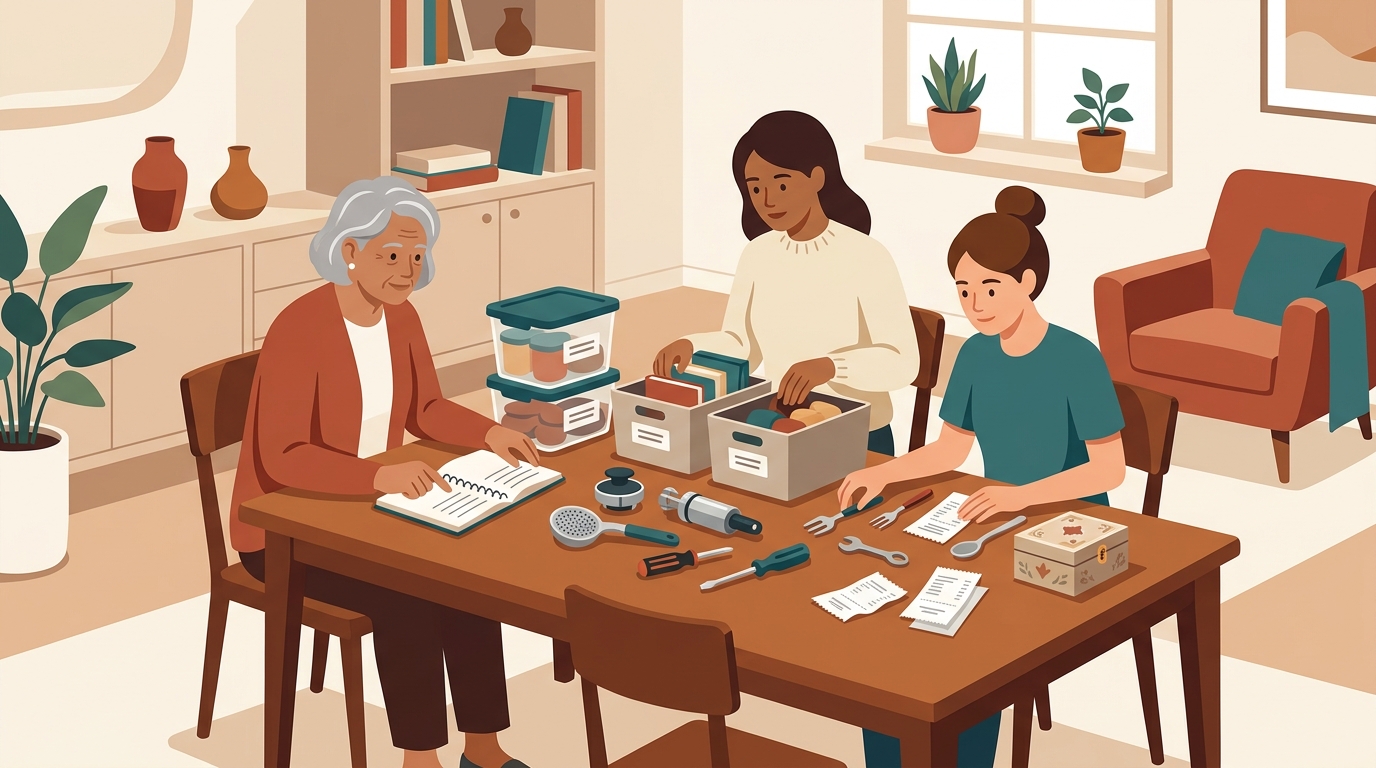
Multigenerational household inventory sounds like paperwork until the first real-life stress test: a basement flood, a move, a warranty claim, a parent downsizing into the house, or three people insisting the same air fryer belongs to them. When multiple generations live under one roof, belongings stop being simple. Some items are personal, some are shared, some are inherited, some are borrowed, and some are quietly duplicated because nobody knew one already existed.
The shift is not rare. Pew Research Center, analyzing census data, found that 59.7 million people in the United States lived in multigenerational family households in March 2021, 18% of the population. Pew also reported that the number of people in multigenerational homes quadrupled from 1971 to 2021. The U.S. Census Bureau uses related household and family data to track how Americans live together, while Statista has treated multigenerational households as a recurring U.S. household data category. This is not a niche living arrangement. It is a normal way families handle housing costs, caregiving, adult children returning home, aging parents, childcare, and cultural preference.
An inventory will not solve every family disagreement, but it gives the household one shared record of what exists, where it is, who uses it, and what proof exists if something breaks or disappears. For a family with grandparents, parents, adult children, teenagers, and sometimes in-laws under one roof, that record turns a crowded home into a manageable system.
Why multigenerational homes need a different inventory system
A single-person home can get away with memory. A couple can often rely on a few shared folders and a receipt drawer. A multigenerational home needs more structure because the household has more owners, more histories, more handoffs, and more invisible assumptions.
More people means more categories of ownership
In a shared family home, ownership is not binary. A grandmother may own the china cabinet, the parents may own the dining table, the household may share the sofa, one adult child may bring a gaming console, and everyone may use the washer. A basic list of possessions misses the practical question: who decides what happens to the item?
That distinction matters during moves, repairs, insurance claims, estate planning, and everyday maintenance. If the family replaces a shared refrigerator, the receipt belongs with the household. If an older parent brings a medical device, the receipt, serial number, and warranty may need to be accessible to one caregiver but not treated as general household equipment. If an adult child buys a high-end espresso machine for the kitchen, the family should know whether it stays with them when they move out.
Memory gets less reliable as the household grows
Families often assume someone knows where the manual, receipt, or spare part is. In practice, that person is usually busy, unavailable, or not the person standing next to the broken appliance. The Insurance Information Institute recommends creating a home inventory with photos, descriptions, purchase dates, serial numbers, receipts, and estimated values because that information supports insurance claims after a loss. The same record also helps the family make faster decisions before a loss.
When the upstairs closet holds holiday decorations, a grandparent's documents, old baby gear, and college storage boxes, labels alone are not enough. A searchable inventory helps people find what they need without opening six bins and texting five relatives.
Shared living creates emotional stakes
Inventory is not just about stuff. It is about respect. A box of tools may represent a parent's years of work. A quilt may be a family heirloom. A teenager's soccer gear may be urgent on a Saturday morning. A grandparent's medical paperwork may be sensitive. A good system keeps practical details visible while leaving room for the emotional value attached to belongings.
The goal is not to make the home feel managed by a spreadsheet. The goal is to make sure nobody has to prove, remember, or defend what matters when the house is already busy.
Start with household zones, not individual rooms
The easiest mistake is trying to inventory the entire home room by room in one weekend. That creates fatigue and half-finished lists. Multigenerational homes work better when you divide the home into zones based on how people actually use the space.
Shared zones
Shared zones include the kitchen, living room, laundry area, garage, storage closets, pantry, yard, and utility spaces. These are the places where responsibility gets blurry. The blender might be used by everyone, but bought by one person. The lawn mower might be maintained by one parent, but needed by the whole household. The storage shelves might contain a mix of heirlooms, seasonal decor, tools, and donations waiting for a decision.
Start here because shared zones produce the most friction and the most duplicate spending. Vorby's guide to inventorying shared kitchen gadgets is a useful sibling workflow for one of the busiest shared spaces in the house. The same principle applies to garage tools, cleaning supplies, pantry equipment, and family entertainment devices.
Private zones
Private bedrooms, offices, craft rooms, and personal storage areas need a lighter touch. Adults should not feel like every item in their room is being audited by the family. Instead, agree on categories that belong in the shared inventory: expensive electronics, insured jewelry, medical equipment, family documents, items borrowed from another household member, and belongings stored in common areas.
For teenagers and adult children, this can become a useful life skill. They learn to keep photos of electronics, note serial numbers, and save receipts for items they may want to insure later as renters or homeowners.
Transition zones
Multigenerational households change constantly. A parent moves in after surgery. A college student comes home for the summer. A grandparent downsizes from a larger home. A family member stores furniture while looking for an apartment. These transition zones need explicit labels: temporary storage, undecided, donation, belongs to, and shared use.
If the home recently merged households, read Vorby's article on ways couples can inventory and merge homes. The family scale is bigger, but the core problem is the same: duplicates, sentimental items, shared purchases, and decisions that become harder the longer they sit unmade.
Define ownership before you list every item
Inventory gets easier when the household agrees on ownership categories first. You do not need legal language for every toaster and folding table. You need clear enough categories that people can find, use, repair, replace, donate, or move items without surprise.
Use four simple ownership labels
A practical multigenerational household inventory can use four labels:
- Personal: Owned by one person and not for general household use.
- Shared household: Used by the household and staying with the home unless the family agrees otherwise.
- Family heirloom: Sentimental or inherited, with a named steward and notes about family history.
- Borrowed or temporary: Stored in the home but expected to return to someone else or leave at a specific time.
This keeps the system simple enough to use. It also prevents the quiet drift that happens when temporary storage becomes permanent storage, or when personal property becomes assumed household property because everyone uses it.
Separate owner from user
One person may own an item while another person uses it most often. The mobility scooter may belong to a grandparent, but a caregiver may handle charging and maintenance. The family camera may be owned by a parent, but a teenager may use it for school projects. The outdoor grill may be a shared household item, but one person may be responsible for propane, cleaning, and winter cover storage.
Track owner, primary user, and maintenance contact separately. That sounds formal, but it reduces confusion. When the filter needs replacing or the warranty form asks for a purchase date, the family knows who has context.
Mark what should not be donated
Decluttering is risky in a multigenerational home because one person's clutter can be another person's memory. Create a visible inventory tag for do not donate, ask first, or family keepsake. Use it for heirlooms, photo albums, military records, handmade items, inherited furniture, old tools, and anything tied to family history.
This is especially important during downsizing. A grandparent moving into an adult child's home may already be grieving the loss of space. Inventory should not turn that transition into a second loss by making their belongings feel disposable.
Capture the details that matter for insurance, repairs, and receipts
A family inventory should be useful on an ordinary Tuesday and during a bad week. That means each item record should capture enough detail to support repair, replacement, insurance, and tax or warranty questions without requiring a scavenger hunt.
Record proof, not just names
For high-value items, include photos, brand, model, serial number, purchase date, approximate value, receipt, warranty expiration, and storage location. The Insurance Information Institute's home inventory guidance emphasizes room-by-room documentation, photos or video, receipts, serial numbers, and keeping the inventory somewhere safe. In a multigenerational home, safe also means accessible to the right people.
A current inventory also helps with everyday recovery. If a freezer fails, a bike is stolen from the garage, or a laptop is damaged during a plumbing leak, the family can move from panic to documentation quickly. The record gives everyone the same starting point: what the item was, where it lived, what it cost, and which proof is already attached.
Attach receipts where decisions happen
Receipts scattered across email inboxes, wallets, paper folders, and store accounts are not a system. For shared households, the receipt should live with the item record so the person solving the problem can see it. If the dishwasher breaks, the family should not need to ask who bought it, which card was used, and where the warranty email went.
This matters for recurring categories too. Appliances, furniture, home office equipment, medical supplies, and childcare gear often have return windows, warranty periods, and replacement cycles. A receipt organizer is not glamorous, but it is one of the simplest ways to stop family logistics from becoming detective work.
Use photos to settle ambiguity
Photos make inventory faster and more trustworthy. Photograph the item, the serial number plate, the receipt if paper, the warranty card, and the storage location. For bins, photograph the open bin before closing it, then label the bin with a short name that matches the inventory record.
For heirlooms, add a photo and a short note about the story. The note may matter more than the estimated value. A future family member should know why the rocking chair, serving platter, or tool chest was kept.
Build a repeatable workflow for busy families
The best inventory system is the one a real family will keep using. Multigenerational households have school pickups, caregiving, meal planning, work schedules, medical appointments, sports, house projects, and visitors. The workflow needs to fit into family life, not become another guilt project.
Use short passes instead of a marathon
Start with one zone and one category. For example: kitchen appliances over $75, garage power tools, shared electronics, medical devices, or heirlooms in storage. Set a timer for 45 minutes. Photograph, label, and record only what fits in that pass. Then stop.
This works because visible progress builds trust. A complete garage inventory can wait. A searchable record of the pressure washer, drill batteries, extension cords, and leaf blower can start saving time immediately.
Assign roles by strength
Do not make one person responsible for everything. One family member can take photos, another can read model numbers, another can attach receipts, and another can decide ownership labels. Older relatives may provide the history of heirlooms. Younger adults may be faster with scanning and uploads. Kids can help label bins if the categories are clear.
The point is shared participation, not perfection. When people help build the record, they are more likely to trust it later.
Create a new item rule
The easiest inventory to maintain is the one that captures new items at the door. For every new shared or high-value item, record it within a week of purchase. Add a photo, owner, location, receipt, and warranty details. If it is a shared purchase, note who paid and whether reimbursement is needed.
This is the same habit that helps roommates avoid confusion during move-out. Vorby's roommate move-in inventory checklist is written for non-family shared housing, but the intake principle works beautifully for families: document the starting point before memory starts rewriting it.
Handle sensitive categories with care
Some belongings are practical. Others carry privacy, money, grief, health information, or future legal importance. A multigenerational inventory should be clear without making sensitive information too public inside the household. This is where the family should agree on access, not just labels. The person who needs warranty details for a lift chair may not need to see private health notes, and the person who can find the safe should not automatically control every document inside it.
Medical and caregiving items
Track medical equipment, mobility aids, monitoring devices, prescription storage devices, spare batteries, chargers, and warranty or service information. Include who uses the item, who maintains it, and where emergency accessories live. Do not put private medical details in a general household note if everyone can see it. Keep the inventory useful, not invasive.
For caregiving households, the most helpful field is often location. If a walker, blood pressure cuff, backup charger, or medication lockbox moves between rooms, the family needs one place to check before stress takes over.
Documents and identity records
Birth certificates, passports, Social Security cards, property documents, vehicle titles, insurance policies, and estate papers should be inventoried at the folder or safe level, not copied into an open household record. Record that the document exists, where it is stored, and who has access. Do not upload sensitive identity documents unless the storage system is designed for that level of security.
For insurance, keep policy numbers and agent contact information available to the adults who would file a claim. After a fire, theft, or flood, the family should know where the inventory is, how to access it, and which items have proof attached.
Inherited and sentimental items
Sentimental belongings need context. Add notes such as from Grandma Elena's kitchen, bought by Dad after his first job, handmade by Kelsey in 2021, or part of the Peterson holiday set. These notes reduce accidental donations and make future decisions kinder.
If the family expects future estate conversations, avoid turning the household inventory into a battleground. Record facts first: item, location, current steward, known history, and any existing written instructions. Save allocation decisions for the appropriate family process.
What to look for in a household inventory app
A multigenerational household does not need a complicated database. It needs a calm shared system that supports photos, locations, proof, and household access. Keep the feature checklist short and practical.
Core features that matter
- Shared household access: More than one adult should be able to add, edit, and find items.
- Photos and receipts: Item photos, receipt images, and serial number photos should live with the item.
- Locations and containers: The system should handle rooms, closets, shelves, bins, and off-site storage.
- Ownership notes: The app should let you distinguish personal, shared, heirloom, and temporary items.
- Search: Family members should be able to find blender, passport folder, leaf blower, or holiday lights without remembering the exact category.
- Export or backup: A household record should not be trapped where the family cannot retrieve it.
Keep the system family-friendly
The app should make the next right action obvious. Add an item. Add a photo. Add a receipt. Choose a location. Add ownership notes. If the workflow requires ten required fields, people will avoid it. If it works in the moment, people will use it while unpacking, cleaning, replacing, and preparing for a move.
For families that rent or have adult children moving between homes, Vorby's renter guide to documenting possessions is a useful companion. It reinforces the habit of keeping proof attached to belongings before there is a claim or move-out dispute.
Multigenerational household inventory FAQ
What should a multigenerational household inventory include?
Include shared items, high-value personal belongings, appliances, electronics, medical equipment, tools, heirlooms, important document locations, receipts, warranties, serial numbers, photos, owner notes, and storage locations. Start with the items that would be expensive, hard to replace, or emotionally painful to lose.
Who should manage the inventory in a shared family home?
One person can coordinate the system, but the household should share responsibility. The best setup lets each adult add items, update locations, and attach receipts for the belongings they know best.
How do you inventory belongings when an aging parent moves in?
Start with medical equipment, important documents, heirlooms, furniture, electronics, and anything stored in shared spaces. Label items as personal, shared, heirloom, or temporary so the move feels respectful and future decisions are clear.
How often should a family update its home inventory?
Update it whenever a shared or valuable item enters the home, then do a light review twice a year. Seasonal storage changes, school-year transitions, holidays, and insurance renewals are natural times to check the record.
Can a household inventory help with insurance claims?
Yes. The Insurance Information Institute recommends photos, descriptions, serial numbers, receipts, and values because they help support claims after theft, fire, or other covered losses. A current inventory helps the family prove what was owned and what it may cost to replace.
Turn the shared home into a shared system
A multigenerational home works best when the people inside it do not have to rely on memory for every object, receipt, and decision. Start with shared zones, label ownership clearly, attach proof, and protect the stories behind the items that matter most. Revisit the record during big family transitions so it stays useful, current, and trusted.
Shared family homes run better when belongings are visible and decisions are clear. Vorby gives multigenerational households one calm place to track what they own together. Start your household inventory today.


