The moments after a house fire are a blur of chaos and disbelief. Your world feels upside down, and it's nearly impossible to think clearly. But the actions you take in these first crucial hours can dramatically impact how smoothly your recovery goes. The absolute first priority is safety, yours and your family's. Only then can you move on to the critical calls that get the ball rolling.
Your First 24 Hours: An Action Plan for the Aftermath
In the immediate wake of a fire, adrenaline is pumping, and shock can easily set in. It’s a deeply disorienting experience. The key is to take a breath and focus on a prioritized list of actions. This isn’t about doing everything at once; it’s about doing the right things in the right order to protect your health, your finances, and your property.
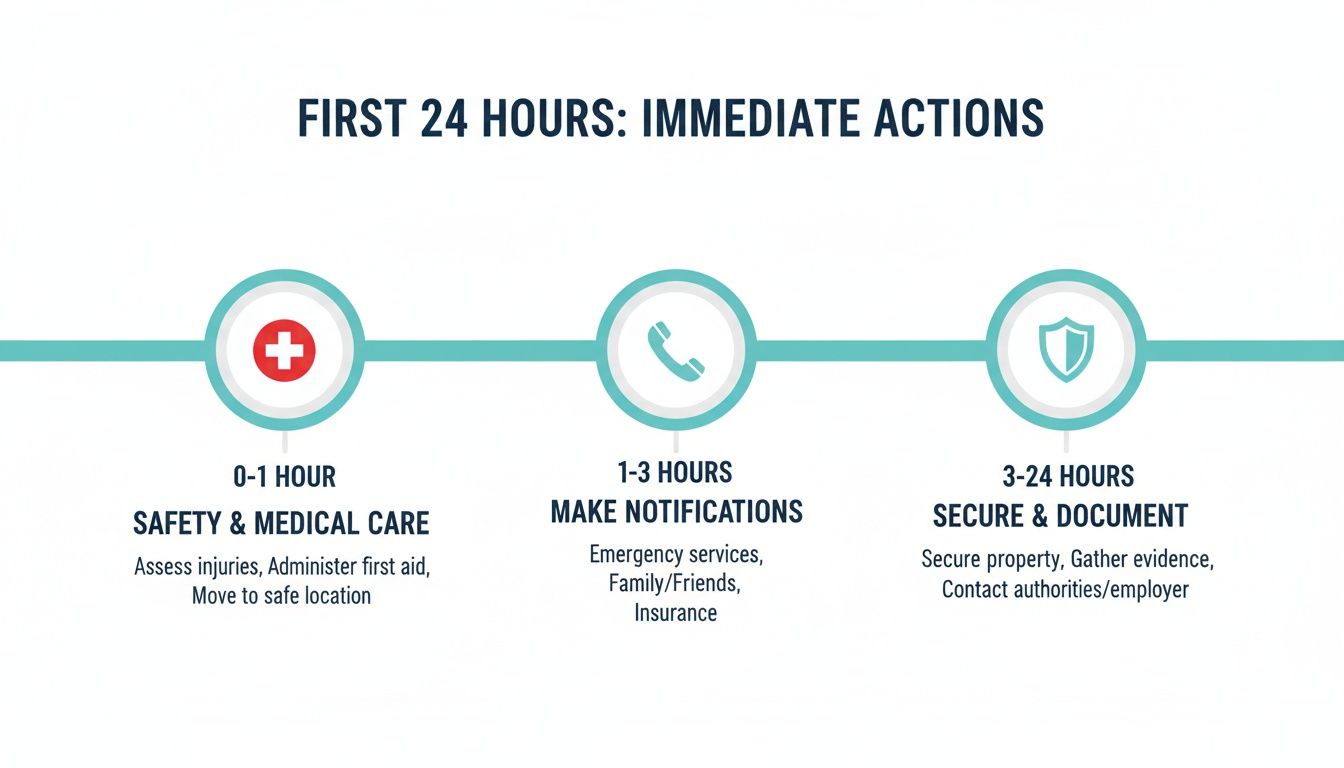
This timeline gives you a clear sequence: check on everyone’s well-being, make the necessary calls to kickstart the recovery, and then secure the property once officials give the all-clear. Everything else can wait.
Prioritize Health and Safety Above All
Your gut instinct might be to rush toward the house to see what’s left, but your family's health is the only thing that truly matters right now.
Even if you think everyone is fine, you need to get checked out by a medical professional. Smoke inhalation is a silent and serious threat that can cause major respiratory problems hours after exposure. Paramedics on site are a great first step, but a follow-up visit to a doctor or urgent care is a smart move for everyone who was inside.
Don't forget your pets. They are just as vulnerable to stress and smoke. Find a safe place for them to stay, whether it's with a friend, a vet, or a local animal shelter.
Making the Right Calls in the Right Order
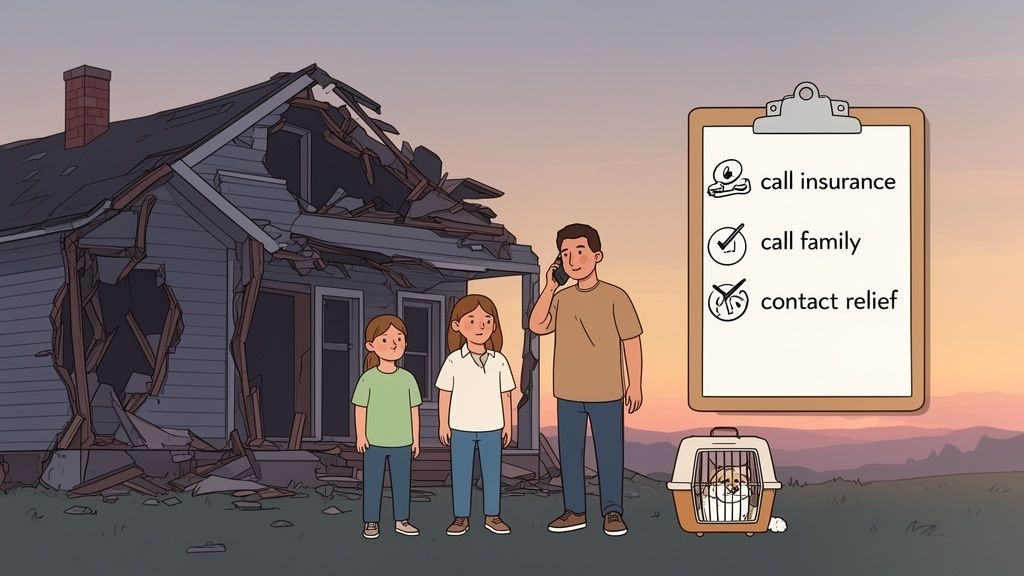
Once you know everyone is safe, it’s time to reach for your phone. The sheer number of people to contact can feel daunting, so here’s who to call first.
- Your Insurance Company: This should be your very first call. The sooner you contact your agent, the faster they can start your claim. They can also authorize immediate funds for essentials like a hotel, clothes, and food through your policy's Additional Living Expenses (ALE) coverage.
- Close Family and Friends: Let your support network know you’re safe. They can offer a place to stay, a shoulder to cry on, and practical help when you're too overwhelmed to think. Lean on them.
- Relief Organizations: Groups like the American Red Cross are geared up for exactly this kind of disaster. They can provide immediate, no-cost assistance with shelter, food, and mental health resources.
Navigating this initial period is confusing, but having a clear guide for the first steps to take after a fire can make all the difference.
To make things even clearer, here is a quick-reference checklist of the essential contacts and actions for that first critical day.
Immediate Action Checklist After a House Fire
This table prioritizes the contacts and actions you need to take within the first 24 hours to ensure safety and begin the long process of recovery.
| Priority | Action Item | Who to Contact | Key Purpose |
|---|---|---|---|
| 1 (Highest) | Confirm Safety & Seek Medical Care | Paramedics, Doctor, Urgent Care | Address immediate injuries and prevent delayed effects from smoke inhalation. |
| 2 | Start Your Insurance Claim | Insurance Agent/Company | Access emergency funds (ALE) for housing, food, and clothing. |
| 3 | Notify Your Inner Circle | Close Family & Friends | Secure emotional support and immediate practical help (e.g., a place to stay). |
| 4 | Arrange for Pet Safety | Veterinarian, Animal Shelter, Friend | Ensure pets are safe, sheltered, and receive any needed medical attention. |
| 5 | Contact Immediate Relief Services | American Red Cross, Salvation Army | Get access to free temporary shelter, food, and essential supplies. |
| 6 | Request the Fire Report | Local Fire Department | Obtain the official report needed for your insurance claim. |
| 7 | Secure the Property (When Cleared) | Board-Up Service (often via insurer) | Prevent looting, vandalism, and further weather damage to the property. |
Following this checklist helps bring a sense of order to an incredibly chaotic situation, ensuring you cover the most critical bases first.
What Not to Do: Secure the Property and Wait
The fire department will be very clear about when it is safe to approach your property. Do not, under any circumstances, go back inside until the fire marshal gives you official permission. The structure could be dangerously unstable, and the air will be full of toxic materials.
Your insurance policy requires you to take "reasonable steps" to prevent further damage. This usually means boarding up broken windows or placing a tarp over a damaged roof. Your insurer can often recommend a company for this. Crucially, do not start cleaning up or throwing anything away. Doing so can seriously compromise your insurance claim.
The numbers here are sobering. In the U.S., a fire department responds to a fire every 23 seconds. After the flames are out, the financial recovery begins, and this is where documentation becomes everything. Experts estimate that insurance claims without a detailed inventory are often undervalued by as much as 20-30%. This is precisely where having a pre-disaster home inventory, like an emergency grab-and-go inventory, can be a game-changer.
Navigating Your Insurance Claim Like a Pro
The road to recovery after a house fire runs straight through your insurance company. I know from experience that this part of the journey can feel just as overwhelming as the fire itself. Getting this process started quickly and correctly is one of the most important things you can do right now.
Your first call is to your insurer to formally report the loss. This is what kicks off the claim process and gets a claims adjuster assigned to your case.
This person will be your main point of contact. Their job is to dig into the damage to your home and belongings to figure out what your policy will pay out. Try to build a professional, cooperative relationship with them. It can genuinely make a huge difference. But always remember: their primary responsibility is to their employer, not to you.
This is where your own preparation becomes your greatest asset. The single most powerful thing you can do to guarantee a fair settlement is to document every single item that was lost or damaged. I can't stress this enough.
Why Detailed Documentation Is Everything
Trying to remember every single thing you owned is a monumental, if not impossible, task after a fire. The shock and stress make it incredibly difficult to recall the contents of every closet, drawer, and cabinet. This is why a complete inventory isn't just a "nice-to-have"; it's an absolute necessity for a successful claim.
If you didn't have an inventory before the fire, you'll have to build one from scratch now. Here’s a practical way to tackle it:
- Become a Photographer. Once you get the all-clear to enter, walk through every room and systematically record the damage. Take wide shots, then zoom in. Open what’s left of drawers and closets. Capture everything from the big-ticket appliances to the smallest personal items.
- Itemize Everything. Start a spreadsheet or grab a notebook. For each item, list what it was, roughly what it cost, its age, and what you think it would cost to replace today.
- Hunt for Proof. This is the tedious part. Scour your email for old receipts from Amazon or other online stores. Dig through credit card statements. Look for old photos or videos of your home that show your belongings in the background.
This process is emotionally brutal, but it's financially critical. This documentation is the hard evidence that backs up the value of your claim.
Pre-Disaster Inventories Are a Game Changer
Honestly, the best protection is having a detailed home inventory finished before disaster strikes. A house fire is a nightmare that over 350,000 U.S. households endure every single year. How fast you recover often comes down to how quickly and accurately you can prove what you lost.
Residential fire losses now top $48 billion annually, a number that highlights the staggering financial devastation. It’s been shown that after major disasters, communities where homeowners had well-documented insurance claims were able to rebuild significantly faster.
This is where a digital home inventory app becomes your secret weapon. Having all your possessions already photographed, categorized, and valued transforms your entire claim experience.
Instead of spending agonizing weeks trying to rebuild a list of your life's possessions from a traumatized memory, you just export a detailed report and email it to your adjuster. This one step can shrink your claim time from months to mere weeks.
This level of organized, detailed proof leaves little room for dispute with the insurance company, which helps speed up your settlement so you can start rebuilding your life. To get ahead of any potential disaster, you can check out our comprehensive guide to creating a home inventory for insurance.
Understanding Key Insurance Terms
As you get deeper into your claim, you're going to hear a lot of jargon that directly impacts your final payout. The two most important terms you need to understand are Actual Cash Value (ACV) and Replacement Cost Value (RCV).
- Actual Cash Value (ACV): This is the value of your damaged property minus depreciation. Think of it like the "garage sale" value. Your five-year-old sofa might have cost $2,000, but because of wear and tear, its ACV might only be $800 today.
- Replacement Cost Value (RCV): This is the cost to buy a new, similar item at today's prices. Most policies pay out the ACV first. Then, once you've actually replaced the item and sent them the receipt, they'll release the remaining funds (the depreciation).
Knowing which coverage you have is critical. RCV policies offer far better financial protection, but you need to understand the two-step payout process to budget correctly for replacements. Never hesitate to ask your adjuster to clarify any terms you don't understand. A clear line of communication and your detailed documentation are the best tools you have for getting the full and fair settlement you’re entitled to.
Handling Cleanup and Salvaging Your Belongings
The moment officials say it’s safe to go back inside is a strange mix of relief and dread. This is where the physical recovery begins, but it's a minefield. You're not just dealing with what you can see; you're facing hidden dangers like a weakened structure, toxic residue, and chemical fumes. Getting through this means putting safety first, long before you even think about what can be saved.Before you start sorting through what’s left, you have to understand the full scope of the damage. The fire is just the first part of the problem. Firefighters’ hoses unleash a massive amount of water, creating the perfect breeding ground for mold, which can take hold in as little as 24 to 48 hours.
On top of that, smoke and soot aren't just messy, they’re acidic. They will continue to eat away at surfaces long after the fire is out, and inhaling those particles poses a serious health risk.
Understanding the Hidden Dangers
Never, ever try to handle a large-scale fire cleanup on your own. The risks are just too high, and the good news is your insurance policy almost certainly covers professional restoration services. Fire residue is loaded with toxic particles, and the structural integrity of your home can be compromised in ways that are impossible to spot with an untrained eye.
Here are the primary hazards you absolutely need to be aware of:
- Structural Damage: The intense heat from a fire can weaken floors, walls, and ceilings. Something that looks perfectly stable could collapse without any warning. You have to move with extreme caution and stay out of any area that feels remotely unsteady.
- Soot and Smoke Residue: Soot is an oily, acidic nightmare that starts damaging materials the second it touches them. Smoke particles are microscopic, allowing them to seep deep into porous things like wood, drywall, and fabric, embedding odors and harmful chemicals.
- Water Damage and Mold: All that water used to extinguish the blaze creates its own crisis. Saturated drywall, insulation, and wood become a five-star resort for dangerous mold, which can cause significant respiratory problems.
- Electrical Hazards: Even with the main power shut off, any standing water near electrical wiring or appliances is a serious electrocution risk. Don't take any chances.
With all this in mind, hiring a certified fire restoration company isn't a luxury; it's a necessity. They have the training, industrial-grade equipment, and personal protective gear (PPE) to navigate these hazards safely.
A professional restoration service does way more than just clean. They assess structural safety, extract water, treat for mold, and use specialized techniques like ozone treatments or thermal fogging to permanently remove smoke odor from the building and your belongings.
Sorting and Salvaging Your Possessions
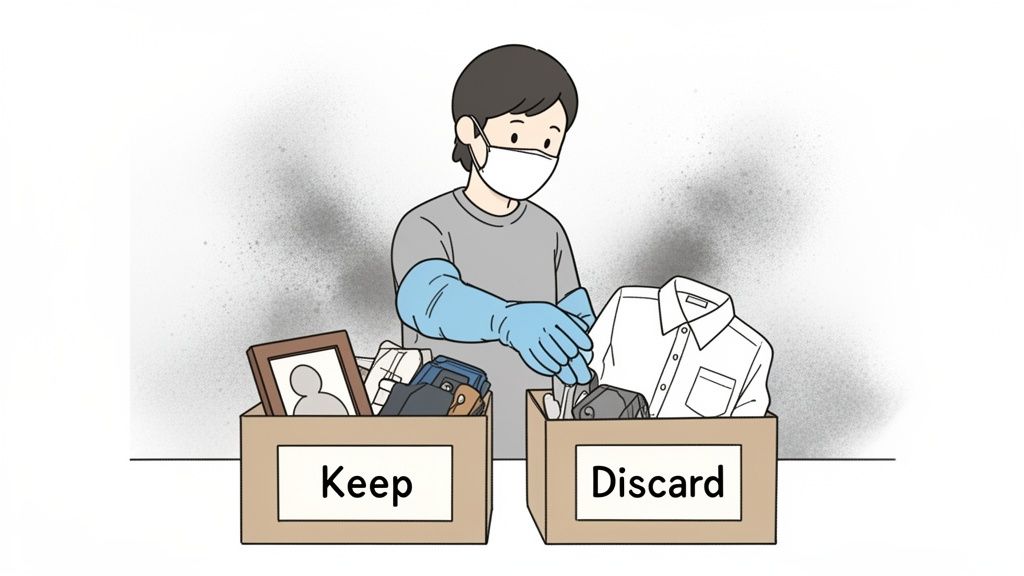
Walking through your home to decide what to keep and what to let go of is gut-wrenching. To avoid getting completely overwhelmed, try to create a system. Set up a few distinct areas or use clearly labeled boxes for categories like "Keep," "Restore," and "Discard."
As you go, photograph everything before you move or touch it. This visual documentation is absolutely critical for your insurance claim, especially for items that are a total loss.
Deciding What Can Be Saved
Knowing what's realistically salvageable versus what's a lost cause can save you a lot of time, money, and emotional energy. It’s a triage process.
| Item Category | Typically Salvageable | Often a Total Loss |
|---|---|---|
| Non-Porous Hard Goods | Glass, ceramics, and metal can often be professionally cleaned and fully restored. | Plastic items that have melted, warped, or been discolored by heat are usually unsalvageable. |
| Wood Furniture | Solid wood pieces can sometimes be refinished to remove smoke damage and seal in odors. | Particleboard or laminate furniture almost always swells from water damage and traps smoke odor forever. |
| Electronics | Some devices might be saved by a specialist, but internal corrosion and heat damage are common. | Anything with visible heat or water damage is almost certainly a complete loss. It’s not worth the fire risk. |
| Textiles | Clothing and linens can sometimes be saved with specialized laundering and ozone treatments for smoke removal. | Items that are heavily sooted, scorched, or have any signs of mold or mildew are usually beyond repair. |
| Documents & Photos | Freeze-drying services can sometimes save important papers and photos that are wet but not burned. | Anything that has been directly burned or has turned to ash is gone. |
This process is deeply personal, and it's especially hard when dealing with sentimental items. Give yourself permission to grieve what you’ve lost. It’s more than okay to feel overwhelmed. Focus on one small section at a time, and don't be afraid to lean on friends or family to help you through it. Your emotional well-being is every bit as important as the physical cleanup.
Rebuilding Your Life, One Document at a Time
A house fire doesn’t just burn through walls and furniture; it vaporizes the essential paperwork that defines your life. The administrative recovery is a huge, often unseen part of picking up the pieces. This process of systematically replacing vital records while securing a stable place to live is the foundation for getting back to normal.
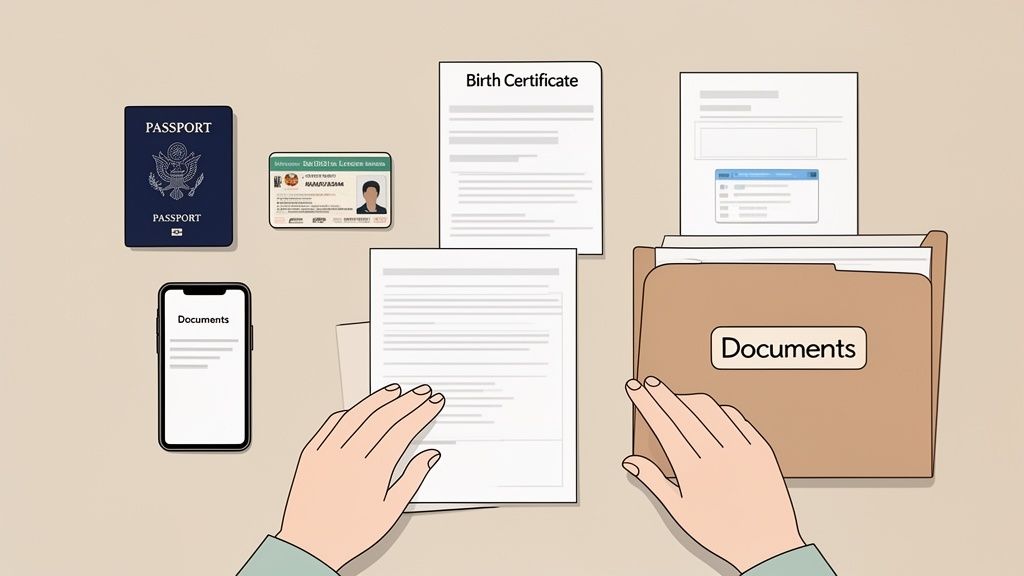
The task of replacing every single important document can feel absolutely crushing. The trick is to break it down. Think of it as a checklist, where each replaced document is a small but significant victory.
First Things First: Replacing Your Most Important Documents
Before you do anything else, grab a notebook and create a master list of every document you can think of that needs replacing. This list will become your roadmap. To keep from getting completely overwhelmed, just focus on tackling one or two items a day.
Here’s a practical guide to replacing the most crucial paperwork:
- Driver's Licenses and State IDs: Head to your local Department of Motor Vehicles (DMV) website first. Most states have an online portal to request a duplicate, which is almost always the fastest way. You'll typically just need your Social Security number and a small fee.
- Social Security and Medicare Cards: You can request a new Social Security card through the Social Security Administration's website or by visiting a local office. The good news is you probably don't need the physical card for most things as long as you know your number. A replacement Medicare card can also be requested online.
- Birth, Marriage, and Death Certificates: These are handled by the vital records office in the state or county where the event happened. The Centers for Disease Control and Prevention (CDC) has a super helpful online directory to pinpoint the correct agency for any state.
- Passports: The U.S. Department of State is your go-to. You’ll have to report your passport as lost or stolen, then apply for a new one in person at a passport acceptance facility. Be prepared to show other forms of ID and proof of citizenship.
It's a tough lesson, but this experience highlights the incredible value of digital backups. Storing encrypted digital copies of your essential documents in a secure cloud service can turn a month-long replacement nightmare into a minor inconvenience.
Reestablishing Your Financial Footing
Next up is your financial life. Thankfully, most of this information now lives online. Call your banks and credit card companies immediately to report any lost or damaged cards. They can issue replacements quickly and help you regain access to your online accounts.
Don't forget about property titles and deeds. For your cars, contact your state's DMV for duplicate titles. For your home, the county recorder's office where the property is located keeps the official deed on file and can provide a certified copy.
Thinking ahead can prevent this kind of stress in the future. Learning where to store important documents is one of the most valuable lessons you can take from this difficult time.
Finding a Safe Place to Land
While you're wading through paperwork, the most urgent need is finding a place to live. This is where your homeowner's or renter's insurance policy becomes your lifeline.
Your policy should include something called Additional Living Expenses (ALE) or "Loss of Use" coverage. This is specifically designed to cover the costs of living somewhere else while your home is being repaired or rebuilt.
ALE typically covers expenses like:
- Temporary Housing: This could be a rental home, an apartment, or an extended-stay hotel.
- Increased Food Costs: If your temporary spot doesn't have a kitchen, ALE can cover the difference between your normal grocery bill and the cost of eating out.
- Other Essentials: Think laundry services, furniture rental, and even pet boarding if your temporary home doesn't allow animals.
Work very closely with your insurance adjuster to understand your ALE limits and how to get reimbursed. Keep detailed records and receipts for every single expense because you will need to submit them for your claim. Finding a stable, comfortable temporary home, especially if you have kids, is absolutely vital for reestablishing routines and starting the emotional healing process.
Managing the Emotional Toll of a House Fire
Once the fire trucks leave and the immediate danger is over, the real work begins. And I’m not just talking about the physical task of sorting through debris and dealing with insurance. The emotional side of this is often the heaviest lift, but it’s the part we rarely prepare for. Getting back on your feet after a house fire is about more than rebuilding walls; it's about tending to your own well-being.
You're going to feel a lot of things, and they might not make sense. Shock, anger, deep sadness, anxiety, maybe even guilt. That's all normal. You haven’t just lost a building; you’ve lost your sanctuary, a place filled with irreplaceable memories. The very first step is giving yourself permission to feel whatever comes up. These feelings are valid.
Acknowledging the Trauma and Finding Your Footing
Let's be clear: losing your home is a traumatic event. That profound sense of security you once had has been ripped away, leaving you feeling exposed and vulnerable. It’s common for survivors to deal with sleeplessness, flashbacks, or a constant feeling of being on edge. Your body and mind are reacting to a significant trauma.
Be kind to yourself. There’s no schedule for healing from this, and your journey will be your own. In the early days, the goal isn't to fix everything at once. It’s about taking small, concrete steps to claw back a little bit of control.
Here are a few things that actually help:
- Get Back to a Simple Routine: The world feels chaotic, so create pockets of predictability. Making coffee the same way every morning or taking a walk after dinner can feel surprisingly grounding.
- Talk About What Happened: Don't hold it all in. Sharing what you're going through with trusted friends or family can break the feeling of isolation. Just saying the words out loud can make the burden feel a little lighter.
- Step Away from the Media: Watching news clips of the fire or endlessly scrolling through photos can re-traumatize you. It’s okay to turn it off and protect your peace.
I remember one family, the Jacksons, who told me their game-changer was creating a simple evening routine in their temporary apartment. They made dinner together and watched a movie every night. It was a small anchor that helped their two kids feel safe when everything else felt uncertain.
Your emotional recovery is just as crucial as rebuilding your house. Trying to "be strong" by ignoring your feelings will only make things harder down the road. It's not weakness to feel overwhelmed; it's a sign you've endured something massive.
Seeking Professional Support and Resources
Friends and family are your first line of defense, but sometimes the weight of this kind of trauma is too much for them to carry. There is zero shame in reaching out to a mental health professional who knows how to handle trauma. In fact, it’s one of the strongest things you can do. For anyone grappling with the intense emotional fallout, seeking professional trauma counselling can provide the tools you need to navigate this.
A good therapist can give you practical strategies for managing anxiety, processing your grief, and working through the memories tied to the fire. They offer a safe space to unload everything without judgment.
Here are a few resources that can provide immediate support:
- National Suicide Prevention Lifeline: Call or text 988 anytime. It’s free, confidential, and available 24/7.
- SAMHSA's Disaster Distress Helpline: Call 1-800-985-5990 to speak with trained counselors who specialize in crisis counseling after disasters.
- Local Support Groups: Check with organizations like the American Red Cross. Connecting with others who get it can be incredibly powerful.
A woman named Maria initially fought the idea of therapy, thinking she had to handle it on her own. But after months of anxiety and sleepless nights, she finally made an appointment. She later said it was the single best decision of her recovery. It helped her see that healing wasn't about being strong alone; it was about being supported.
The road back from a house fire is a marathon, not a sprint. Taking care of your emotional health is what gives you the endurance to make it to the finish line.
Got Questions? We Have Answers.
Even with a plan in hand, you're going to have questions. You're walking a path you've never been down before, and feeling uncertain is completely normal. Here are some direct answers to the questions that come up most often in the chaotic days after a fire.
How Long Does It Take to Rebuild a House After a Fire?
This is the hardest question to answer, and the timeline can vary wildly. If you've had minor smoke and water damage, you might be back in a few months. But for a total loss, a complete teardown and rebuild? You should realistically prepare for it to take a year, sometimes even longer.
Several big variables will dictate your schedule:
- The extent of the damage: This is the most obvious one. A kitchen fire is a very different project than a home that’s been burned to the foundation.
- Your insurance claim: How quickly your insurer investigates, approves the claim, and cuts the checks is a huge factor. A detailed, well-documented claim can shave weeks or even months off this part.
- Permits and inspections: Your local building department has its own timeline. Just getting the permits to start construction can add a significant delay before a single nail is hammered.
- Contractor availability: After a major disaster, every reputable contractor is swamped. Finding a good one who can start your project right away can be a real challenge.
Should I Hire a Public Adjuster After a House Fire?
A public adjuster is an independent insurance professional who works for you, not for the insurance company. Think of them as your personal advocate in the claims process. Their entire job is to manage your claim and negotiate with your insurer to get you the maximum possible settlement.
Hiring one is a smart move if you're feeling overwhelmed, if the insurance company’s initial offer seems shockingly low, or if you feel like you're being ignored. They typically charge a percentage of your final payout, usually between 5% and 15%. You'll have to weigh that cost against the potential for a much larger settlement and a lot less stress on your plate.
What Should I Do About My Mortgage Payments After a Fire?
This is a critical point that trips up too many people in a crisis: You absolutely must continue making your mortgage payments. Your mortgage is a completely separate contract from your insurance policy. Even if your home is a pile of ash and completely unlivable, the loan still exists.
Failing to pay can lead to foreclosure, which is like pouring salt in an already devastating wound.
Call your mortgage lender immediately and tell them what happened. When the insurance company issues a check for the structural damage, it will almost always be made out to both you and your lender. Your bank will then hold those funds in escrow, releasing them in stages as the rebuilding work is completed and passes inspections.
Can I Clean Up the Damage Myself to Save Money?
I know the urge to roll up your sleeves and start clearing things out is strong, but please, fight it. Fire cleanup is a hazardous job that requires professionals, and attempting it yourself can cause more harm than good.
Soot isn't just dirt; it's a toxic, acidic, and corrosive byproduct of the fire. Trying to wipe it away with regular household cleaners will smear the residue and drive it deeper into walls and furniture, causing permanent staining and odor. Add to that the water from the firefighters' hoses, which creates a perfect breeding ground for dangerous mold if it isn't dried out with industrial-grade equipment.
The cost of a certified fire restoration company is almost always covered by your insurance policy. It's the only way to ensure your home is made safe and healthy again.
Navigating the aftermath of a fire is one of life’s biggest challenges, but being organized can make all the difference. An up-to-date home inventory is the single most powerful tool for getting your insurance claim moving quickly. With Vorby, you can generate a detailed report of everything you own in minutes, helping you claim the full settlement you're entitled to without weeks of agonizing guesswork. Start your free trial and get prepared at https://vorby.com.