Before you can even think about building your dream garage workshop, you have to face the beast. That chaotic pile of tools, forgotten projects, and mystery boxes is standing between you and a functional space. The secret isn't buying more shelves; it's about making smart decisions before you spend a dime.
The real starting point for reclaiming your garage is a simple but powerful strategy: declutter everything, sort it into logical groups, and create dedicated zones for how you actually use the space. This is the bedrock of any successful organization project.
Your Practical Starting Point for Garage Organization
Feeling overwhelmed when you look at the garage? That’s normal. It’s a space of deferred decisions. But diving in without a plan is a recipe for failure. You’ll just end up shuffling clutter from one corner to another.
A good system isn't about the containers you buy. It’s about the honest choices you make about what to keep, what to let go of, and how you’ll use the space you reclaim. This approach ensures the final setup is intuitive, efficient, and (most importantly) easy to stick with.
The Initial Decluttering Phase
This is the hardest part, but it’s non-negotiable. You have to empty the space. Pull everything out onto the driveway or lawn. I know it sounds like a massive headache, but it’s the only way to get a clean slate and see the true scope of what you’re dealing with.
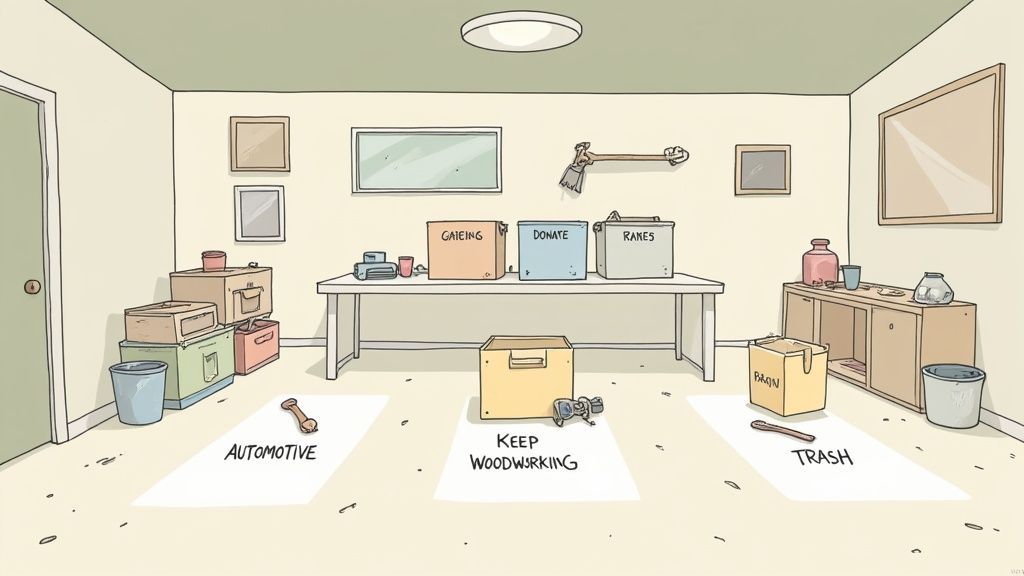
With everything out in the open, it's time to get ruthless. Create three distinct areas (tarps work great for this) and start sorting.
- Keep: These are the tools and supplies you use regularly. Be honest. If it hasn't seen the light of day in over a year, it probably doesn't belong here.
- Donate or Sell: This is for the duplicates, the tools from a hobby you dropped years ago, and anything that’s still in good shape but just taking up space.
- Discard: Broken tools that are beyond a reasonable repair, dried-up paint cans, expired chemicals, basically anything that’s no longer safe or functional gets tossed.
This sorting process is where the magic happens. We have a detailed post on how to declutter your home that offers some great room-by-room advice you can easily apply here.
A huge mistake I see people make is holding onto things "just in case." If you haven't needed that hyper-specific wrench in the last five years, you can probably borrow or rent one if the need ever arises. The value of that reclaimed space is almost always higher.
You're not alone in wanting a more functional space. This is a massive trend. The global garage organization market was valued at USD 29.7 billion in the early 2020s and is projected to hit USD 57.4 billion by 2033. It’s clear that people are waking up to the value of an organized home.
Before we move on, let's simplify that initial purge with a quick checklist. This is the core of what you need to do to get started.
Your Initial 4-Step Decluttering Checklist
| Step | Action | Key Objective |
|---|---|---|
| 1. Empty the Garage | Pull absolutely everything out into an open area like the driveway. | Create a "blank canvas" and see the full extent of your inventory. |
| 2. Set Up Sorting Zones | Designate clear areas for "Keep," "Donate/Sell," and "Discard." | Make quick, decisive sorting possible and prevent second-guessing. |
| 3. Sort Every Item | Handle each item once and place it into one of your three zones. | Eliminate clutter and keep only what is truly useful or valuable. |
| 4. Clear the Clutter | Immediately haul away the discard pile and pack up donations. | Prevent sorted items from migrating back into the garage. |
Once you've completed these steps, you'll be left with only the items you've committed to keeping, making the next phase much more manageable.
Creating Functional Zones
Now, with your "keep" pile ready, it's time to think like a workshop designer. The goal is to create zones, which are logical areas based on specific activities. Zoning makes your workflow incredibly efficient because everything you need for a task is right where you need it.
Whether you're working with a brand-new space or an old one, thinking about layout is key. For those starting from scratch, this essential guide to building a garage has some great insights into creating a functional footprint from the get-go.
Think about how you use your garage. Most people have a few common zones:
- Automotive Station: This is where you keep everything for car maintenance, including oil, fluids, jacks, wrenches, and cleaning supplies. Group it all together.
- Woodworking or Project Bench: Your main workbench is the heart of your creative space. All your hammers, saws, drills, and measuring tools should live here.
- Gardening Corner: To make life easier, cluster your rakes, shovels, bags of soil, and pots near the garage door for quick access to the yard.
- Long-Term Storage: Those high shelves or awkward corners are perfect for things you don't need often, like holiday decorations or camping gear.
By mapping out these zones, you're essentially creating a blueprint for your garage. This strategic plan tells you exactly what kind of storage you'll need and where it should go, which is exactly what we'll get into next.
Choosing Storage Systems That Actually Work for You
Once you've sorted through your tools, the next big decision is figuring out where everything will live. Choosing the right storage isn't about buying the most expensive cabinets you can find. It’s about matching solutions to your specific workflow and the layout of your garage. The whole point is to create a system that makes grabbing and returning a tool feel like second nature, not a chore.
Think of your storage options like a toolkit. You wouldn't use a hammer to turn a screw, right? The same logic applies here. A massive, stationary tool chest is overkill for the handful of tools you constantly need to bring to a project across the garage.
Go Vertical: Your Walls Are Your Best Friend
Your garage walls are probably the most underused real estate you own. Getting tools up and off the floor is a game-changer. It frees up precious square footage and, more importantly, makes everything visible and easy to grab. This is where vertical systems absolutely shine.
Two of the most popular workhorses are pegboards and French cleat systems.
- Pegboards: These are a classic for good reason. They're an affordable, flexible way to hang the hand tools you reach for most, such as screwdrivers, wrenches, and hammers. Their biggest advantage is instant visibility. You can spot the exact tool you need in a single glance.
- French Cleats: This setup uses interlocking angled cleats mounted to the wall, letting you hang custom-built holders, shelves, and even small cabinets. It’s incredibly strong and endlessly adaptable, making it perfect for heavier items or for anyone who enjoys building a completely customized workshop.
And don't forget the basics. A solid set of garage shelving solutions is foundational for maximizing vertical space. Heavy-duty shelves are the perfect home for tool cases, paint cans, and all those bulky items that just won't hang on a wall.
Mobile and Secure: Solutions for Every Tool
While wall storage is fantastic for your everyday items, not everything belongs out in the open. Some tools need to be mobile, while others are better off protected from dust and moisture. This is where rolling chests and cabinets earn their keep.
A rolling tool chest can completely change how you tackle projects. Imagine you’re working on your car. Instead of walking back and forth to your workbench a dozen times for sockets and wrenches, you can roll the entire chest right next to you. This simple move slashes frustration and project time.
For more valuable or sensitive equipment, lockable cabinets are the answer. They shield power tools, diagnostic gear, and hazardous chemicals from dust, moisture, and curious hands. Plus, they give your garage a clean, uncluttered look that can make it feel more like a professional workshop.
The choice between open shelving and closed cabinets often comes down to accessibility versus protection. The best approach is usually a mix of both: use open storage for everyday tools and secure cabinets for valuable, sensitive, or rarely used items.
The market backs this up. In 2022, garage cabinets made up the largest slice of the organization market at 42.05%, pulling in nearly USD 9.8 billion globally. People love them because they protect expensive tools and hide clutter, which makes the whole workspace safer and more efficient.
Match the Storage to Your Stuff
There's no single "best" storage system. The right choice is the one that fits what you own and how you work. Please, avoid the common mistake of buying a one-size-fits-all solution before you’ve actually analyzed your own collection.
Here’s a practical way to break it down:
| Tool Category | Recommended Storage Type | Why It Works |
|---|---|---|
| Daily Hand Tools | Pegboard or Magnetic Strip | Keeps screwdrivers, pliers, and wrenches visible and within arm's reach of your workbench. |
| Power Tools | Cabinets or Deep Shelves | Protects them from dust and accidental drops. Storing them in their original cases on a shelf is a great way to keep everything together. |
| Project-Specific Kits | Rolling Tool Chest | Lets you bring an entire set of tools, like your automotive socket set, directly to the job. |
| Lawn & Garden Tools | Wall-Mounted Racks | Gets long-handled tools like rakes and shovels off the floor so you're not constantly tripping over them. |
When you thoughtfully match each tool category to the right storage method, you’re not just organizing; you’re building an intuitive system. It’s an approach that ensures the garage you create today will still be working for you years down the road.
Bringing Your Garage Organization Plan to Life
You've got the blueprint, you've picked your storage systems, and now it's time for the fun part: making it real. This is where you physically set up your cabinets, hang the shelves, and arrange your organizers to create a workspace that actually works for you. Think of yourself as a workshop choreographer, putting every tool exactly where it needs to be for the smoothest possible project flow.
The goal here isn't just to make it look tidy; it's to make it efficient. How you install and arrange everything directly impacts how easy it is to find a tool, use it, and (crucially) put it back. A well-designed layout saves you from that familiar, frustrating scavenger hunt every time you step into the garage.
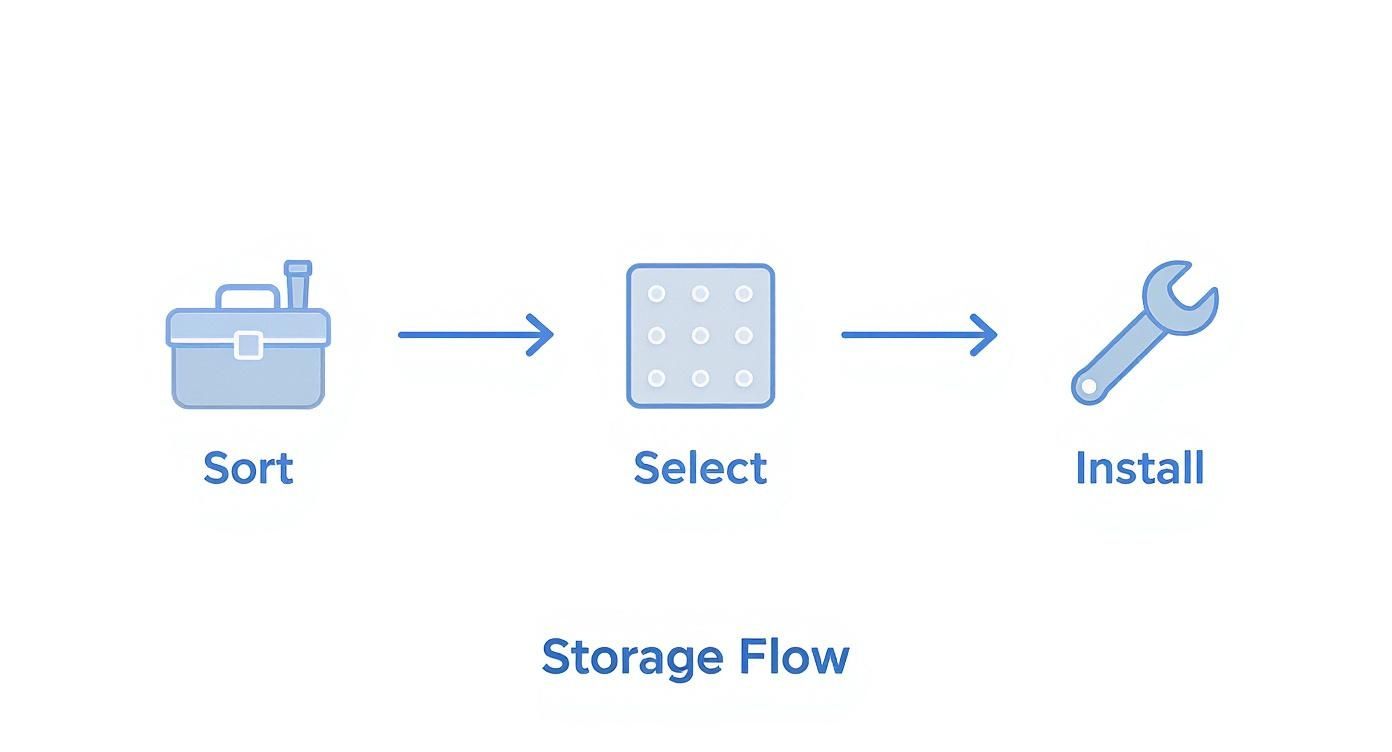
This simple flow shows that installation is the final, critical step that brings all your planning and sorting work to life.
Grouping Tools by Function and Frequency
The most effective garage setups I've seen all follow two simple rules: group by function and organize by frequency of use. This just means keeping similar tools together and putting your most-used items where you can grab them without thinking.
- Group by Function: Designate specific zones. All your automotive tools go in one area, woodworking gear in another, and lawn care in a third. Your socket set shouldn't be ten feet away from your oil filter wrench and jack stands, as they're a team.
- Prioritize by Frequency: The tools you grab for nearly every project are your VIPs. Think cordless drill, tape measure, and a good screwdriver set. These deserve prime real estate, like on a pegboard right over your workbench or in the top drawer of a rolling cart.
Less-used items, like that tile saw you bought for a single project or the leaf blower in the summer, can be stored on higher shelves or tucked away in back corners. This keeps your main work area clear for the daily heavy hitters.
Creating an Ergonomic Workspace
Ergonomics in a garage sounds fancy, but it's really just about common sense. You want to set things up to minimize unnecessary bending, reaching, and walking. It’s about saving your back and your time.
Your workbench is the heart of the operation, so start there. As a rule of thumb, leave at least three feet of clear space in front of it and on the sides. You need room to move without constantly bumping into things.
You can even borrow the "work triangle" concept from kitchen design. Your three main points might be the workbench, your primary tool chest, and a large piece of equipment like a table saw. Arranging them in a loose triangle cuts down on the steps you take during any project.
Here's a tip that has saved my back more times than I can count: put heavy or bulky items like shop vacs and air compressors on lower shelves or, even better, on mobile carts. Lifting a 50-pound compressor off a high shelf is a recipe for disaster.
Practical Installation Tips and Tricks
As you start bolting things to the wall, a few small details can make a huge difference. These are the things that separate a good layout from a great one.
- Set Up a Dedicated Charging Station: Pick one shelf or a specific cabinet area for all your cordless tool chargers. Mount a power strip there to keep all your batteries in one spot, topped off and ready to go.
- Leave Plenty of Clearance: Think about how you’ll actually use your large equipment. A table saw, for example, needs a lot of "infeed" and "outfeed" room to handle long boards safely. Don’t box it into a corner where it’s a pain to use.
- Always Use Drawer Liners: A simple roll of non-slip liner is non-negotiable for tool chest drawers. It stops your tools from sliding around every time you open a drawer, which protects both the tools and the drawers themselves.
- Don't Forget About Lighting: Position your main work areas directly under your best light source. If the overhead light isn't cutting it, add task lighting like an adjustable lamp clamped to your bench or some stick-on LED strips under a cabinet.
For all the small stuff, from screws to zip ties, having the right containers is everything. Check out our guide on storage container organization ideas for some clever ways to tackle the little things. It’s this combination of a logical layout and these thoughtful touches that turns a garage into a space you’ll genuinely enjoy working in.
Using Simple Tech to Keep Your Tools Organized
Once your shelves are up and your bins are sorted, you can take your system to the next level with a little bit of simple tech. This isn’t about installing some complicated software or buying expensive gadgets. It’s about using the phone already in your pocket to create a smart inventory of your gear, giving your tool chests a digital brain.
Think about it. You're looking for that specific tap and die set you haven't touched in eight months. Instead of yanking open a dozen heavy drawers, you just scan a small code on your tool chest with your phone. Instantly, a list of that drawer's contents pops up, complete with a photo of the set, confirming it's right where you thought it was. No more guesswork.
Creating a Digital Inventory with QR Codes
This kind of slick, organized system is surprisingly easy to pull off using QR codes and a home inventory app like Vorby. The whole idea is to link a physical location, like a drawer, a bin, or a cabinet, to a digital list of what’s inside. This is an absolute game-changer for shared workshops or for anyone who just can't remember where they stashed that rarely used tool.
The concept is powerful because it's so simple:
- Create a Digital "Container": In the app, you make a virtual space that mirrors your physical one. Let's call it "Rolling Tool Chest, Drawer 3."
- Log the Contents: You list everything inside that drawer. You can even add photos, receipts for warranty tracking, or links to online manuals.
- Generate and Link a QR Code: The app creates a unique QR code for that digital container.
- Stick on the Label: Print the QR code onto a sticker and slap it on the outside of the drawer. Now, a quick scan with your phone tells you everything inside.
This screenshot shows exactly how an app like Vorby displays your items, with clear images and location details right at your fingertips.
A quick visual reference like this makes finding what you need incredibly fast.
Your Step-by-Step Guide to a Digital Setup
Getting your digital inventory running is a perfect afternoon project. It really just boils down to a few manageable steps.
- Pick Your App: Grab an inventory management tool. Vorby is a great choice because it’s built for exactly this, letting you add detailed descriptions, photos, and even share access with family or friends.
- Catalog Your First Zone: Don't try to do the whole garage at once. Start small. Pick one tool chest or a single set of shelves and go drawer by drawer, adding items into the app.
- Add the Good Stuff (Details): This is where the system really starts to shine. Snap a quick photo of each tool or set as you log it. For that new drill you just bought, upload a screenshot of the digital receipt. This one simple action makes future warranty claims totally painless.
- Print and Place Your Labels: Once a drawer is fully cataloged, generate its QR code. A basic label maker or some sticker paper is all you need. For a garage environment, I’d recommend putting a layer of clear packing tape over the label to protect it from grease, grime, and moisture.
By creating a digital map of your tools, you're not just getting organized; you're building an asset management system for your home. This is incredibly useful for insurance purposes in case of theft or damage, giving you a detailed, time-stamped record of your valuable gear.
The Long-Term Payoff
That small investment of time upfront pays off big time. For anyone sharing a workshop with family members or friends, it puts an end to the constant "Hey, where's the...?" questions. Now, anyone can scan a container to find what they need or see exactly where a tool is supposed to go back.
It also makes tracking loaned items a breeze. When you lend your neighbor a tool, just make a quick note in the app. You’ll never forget who has your good socket set again.
For a deeper dive into making this system work for you, our guide on creating a tagging system for inventory offers even more advanced tips. It’s all about transforming your garage from a simple storage space into a fully cataloged, easily searchable workshop.
Maintaining Your Organized Garage for the Long Haul
You did it. You wrestled the chaos into submission. The tools are sorted, the zones are clear, and your storage systems are a thing of beauty. But now comes the real test: keeping it that way. An organized garage isn't a one-and-done project; it's a living system that needs small, consistent check-ins to keep it from sliding back into the abyss.
This final stage isn't about another weekend-long overhaul. It’s about weaving a few simple habits into your daily routine so maintenance becomes second nature. These tiny actions are your defense against the slow, creeping return of clutter, ensuring your garage stays a functional, even enjoyable, workspace for years.
Building Sustainable Organizational Habits
The real secret to staying organized for good is embedding a few key practices into how you work. These aren't soul-crushing chores; they're quick, almost effortless routines that stop the mess before it starts.
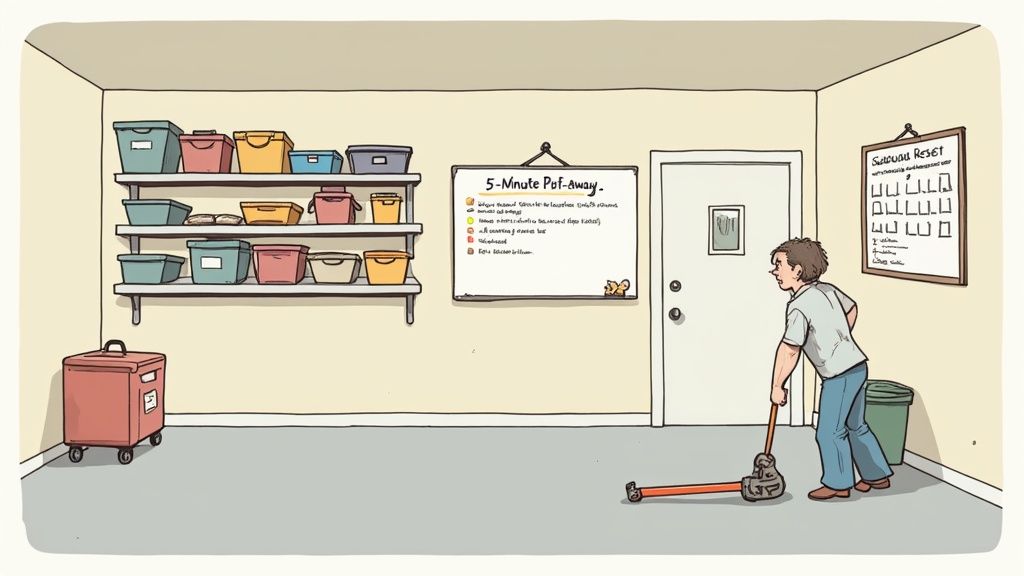
One of the most powerful is the 5-Minute Put-Away Rule. After every project, big or small, just dedicate five minutes to putting your tools back where they belong. It sounds ridiculously simple, but this one habit prevents that slow pile-up of clutter that eventually swallows your workbench. The cumulative impact is massive.
Another game-changer is the One-In, One-Out Rule. Every time a new tool comes into the garage, an old, broken, or redundant one has to go. This forces a constant, low-effort evaluation of what you actually need and keeps your perfectly organized drawers from becoming overstuffed again.
The goal is to shift your mindset from a massive, once-a-year cleaning event to a series of tiny, ongoing adjustments. It’s this proactive approach that makes organization effortless over time, rather than a recurring, dreaded project.
Conducting Quick Seasonal Resets
Even with the best daily habits, it’s smart to do a quick check-in every few months. Think of a seasonal reset as a brief, focused review to make sure your system is still working for you. This is your chance to catch small issues before they snowball into big problems.
During a reset, just walk through and ask a few simple questions:
- Is anything out of place? Scan for tools that have migrated away from their designated zones.
- Are any areas becoming clutter hotspots? Identify why things are starting to pile up in certain spots and adjust.
- Does the layout still make sense? Your needs change. Maybe that drill you now use weekly should be closer to the door.
This whole process shouldn't take more than an hour. It's a quick tune-up for your garage, a chance to purge what you haven’t used, tweak the layout, and double down on what’s working.
Keeping the Space Clean and Productive
A clean workshop is a safe and efficient one. It's not just about looks; dust, sawdust, and grime can damage your tools and create hazards. Making cleaning part of your routine is non-negotiable for protecting your investment.
This push toward treating the garage as a valuable extension of the home is a major trend. The garage organization market is already valued between USD 24 to 26.97 billion and is on track to explode to over USD 42 billion by 2032. It’s clear that people are tired of chaotic garages and are investing in clean, organized solutions. You can check out more of these garage organization market insights to see where the industry is heading.
Here are a few simple ways to keep your workspace in top shape:
| Cleaning Task | Frequency | Why It Matters |
|---|---|---|
| Sweep the Floor | After every project | Prevents sawdust and debris buildup, which is a major tripping hazard. |
| Wipe Down Surfaces | Weekly | Gets rid of dust that can work its way into power tools and ruin them. |
| Empty Trash Bins | As needed | Keeps pests away and reduces fire risks from oily rags or scrap wood. |
| Check for Spills | Immediately | Oil, paint, and other liquids can cause nasty stains and create slip hazards. |
By making these small maintenance and cleaning habits part of your regular garage routine, you guarantee the space remains a safe, productive, and enjoyable place to work. All that effort you put into organizing your tools will continue to pay off, project after project.
Your Most Pressing Garage Organization Questions, Answered
Even with a solid game plan, you're going to hit a few snags. It happens on every big project. Knowing the answers to the most common hurdles before you start can save you a ton of time and frustration, helping you make smarter choices on the fly.
Let's dive into the questions we hear all the time. We'll cover everything from taming those giant, awkward tools to figuring out if splurging on fancy cabinets is actually worth it.
What Is the Best Way to Store Bulky Tools?
Leaf blowers, weed whackers, and shop vacs can be the bane of a tidy garage floor. The goal is simple: get them up and out of the way, but not so out of the way that they're a pain to grab. Your walls and ceiling are your best friends here.
- Wall-Mounted Racks: For anything with a long handle (think shovels, rakes, trimmers), sturdy wall-mounted racks are a no-brainer. They keep your tools secure and upright, preventing a tangled mess in the corner.
- Overhead Storage: Got stuff you only use seasonally, like ladders or holiday gear? Look up. Your ceiling is prime real estate. Pulley systems or heavy-duty ceiling racks can hoist these items up, freeing up an incredible amount of floor space.
- Mobile Bases: Some heavy tools just have to live on the ground; air compressors or big floor jacks come to mind. The trick is to put them on a mobile base or a heavy-duty cart. This makes it a breeze to roll them out when you need them and tuck them away when you're done.
Are Expensive Cabinets Worth the Investment?
The short answer? It depends. While you can absolutely get organized without a high-end system, premium cabinets offer some real advantages that make them a smart investment for a lot of people.
For serious DIYers or anyone with a valuable tool collection, quality cabinets provide superior protection from dust, moisture, and theft. They also create a clean, professional look that can transform a cluttered garage into a true workshop.
Sure, those cheaper cabinets from the big-box store can get the job done for a while, but they often lack the grit to handle the garage environment. If you can swing it, investing in sturdy, purpose-built garage cabinets will pay off. They protect your tools better and simply last longer. Considering a 53% majority of U.S. homeowners use their garage for DIY projects, good storage is more of a necessity than a luxury.
How Do I Organize All the Small Hardware?
Screws, nuts, bolts, and washers are masters of chaos. Leaving them in their original flimsy cardboard boxes is practically asking for a spill. The secret is to contain and label everything.
Try one of these solutions designed for the small stuff:
- Small Parts Organizers: These are the classic plastic cases with lots of little compartments, many of which are removable. They're perfect for sorting different fasteners and stack neatly on a shelf.
- Drawer Dividers: If you have a tool chest, don't just dump hardware into the drawers. Use simple dividers or small plastic bins to create a dedicated home for each type of screw or bolt.
- Wall-Mounted Bins: For the screws and nails you use all the time, small, open-front bins are fantastic. Mount them on a pegboard or slatwall right by your workbench so you can see and grab what you need without missing a beat.
What If I Have a Very Small Garage?
A small garage doesn't mean you're doomed to clutter. It just means you have to get creative and use every single inch you've got. In a tight space, vertical storage isn't just a good idea, it's everything.
Here's how to make the most of what you have:
- Go Floor-to-Ceiling: Think tall. Use towering shelving units and wall systems like pegboards or French cleats to draw the eye up and store way more stuff vertically.
- Use Fold-Down Furniture: A fold-down workbench is a game-changer for a small garage. You get a solid, stable work surface when you need one, and it folds flat against the wall when you don't.
- Choose Shallow Cabinets: Some manufacturers make shallower cabinet lines, often around 18 inches deep, built specifically for tight spots. They give you that clean, enclosed storage without eating up precious floor space.
With these tricks up your sleeve, you can build a seriously functional workshop, no matter how small your garage is.
Your Garage Organization FAQ
Still have a few questions? Here are some quick answers to the most common things people ask when tackling their garage.
| Question | Brief Answer |
|---|---|
| How long does a full garage organization take? | Plan for a full weekend. Most people need 10-16 hours for a standard two-car garage: one day to purge and one day to install and organize. |
| What's the #1 mistake people make? | Buying storage solutions before they purge. You'll almost always buy the wrong sizes or types, wasting money and space. |
| Is pegboard or slatwall better? | Slatwall is stronger and more versatile for heavy items, but pegboard is more affordable and great for hand tools. It often comes down to budget and needs. |
| What's the best way to store extension cords? | Use wall-mounted cord winders or dedicated hose reels. Never leave them in a tangled pile on the floor where they can become a trip hazard. |
| Should I paint the garage floor? | Yes, if you can. An epoxy floor coating isn't just for looks; it resists stains, is easy to clean, and brightens up the entire space. |
Getting the right answers upfront makes the whole process smoother. Armed with this knowledge, you're ready to tackle any challenge that comes your way.
Ready to take your organization to the next level with a digital inventory? Vorby helps you catalog every tool with photos, receipts, and precise locations. Use our app to generate QR codes for your tool chests and bins, so you can see what's inside with a quick scan. Find anything in seconds and never lose track of your valuable gear again. Start your free trial today.