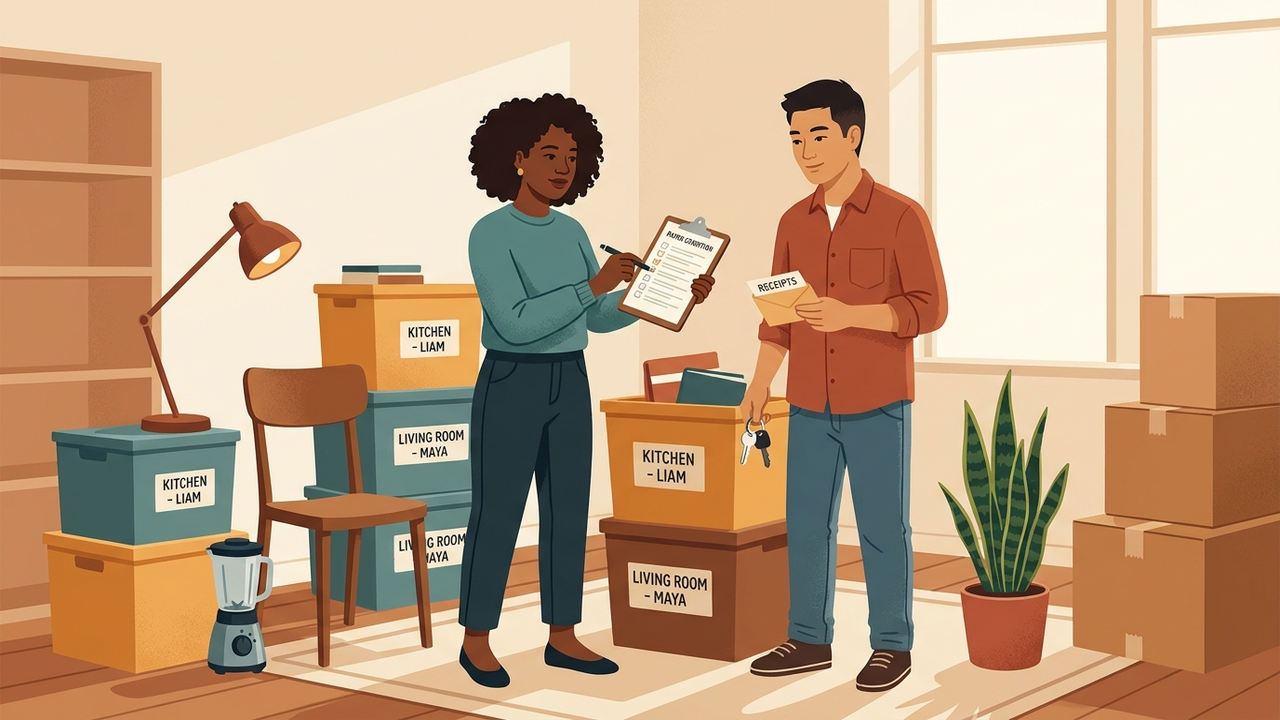
roommates forget to inventory the things that seem too small, too ordinary, or too obviously “ours” to document. The television gets photographed, but the adapter that makes it work does not. Everyone remembers the sofa, while no one records the borrowed drill, spare key, inherited baking dish, or unopened fire extinguisher tucked behind a cabinet.
Those omissions matter because shared homes contain overlapping layers of ownership. One roommate bought the vacuum, another replaced its filter, and everyone uses it. A former tenant may have left a ladder behind. A parent may have loaned the household a stand mixer. When something breaks, disappears, or travels with the wrong person at move-out, memory becomes a poor referee.
Shared living is not unusual or uniform. Pew Research Center reported that 20% of households were shared households in 2019, up from 17% in 2007, using a definition that includes an extra adult such as a roommate, boarder, adult child, or parent. The U.S. Census Bureau separately defines a nonfamily household as a householder living alone or with nonrelatives only, such as roommates or an unmarried partner. In everyday life, the labels matter less than having a record everyone can understand.
Why Shared Homes Lose Track of Small Things
The five details every useful entry needs
A roommate inventory should answer five practical questions: Who owns it? Where is it? What condition is it in? Is there proof of purchase or value? What happens when someone moves out? “Blender in kitchen” is not enough. “Nina owns the black Ninja blender, stored in the lower island cabinet, purchased in good condition in August 2025, receipt attached, leaves with Nina” prevents ambiguity.
Use photos for condition, especially where scratches, stains, missing parts, or worn surfaces are relevant. Add model and serial numbers when available. The Insurance Information Institute recommends recording basic purchase details, serial numbers, receipts, appraisals, and photographs, then keeping the inventory backed up somewhere accessible after a loss. That advice is designed for insurance documentation, but it is equally useful when several people share custody of everyday belongings.
Why small shared items create outsized arguments
Small items move constantly. A cable migrates from the living room to a bedroom. A hex key stays inside a desk after assembling a communal shelf. Dish towels become cleaning rags. A spare key gets handed to a pet sitter and never returns. Because these objects are inexpensive individually, roommates delay documenting them until replacing a whole group becomes expensive.
Household spending gives the category real weight. Statista, citing consumer expenditure data, reports that average U.S. spending on household furnishings and equipment was about $2,414 per consumer unit in 2024. A shared home does not need designer furniture to accumulate meaningful value. It only needs a few years of cookware, linens, organizers, tools, electronics accessories, and replacement supplies.
If an item can be misplaced, mistaken for communal property, needed during an emergency, or disputed at move-out, it belongs in the inventory.
1. Chargers, Cables, and Adapters, Plus 2. Kitchen Tools and Pantry Equipment
1. Chargers, cables, adapters, remotes, and power accessories
The cable drawer is the unofficial lost-and-found of a shared home. Inventory phone and laptop chargers, proprietary power bricks, HDMI cables, Ethernet cords, streaming-device remotes, USB hubs, surge protectors, extension cords, travel adapters, smart-home bridges, and dongles. Include accessories that arrived with a monitor, game console, router, speaker, or television because those are often essential to the main device even when they look interchangeable.
Record the owner and compatible device together. “65-watt USB-C charger” is less useful than “Jordan’s 65-watt Lenovo charger for work laptop.” Photograph identifying marks and note the room, drawer, cable box, or charging station where it normally lives. If roommates intentionally share a charging hub or surge protector, label it as jointly purchased and record each person’s contribution.
Condition should cover bent connectors, frayed insulation, loose ports, missing caps, and whether the accessory works. Save digital receipts for higher-priced docks, power stations, mesh-network units, and branded adapters. At move-out, original device accessories follow the device owner unless everyone agreed that an accessory became household property. Shared replacements should go to the person designated in advance, be bought out at an agreed value, or stay for the incoming roommate with written consent.
2. Kitchen tools and pantry equipment
Roommates usually remember the refrigerator and microwave because they dominate the room. They forget the equipment that makes the kitchen usable: knives, cutting boards, peelers, can openers, measuring sets, baking sheets, food-storage containers, colanders, rice cookers, kettles, coffee grinders, scales, thermometers, reusable filters, spice racks, water-filter pitchers, and the attachments packed with small appliances.
Inventory valuable pieces individually and group ordinary pieces sensibly. A knife set, cast-iron skillet, stand mixer, espresso machine, or inherited Dutch oven deserves its own record. A matching set of six utensils can be one entry with a count and photo. Note cabinets and shelves precisely enough that someone can return an item without asking. For food-storage containers, count bases and lids separately because a set with eight containers and three lids is not intact.
Ownership can be personal, jointly purchased, landlord-provided, borrowed, or left by a prior tenant. Do not convert “everyone uses it” into “everyone owns it.” The Vorby guide to tracking shared kitchen gadgets with an app explains how a common record can keep ownership and location visible without taping names onto every whisk. At move-out, reconcile sets, attachments, and accessories before packing. Photograph chipped enamel, warped pans, dull blades, or cracked appliance housings so normal wear is not confused with last-minute damage.
3. Cleaning Tools, 4. Shared Linens, and 5. Tools and Hardware
3. Cleaning tools and their easy-to-lose parts
A vacuum is obvious; its crevice tool, charging dock, spare battery, washable filter, and replacement brush roll are not. Add brooms, dustpans, mops, buckets, squeegees, carpet cleaners, steamers, toilet plungers, scrub brushes, window tools, reusable cleaning cloths, and specialty products bought for wood, stone, stainless steel, or upholstery. Consumables can be tracked by category rather than bottle unless cost or safety makes an individual record useful.
Write down where each tool belongs and whether it is personal or shared. If one roommate brings an expensive cordless vacuum but everyone uses it, record that ownership does not change through communal use. For jointly purchased equipment, attach the receipt and establish who keeps it later. A simple rule is to offer it first to the roommate staying in the home at a mutually accepted depreciated value, rather than trying to divide an indivisible appliance.
Condition notes should mention suction problems, damaged cords, stained mop pads, cracked bins, or missing parts. Pair the inventory with a routine such as a roommate cleaning schedule, since the person who discovers a broken tool should update its record instead of returning it silently to the closet.
4. Shared linens and soft household goods
Bath mats, hand towels, kitchen towels, guest sheets, pillow protectors, throw blankets, tablecloths, cloth napkins, shower curtains, and mattress protectors blur into the background. They also stain, shrink, tear, and migrate into private bedrooms. Inventory shared linens by set, count, size, color, owner, and storage location. “Two queen guest-sheet sets, gray and white, hall closet top shelf” is much easier to verify than “extra bedding.”
Separate truly communal linens from personal items temporarily offered for shared use. An inherited quilt on the living-room sofa remains personal property. A set of towels purchased from the household fund is shared property. Photograph sentimental, expensive, or already damaged textiles and note existing stains, pulls, discoloration, or pet damage.
At move-out, do not divide a coordinated set randomly unless everyone wants that. Assign full sets, use a buyout, or let the contributor take them. Wash and count linens before handoff, including pillowcases and fitted sheets that disappear inside other bedding. Keep purchase confirmation for higher-value rugs, curtains, weighted blankets, and specialty bedding, especially if roommates split the cost.
5. Tools, hardware, leftover parts, and maintenance supplies
Shared homes accumulate screwdrivers, drills, bits, hammers, levels, stud finders, tape measures, utility knives, step stools, picture hooks, wall anchors, furniture pads, spare screws, lightbulbs, batteries, paint cans, and mystery hardware from flat-pack furniture. These items are commonly stored together even when they came from different owners.
Inventory power tools individually with brand, model, serial number, battery count, charger, case, and attachments. Group low-cost hand tools in a photographed kit, but identify anything borrowed from a parent, neighbor, or landlord. Label leftover paint with the room, color code, finish, date, and whether it belongs to the property. Bag spare furniture hardware and link it to the correct shelf, bed, or desk.
Condition matters because a drill returned without its battery or a step stool with a bent hinge is not the same item that entered the home. Store receipts and warranty details for power tools and ladders. At move-out, the owner takes complete kits, jointly bought basics are assigned or bought out, and landlord-owned maintenance supplies remain. Never let a departing roommate empty the entire utility closet simply because they packed it first.
6. Outdoor and Recreation Gear, 7. Entry and Security Items, and 8. Emergency Supplies
6. Outdoor, recreation, and seasonal gear
Balconies, garages, patios, bike rooms, basements, roof decks, and car trunks hide shared value. Record bicycles, locks, helmets, pumps, repair kits, coolers, folding chairs, tents, sleeping pads, sports equipment, grills, propane accessories, gardening tools, hoses, planters, snow shovels, beach umbrellas, picnic blankets, and holiday decorations. Include storage bins and racks when they were purchased by a roommate rather than supplied with the property.
Seasonal gear needs a precise location because months may pass between uses. Note “garage shelf B in blue tote,” not merely “garage.” Photograph bicycles and higher-value equipment, capture serial numbers, and save receipts or registrations. Record rust, mildew, tears, missing stakes, worn straps, or depleted repair supplies before storage.
Clarify use and ownership when one roommate’s gear becomes the group default. A personal tent does not become communal because three roommates camped in it. For jointly purchased items, decide whether the staying roommate has first refusal, whether the item will be sold and proceeds divided, or whether one owner is designated from the start. Clean, dry, count, and inspect all components before a move, especially tent poles, grill tools, game pieces, and bike-lock keys.
7. Entry, access, and security items
Keys are inventory items, even though they may remain the landlord’s property. Track apartment keys, building fobs, mailbox keys, garage remotes, parking passes, bike-room keys, storage-unit keys, alarm remotes, smart-lock accessories, and authorized duplicates. Record who holds each one and what it opens, but do not store alarm codes, passwords, or sensitive access instructions in a broadly shared item list.
Add entryway property such as doormats, shoe racks, umbrella stands, package lockboxes, doorbell cameras, motion sensors, and removable smart locks. Identify whether the landlord approved or supplied installed equipment. For electronic devices, record the purchaser, model, serial number, subscription owner, mounting hardware, and account-transfer plan. Note existing scratches or mounting marks during move-in.
Move-out handling should be explicit and immediate. A departing roommate returns all property keys and fobs to the landlord or designated leaseholder, removes access from personal apps, and transfers jointly owned device administration before leaving. Photograph returned sets and obtain written acknowledgment where deposits or replacement fees could be affected. Never leave account access tied to a former roommate’s email because the physical device stayed behind.
8. Emergency and safety supplies
Safety gear is easy to ignore precisely because everyone hopes not to use it. Inventory fire extinguishers, smoke and carbon-monoxide alarms when tenant-maintained, first-aid kits, flashlights, lanterns, radios, power banks, emergency water, shelf-stable food, masks, blankets, whistles, spare batteries, basic medications, pet evacuation supplies, and copies of emergency contacts. Note which devices belong to the landlord so maintenance responsibilities remain clear.
Location and condition are critical here. A fire extinguisher hidden behind boxes or a flashlight with corroded batteries is not reliably available. Record expiration dates, inspection indicators, battery type, seal condition, missing first-aid components, and accessibility. Keep emergency supplies visible to all roommates while protecting personal medical information.
Set recurring review dates rather than treating the inventory as permanent. Replace expired or used supplies and record who paid. If a roommate moves out, shared safety equipment should normally stay with the home until replacements are in place, then be handled according to ownership or reimbursement terms. Personal go-bags leave with their owners. Landlord-provided alarms, extinguishers, and posted evacuation materials remain with the property.
9. Receipts, Warranties, and Manuals: The Records Behind the Objects
9. Purchase proof, warranty files, manuals, and account details
Receipts, warranties, manuals, assembly instructions, app registrations, and service records are part of the inventory, not administrative clutter. Without them, roommates may know who owns a device but still be unable to prove when it was purchased, make a warranty claim, order the right part, or reassemble it after a move.
Create one linked record folder with scans or photographs of receipts, order confirmations, model and serial labels, warranty terms, and manuals. Name files consistently, such as “air-purifier_brand_model_purchase-date_owner.” For a joint purchase, record each contribution and the payment method without exposing full card or bank information. If one roommate used a personal store account, note who controls returns, rewards, subscriptions, or warranty communication.
The Insurance Information Institute advises keeping proof of value and backing up an inventory away from the home. That protects the record if the home and the paper folder are affected by the same theft, fire, or water loss. Keep sensitive documents in access-controlled storage while making ordinary manuals and shared purchase records available to the household.
Choose a system that remains usable after the first weekend
A spreadsheet can work for a small, stable home, but it becomes awkward when roommates need photos, receipts, condition histories, and quick phone updates. An app-based inventory can make assignments, attachments, and updates easier to maintain. The useful comparison is not which format looks most organized on setup day. It is which one roommates will actually update after a purchase, breakage, relocation, loan, or move.
This practical breakdown of an inventory app versus a spreadsheet for roommates can help a household choose. Whichever system wins, use consistent owner names, room labels, categories, and move-out instructions. Avoid vague fields such as “miscellaneous,” which recreate the same confusion in digital form.
Make updates part of normal household life
Do a ten-minute update when a major item enters or leaves, then a fuller review every few months and before any roommate transition. One person can coordinate, but every roommate should verify their own property and jointly owned items. A useful starting workflow appears in seven ways to inventory shared household items.
- At purchase: add owner, price, date, receipt, warranty, and intended location.
- After damage: add a dated photo, describe what happened, and note repair or replacement responsibility.
- After relocation: change the stored location so the inventory reflects reality.
- Before a loan: record the borrower, accessories included, condition, and expected return date.
- Before move-out: freeze a dated snapshot that every roommate can review.
10. Borrowed, Inherited, Sentimental, and Move-In-Condition Items
10. Items whose stories matter as much as their price
Some of the most disputed objects were never ordinary purchases. A roommate’s parent loaned the dining table. A grandparent’s casserole dish entered the communal rotation. A former tenant left a mirror with no clear transfer of ownership. Someone brought framed art that has little resale value but enormous personal meaning. These items need more context, not less.
For borrowed property, name the true owner, the roommate responsible for it, the date received, the expected return date, and every included part. Photograph its arrival condition. For inherited or sentimental property, identify it as personal and not available for disposal, donation, sale, or permanent transfer without the owner’s permission. A short story in the description, such as “blue bowl inherited from Maya’s grandmother,” can stop someone from treating it like replaceable kitchenware.
Items left by prior occupants need confirmation from the landlord or previous owner when possible. “It was here when we arrived” does not prove that current tenants own it. Record any written permission to keep, discard, or use it. If ownership cannot be confirmed, label it unresolved rather than assigning it casually.
Document the condition of the home itself
Your inventory should connect personal property to the condition of the rental at move-in. Photograph floors, walls, doors, windows, appliances, counters, cabinets, plumbing fixtures, blinds, furniture supplied with the unit, and outdoor areas. Capture wide views and close-ups of stains, chips, holes, dents, missing hardware, water marks, and existing wear. Date the record and send required condition forms through the landlord’s designated channel.
This is not the same as claiming ownership of the property. It establishes which features and furnishings were present, their starting condition, and which accessories belong with them. Record refrigerator shelves, oven racks, remote controls, garage remotes, window screens, and furniture hardware because missing components may not be obvious until inspection.
When a roommate leaves but the lease continues, take a transition set of photos before anyone starts moving furniture. Separate damage to the unit from damage to a roommate’s item. The roommate move-out guide for inventory and deposits offers a structured way to reconcile belongings, condition, and deposit questions while everyone can still inspect the same space.
Use a written move-out rule for every ownership type
Do not wait until boxes are stacked by the door. Personal items leave with their owner. Borrowed items return to the outside owner or remain with the roommate responsible for the loan. Landlord property stays. Joint purchases follow the written assignment, buyout, sale, or division plan. Consumables can be left without reimbursement unless the household agreed otherwise.
If two people want a joint item, use a simple process: confirm current condition, agree on a fair present value, allow one roommate to buy out the others, or sell it and divide proceeds according to contributions. Do not use original retail price automatically for a worn item, and do not assume equal shares when contributions were unequal. Record the resolution in the inventory, including payment and handoff date.
Do a final room-by-room review together when practical. Compare the live home with the inventory, return access items, match accessories to devices, and photograph the result. The National Association of REALTORS advises movers to build a master list, keep moving documents together, label every box, and inspect belongings when they arrive. The purpose is not to turn roommates into auditors. It is to replace competing memories with one calm, shared record.
Roommate Inventory FAQ
What should roommates inventory first?
Start with items that are expensive, jointly purchased, borrowed, required for safety, or likely to be mistaken for communal property. Then cover easily misplaced accessories and items stored in shared closets, cabinets, garages, basements, and entryways. A complete television record is useful, but so are the remote, power cable, wall-mount hardware, receipt, and owner’s move-out instruction.
Should roommates inventory inexpensive items?
Yes, when the items form a set, move between rooms, or cost noticeably more to replace together. You do not need a separate entry for every spoon. Photograph and count a utensil set, towel group, tool kit, first-aid kit, or container collection. Individual records make sense for items with distinct owners, sentimental value, serial numbers, warranties, safety functions, or known damage.
How do roommates divide jointly purchased items?
Decide at purchase whenever possible. Assign a future owner, establish a buyout method, or agree that the item will be sold and proceeds divided. Record contribution amounts and revisit the item’s condition before move-out. Equal use does not prove equal ownership, so use the documented agreement and payments rather than who used the item most.
How often should a roommate inventory be updated?
Update it whenever an important item is bought, borrowed, moved, damaged, repaired, sold, donated, or returned. Review shared spaces every few months and before lease renewal, insurance review, travel, subletting, or a roommate change. A short recurring review is more accurate than a rushed reconstruction after something disappears.
Can a shared inventory help with renters insurance or a deposit dispute?
It can provide organized dates, descriptions, receipts, serial numbers, and condition photos, which may support an insurance claim or clarify what changed during a tenancy. Coverage and deposit rules depend on the policy, lease, and applicable law, so keep insurer and landlord requirements alongside the household record. Preserve original files and dated backups rather than relying only on screenshots sent in a group chat.
Inventory the cable drawer, linen shelf, key hooks, tool bin, emergency kit, and borrowed belongings before the next purchase or move makes the story harder to reconstruct. Create your shared home inventory with Vorby so ownership, location, condition, purchase proof, and move-out plans stay clear to every roommate. Start with one room today, then keep the record current as your household changes.