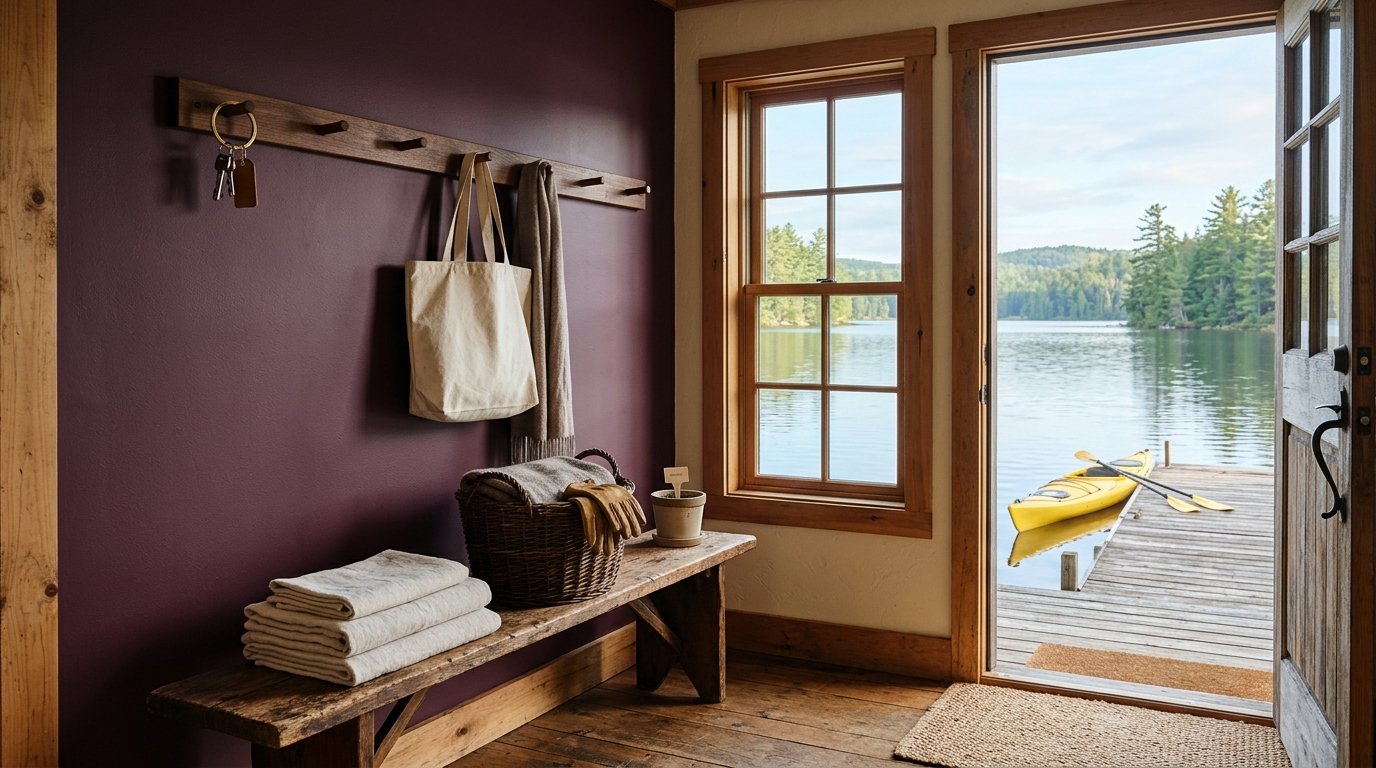
A cabin, a lake house, a beach condo, or the house your parents still own and you look after. You are there a few weeks a year, and every visit starts with the same question: is it here or at home? This checklist is for owners who use the place themselves.
This is general information, not insurance advice; second home and vacancy rules vary by insurer, policy form and state, so check your declarations page and ask your agent.
What should a second home inventory include?
Everything you would have to replace if the place burned or was broken into while you were away. Go room by room, including the garage, shed, dock and storage closets. List furniture, appliances, electronics, linens, kitchen gear, tools and outdoor equipment, with photos, brand and model, rough value, and any receipts you still have.
The Insurance Information Institute closes its vacation home insurance guide with the same advice: to make claims easier, create an inventory of your vacation home contents.
Second home inventory checklist
- ☐ Kitchen: small appliances (brand, model), cookware, knives, dishes for the number of beds.
- ☐ Bedrooms and linens: mattresses and bed sizes, sheet sets per bed, blankets, towels.
- ☐ Living areas: furniture, TV and streaming boxes, games, books.
- ☐ Systems: water heater, furnace, AC, well pump or sump pump, with brand, model and photos of the labels.
- ☐ Outdoor and water: grill, patio set, kayaks, paddleboards, life jackets, fishing gear, bikes.
- ☐ Garage and shed: mower, snow blower, generator, tools, ladders.
- ☐ Safety: smoke and CO alarms (install dates), fire extinguishers, first aid kit.
- ☐ Paper trail: receipts, manuals, policy declarations page, caretaker and utility contacts.
- ☐ After each stay: what was added, broken or taken home.
Does homeowners insurance cover belongings in a second home?
Usually not through your main policy alone. Allstate, citing NAIC, says you will likely need a separate policy to protect a second home and its contents, and it may be written on a named perils basis. III says a second home policy gives the same types of coverage, often at a higher price.
III notes that second homes carry more risk because nobody is there to notice theft, vandalism or easily undetected damage, like burst water pipes. Allstate notes limited coverage for some items, such as a boat. The North Carolina Department of Insurance says dwelling fire policies may be beneficial for vacation, seasonal and secondary homes. To size the contents limit, see how much personal property coverage you need.
What happens to coverage when a vacation home sits empty?
It can shrink. The Texas Department of Insurance says most companies stop coverage if a house is vacant for 60 days or more, though liability usually continues. North Carolina's dwelling policy page ties water damage coverage to the home not being vacant for 60 days. Ask your agent how your policy defines vacant.
The Texas guide is plain about it: most companies stop your coverage if your house is vacant for 60 days or more, though they usually don't stop your liability coverage. Progressive says a standard homeowners policy usually won't cover damage to a vacant home, and that unoccupied home coverage exists for seasonal homes. Policies define vacant and unoccupied in their own words, so check yours.
Simple habits help: keep utilities and heat on if your policy requires it, and update the inventory after each stay.
How do I keep track of what stays at the second home and what travels?
Give every item one home on your list. Things that live at the cabin, like the kayak, grill and spare bedding, go on that home's list. Things that travel, like laptops, bikes and good knives, stay on your main list with a note. Before each trip, check the list instead of guessing what is already there.
| Item | Lives at | Travels? | Estimated value | Note |
|---|---|---|---|---|
| Two kayaks and paddles | Lake cabin | No | $1,100 | Stored in shed, photo of hull IDs |
| Gas grill | Lake cabin | No | $450 | Covered on deck |
| Queen bedding sets (3) | Lake cabin | No | $360 | One per bed |
| Generator | Lake cabin | No | $900 | Brand and model photo on file |
| Laptop | Main house | Yes | $1,300 | Comes and goes each trip |
| E-bike | Main house | Yes | $1,800 | On car rack when visiting |
| Chef's knife set | Main house | Yes | $240 | Packed in kitchen tote |
Here is a blank copy to fill in for your own place:
| Item | Lives at | Travels? | Estimated value | Note |
|---|---|---|---|---|
Rotating gear: see our guide to seasonal bins. A storage unit is a third place with its own list.
What changes if I rent the second home out?
Insurance and inventory both change. III says regularly renting a vacation home usually calls for a landlord or rental dwelling policy, and short stays can need an endorsement or business policy. Your list also grows: guest-facing furnishings, condition notes and check-in photos. Hosts should use a rental host inventory instead of this checklist.
If that is you, start with our short-term rental host inventory or the guide to rental furnishings and deposits. Policy details: III on renting out your home.
Keeping two inventories without the mix-ups
In Vorby, a home is one self-contained inventory with its own items, rooms, locations, members and currency, so you can keep a separate inventory for each home and switch between them from the sidebar. Adding a second home needs an active Vorby subscription; it is not part of the free plan.
- Members are per home. Inviting someone to your main house does not give them access to the cabin, and the reverse is true too.
- Labels for the stays or travels split. Tag items with labels like "Travels" or "Stays at cabin", then filter by label before you pack.
- Search covers only the home you have open, in the app and through Siri. It does not search your other homes.
- Receipts and manuals can be attached to each item as photos or files.
See our guide for if something is stolen.
Frequently asked questions
Do I need a separate inventory for each home?
Yes. Keep one list per property so a claim, a move or a visit only involves the right items. A separate second home policy also means a separate claim, so mixing both houses on one list makes it harder to show what was at the place that was damaged or broken into.
Where should I keep the inventory for a vacation home?
Not only at the vacation home. NAIC recommends storing your home inventory in a secure place at another location, and the Texas Department of Insurance suggests a fireproof safe or somewhere else. A cloud copy you can open from your phone works, so the list survives if the cabin does not.
How often should I update a second home inventory?
At the end of each stay is the easy habit, plus a full review once a year. NAIC recommends reviewing your inventory annually and whenever you buy new items. At a second home, also note anything that broke, was replaced or went back to your main house, so the list matches what is really there.
Can a caretaker or family member help keep the list?
Yes, if you give them access to that home only. A property manager or relative who checks on the house needs to know what should be there, not everything you own. Keep their list limited to that property, keep it current, and ask them to tell you when something is missing, moved or damaged.
Start with the next trip
Keep each house as its own inventory in Vorby, with its own rooms and members, so you know what is at the cabin before you pack.
More than one home is part of a Vorby subscription.